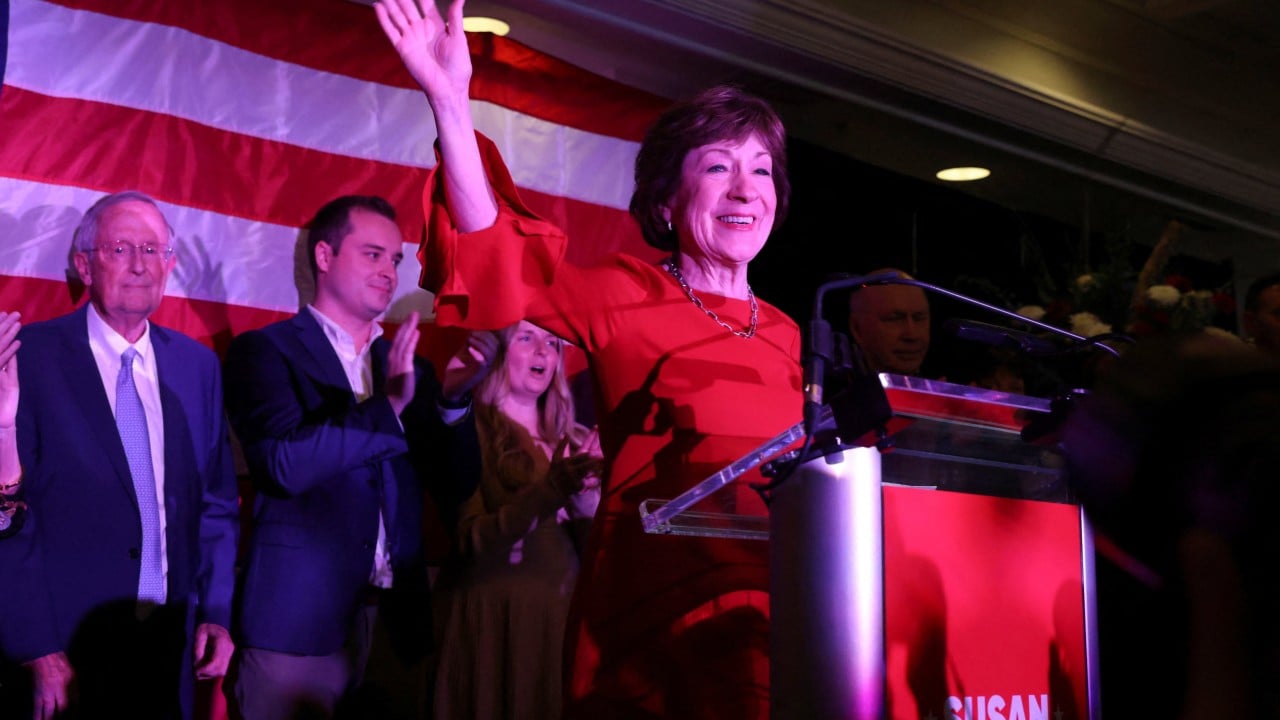
The Democrats' resounding midterm sweep was not an accident of favorable polling or a sudden wave of voter nostalgia. It was the predictable result of a disciplined ground game colliding with an opposition party that misread the economic mood of the American suburbs. By targeting localized cost-of-living grievances, mobilizing irregular voters through hyper-targeted digital outreach, and capitalizing on strategic overreach by conservative state legislatures, Democrats flipped key battleground districts and expanded their governing footprint. The real story behind this election lies not in the victory speeches, but in the structural shifts inside the electorate that made those speeches possible.
For months leading up to the vote, conventional wisdom in Washington pointed toward a sluggish, low-turnout affair where incumbent fatigue would punish the party in power. Pundits looked at historical midterm trends—the nearly ironclad rule that the president's party loses ground in off-year elections—and assumed the math was settled. They were wrong. The political terrain shifted beneath their feet because the mechanics of voter persuasion have fundamentally changed over the last decade. For another view, check out: this related article.
The Suburbs Did Not Just Lean Blue—They Locked In
Suburban counties around major metropolitan areas have served as the ultimate swing territory in American politics for a generation. In this cycle, they ceased to be swing territory. They became a firewall.
Consider the demographic composition of places like the collar counties outside Philadelphia, the booming tech corridors of the Sun Belt, and the sprawling suburbs of the Midwest. These are regions defined by high educational attainment, diverse family structures, and acute sensitivity to local governance. When national messaging focused on abstract macroeconomic indicators, voters tuned out. When local candidates focused on property taxes, public school funding, and healthcare access, those same voters showed up in record numbers. Similar coverage regarding this has been provided by Associated Press.
Ticket-splitting is nearly dead. Twenty years ago, a suburban executive might vote for a fiscal conservative for Congress while backing a moderate Democrat for governor. Today, nationalized media ecosystems and polarized party brands have erased that distinction. Voters view their ballot as a binary choice between two competing visions of civic life. Once a suburban precinct tips past a certain threshold, the social and institutional infrastructure of the community—from school boards to local chambers of commerce—begins to reinforce that partisan alignment.
Republicans attempted to win these voters back by hammering on inflation and border security. Those issues resonated, particularly among older homeowners and working-class families squeezed by grocery and energy bills. Yet the messaging hit a ceiling. Many suburban swing voters viewed the opposition's proposed solutions as either vague or overly punitive, creating an opening for Democratic candidates to present themselves as the steady, pragmatic alternative.
How Micro-Targeted Ground Games Replaced the Broadcast Blitz
Television ad buys used to be the undisputed king of midterm campaigns. Campaigns would raise tens of millions of dollars, flood local network affiliates with thirty-second spots during the evening news, and hope the sheer volume of repetition moved the needle by two or three percentage points. That era is over.
The Democratic sweep relied heavily on a decentralized, data-driven field operation that treated every voter as an individual persuasion target rather than a demographic bloc. Instead of blanketing entire media markets with generic attacks, campaign strategists used consumer data, precinct-level turnout modeling, and peer-to-peer texting to identify low-propensity voters who agreed with the party on one or two core issues.
The turnout engine mattered more than persuasion. In modern polarized elections, the number of genuinely undecided voters is vanishingly small—often hovering around five to seven percent of the electorate in competitive districts. Convincing a committed partisan to switch sides is an expensive, low-yield endeavor. Convincing an apathetic supporter to actually fill out a mail-in ballot or stand in line on a Tuesday in November is where elections are won.
Democratic field organizers invested early in relational organizing. Rather than sending a stranger to knock on a door with a clipboard, apps prompted volunteers to message their own friends, neighbors, and coworkers. A text from a neighbor carries infinitely more weight than a glossy mailer that goes straight into the recycling bin. By the time early voting opened in key states, Democrats had already banked a massive turnout advantage that opposition campaigns simply could not overcome on Election Day.
The Illusion of the Polling Averages
Public polling once again struggled to capture the true shape of the electorate, though not for the reasons critics usually cite. Pollster methodology has improved significantly since the misses of 2016 and 2020, with better weighting for education and partisan recall. The problem is response bias.
Fewer than two percent of people called by pollsters actually answer the phone and complete a survey. The tiny fraction of Americans willing to spend fifteen minutes talking to a stranger about politics are, by definition, unusually engaged and deeply partisan. They do not represent the casual voter who decides whether to participate three days before the election based on a conversation at a kid's soccer game. Campaigns that built their strategies around public polling aggregates found themselves fighting phantom battles in districts that were already out of reach, while neglecting vulnerable incumbents in areas where internal field data showed quiet trouble brewing.
Cultural Overreach Became a Liability in Swing Districts
Elections are rarely won on policy white papers. They are won on values, perceived competence, and the fear of what the other side will do with unchecked power. Throughout the cycle, high-profile legislative battles in conservative-led states provided Democrats with an endless supply of ammunition to use in moderate districts across the country.
Restrictions on reproductive rights, book bans in public libraries, and aggressive interventions into public university curricula dominated national headlines. While these policies energized the conservative base in deep-red rural districts, they proved toxic in purple suburbs. Voters who might otherwise have prioritized tax cuts or deregulation suddenly viewed the election through the lens of personal autonomy and institutional stability.
The backlash was not confined to progressive activists. It extended to moderate independents and traditional center-right voters who balked at the speed and scope of state-level social legislation. Democratic strategists recognized this dynamic immediately and ruthlessly nationalized local races around the theme of personal freedom. Every debate over zoning laws or state budgets was framed as a referendum on whether politicians belonged in doctors' offices and classrooms.
Republicans struggled to find a unified counter-message. Candidates in safe districts pushed for maximalist positions to survive primary challenges, locking themselves into rhetoric that played poorly in a general election. Meanwhile, moderate Republicans in swing districts found themselves forced to answer for the most extreme statements made by their party's fringe. Without a cohesive national platform to pivot back to, they spent the final weeks of the campaign playing defense on terrain chosen entirely by their opponents.
The Quiet Realignment of the Working Class Continues
Buried beneath the headlines of a sweeping Democratic victory is a sobering reality that party strategists cannot afford to ignore. While Democrats surged in the suburbs and dominated among college-educated voters, their erosion among non-college-educated working-class voters—particularly men across racial lines—continued unabated.
In rural counties, former manufacturing towns, and outer-ring exurbs, Republican margins actually expanded compared to previous midterm cycles. The economic grievances driving this shift are real and structural. Decades of deindustrialization, stagnant real wages in non-service sectors, and the rising cost of housing and transportation have left millions of working-class families feeling abandoned by coastal elites and institutional Democrats.
Let us take a hypothetical example to illustrate how this dynamic plays out on the ground. Imagine a mid-sized industrial county in the Rust Belt where the largest employer closed a plant ten years ago, replaced by lower-paying logistics warehouses. A lifelong union worker in that county might appreciate Democratic support for infrastructure spending, yet feel deeply alienated by cultural rhetoric coming from national progressive figures and frustrated by the immediate bite of inflation on their weekly paycheck. That voter does not necessarily become a die-hard conservative, but they stop pulling the lever for Democrats—or they stay home entirely.
This geographic sorting creates a dangerous long-term vulnerability. Winning big in densely populated metro areas runs up the national popular vote, but the American constitutional system rewards geographic breadth. The Senate map and the Electoral College do not care if a candidate wins a city by eighty percent instead of seventy percent. If Democrats allow their rural and small-town infrastructure to wither completely, they will find themselves perpetually defending razor-thin majorities where a single bad economic quarter could wipe out their gains.
Down-Ballot Races Altered the Balance of State Power
While cable news panels focused obsessively on control of the House and Senate, the most consequential victories of the midterm sweep happened further down the ballot. Democrats flipped several state legislative chambers, secured key governorships, and won critical state supreme court seats that will shape policy for the next decade.
State legislatures are the true laboratories of American governance. They draw congressional district maps, set voting rules, regulate utilities, and determine how federal infrastructure and healthcare dollars are spent. For over a decade, Republicans held a massive structural advantage at the state level, allowing them to pass sweeping conservative policies even in states that voted Democratic in presidential elections.
That monopoly is breaking. By pouring institutional money into state legislative races—an area historically neglected by national Democratic donors—the party managed to break conservative supermajorities in multiple states and establish unified control in others.
- Redistricting leverage. Control of state courts and legislatures directly impacts mid-decade redistricting battles and litigation over gerrymandered maps, potentially locking in several additional competitive House seats before the next presidential cycle.
- Election administration. Winning secretary of state and attorney general races ensures that the officials overseeing ballot access and certification in battleground states are insulated from partisan pressure to overturn results.
- Policy execution. Governors with friendly legislatures can immediately enact state-level protections on labor rights, environmental standards, and reproductive healthcare without waiting for a gridlocked Congress to act.
These down-ballot victories also serve a vital talent-pipeline function. State legislators and municipal leaders are the farm team for future congressional and presidential candidates. Building a deep bench in purple states gives the party credible, battle-tested messengers who understand how to win in difficult territory.
The Structural Trap of Governing With a Mandate
Victories of this magnitude inevitably breed hubris. Within hours of the final ballots being counted, factions within the Democratic coalition began arguing over what the sweep actually meant. Progressive organizers claimed the results proved that bold, unapologetic liberal policies drive turnout. Centrist lawmakers countered that their victories in swing districts were won precisely because they ran as pragmatists who distanced themselves from the party's left flank.
Both sides are looking at the same data and seeing what they want to see. The reality is that the Democratic coalition is an uneasy alliance of urban progressives, suburban moderates, union laborers, and minority voters whose economic and cultural priorities frequently clash. Holding that coalition together during an election against a common opponent is one thing. Governing with it when hard budgetary choices and legislative compromises are required is another matter entirely.
Voters hired Democrats to solve immediate, tangible problems, not to wage ideological crusades. If the party misinterprets a vote against chaos and extremism as a blank check for sweeping institutional overhauls, the suburban firewall that delivered this sweep will crack just as quickly as it formed. History is littered with political majorities that mistook a temporary tactical advantage for a permanent realignment, only to be humbled two years later when the electorate grew tired of overreach.
The mechanics of this midterm victory prove that disciplined organization, localized messaging, and a sharp focus on personal autonomy can overcome even fierce economic headwinds. Yet the underlying fractures in the American electorate remain untouched. The geographic divide between booming metro areas and struggling rural counties is wider than ever, trust in public institutions sits near historic lows, and millions of working-class voters remain politically homeless. Democrats won the battle for the suburbs and seized the levers of state power, but keeping them will require delivering measurable economic relief to the families who took a chance on their promises.