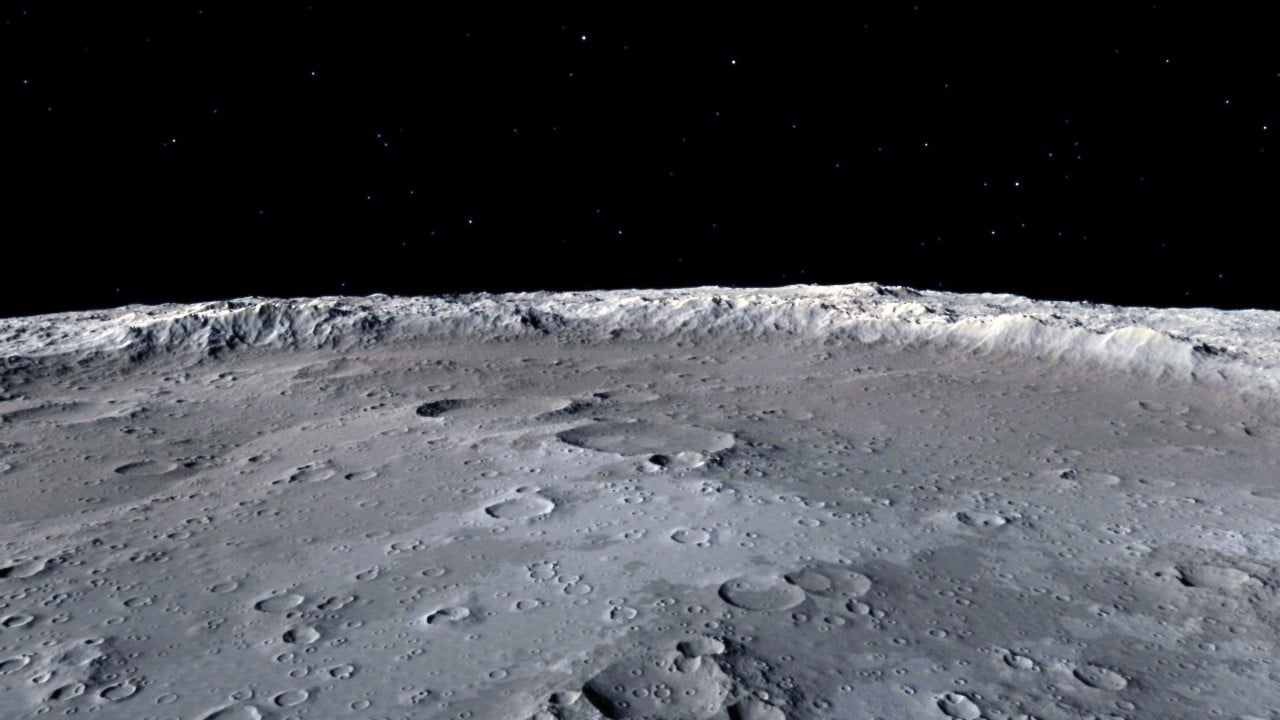
China’s space mining road map targets the lunar south pole within four years, aiming to extract water ice and helium-3 as part of a state-backed industrial push that stretches toward near-Earth asteroids by 2035. While Western media often frames Beijing’s celestial ambitions as a distant science experiment or a replay of the twentieth-century space race, industry insiders recognize a far more pragmatic strategy. Beijing is treating off-world extraction not as an exploration milestone, but as an extension of its terrestrial supply chain dominance.
The blueprint, largely anchored by proposals from the China Aerospace Science and Technology Corporation and researchers at the Chinese Academy of Sciences, lays out a phased timeline. Within four years, uncrewed robotic missions are scheduled to test in-situ resource utilization at the lunar south pole, specifically targeting permanently shadowed craters believed to hold millions of tons of water ice. By 2030, these precursor probes are expected to support a joint Sino-Russian International Lunar Research Station, laying the physical groundwork for industrial-scale extraction, orbital refueling depots, and eventual asteroid capture missions in the following decade. If you found value in this piece, you should look at: this related article.
Why Beijing Is Racing to the Lunar South Pole
Follow the physics, and the strategy makes immediate sense. Launching mass from Earth’s deep gravity well is punishingly expensive, even with reusable rockets driving down per-kilogram costs. Every ton of propellant burned to escape Earth’s atmosphere reduces the payload that can be sent to deep space.
Water ice changes that equation overnight. When split into hydrogen and oxygen using solar-powered electrolysis, lunar water becomes rocket propellant. Establishing a refueling station on the Moon turns the lunar surface into a logistical truck stop for the rest of the solar system. Whoever controls the ice deposits at the lunar south pole effectively controls the tollbooth for deep-space transit. For another angle on this story, refer to the recent coverage from CNET.
There is a second, equally calculated driver behind the four-year timeline. The topographically elevated rims of craters like Shackleton and Cabeus experience near-continuous sunlight, providing uninterrupted solar power right next to permanently shadowed basins where temperatures plunge below minus 200 degrees Celsius. Those prime real estate zones are geographically tiny—spanning just a few square kilometers in several cases. Under the 1967 Outer Space Treaty, nations cannot claim sovereignty over celestial bodies, yet the treaty allows for "safety zones" around active operations to prevent harmful interference. In practical terms, the first nation to park nuclear reactors, solar arrays, and robotic excavators on those crater rims claims de facto operational control over the most valuable energy and water reserves in cislunar space.
The Helium-3 Calculation
Beyond water, Chinese state media and academic papers consistently highlight helium-3, a light, non-radioactive isotope deposited on the lunar regolith over billions of years by the solar wind. On Earth, our magnetic field deflects these particles, leaving global reserves scarce. On the Moon, estimates suggest roughly one million metric tons sit trapped in the upper layers of dust.
In theory, fusing helium-3 with deuterium produces clean nuclear energy without generating long-lived radioactive waste. In reality, commercial aneutronic fusion remains decades away from net-positive energy generation on Earth. Veterans in the aerospace sector view Beijing’s emphasis on helium-3 with a healthy dose of skepticism. Extracting a single ton of the isotope requires processing roughly 150 million tons of lunar dirt—an industrial earth-moving operation that dwarfs current terrestrial mining projects, all executed in a vacuum with razor-sharp, electrostatically charged dust.
Why push the narrative now? Because geopolitical signaling matters just as much as engineering readiness. By framing lunar mining around future energy independence, Beijing justifies massive state subsidies for heavy-lift launch vehicles like the Long March 9 and Long March 10, advanced autonomous robotics, and space-rated nuclear power systems. Even if a single gram of helium-3 never powers a terrestrial grid, the dual-use technologies developed to chase it give China unmatched capabilities in orbital logistics, satellite servicing, and cislunar surveillance.
Engineering Reality Versus State Ambition
Ambition is cheap on paper. Hardware survives—or dies—in the thermal vacuum of space.
China’s recent track record in robotic lunar exploration is undeniably impressive. The Chang’e-5 and Chang’e-6 missions successfully returned samples from the lunar near side and far side, respectively, proving that Chinese engineers have mastered autonomous rendezvous, docking in lunar orbit, and precision landing. Moving from scooping two kilograms of dirt to running continuous mining operations over a four-year horizon, however, represents an exponential leap in complexity.
Consider the environment at the lunar south pole. Lunar regolith is not like beach sand; without wind or water to smooth the grains, the particles are jagged, microscopic shards of glass. During the Apollo missions, this dust shredded Kevlar spacesuit layers, jammed mechanical seals, and overheated radiator surfaces. Autonomous excavators operating continuously over months or years will face relentless mechanical abrasion.
Then there is the thermal shock. Moving a rover from a sunlit crater rim into a permanently shadowed pit subjects electronics, lubricants, and structural alloys to a temperature drop of more than 300 degrees Celsius within minutes. Standard batteries freeze and die. Hydraulic fluids turn solid. Keeping mining rigs operational in those shadows requires either long-range power beaming from sunlit peaks or compact kilopower nuclear fission reactors—a technology Beijing is actively developing alongside Russian partners, though neither nation has yet flight-tested a surface reactor on the Moon.
The Economics of Off-World Extraction
Private Western space mining startups learned a brutal lesson over the past decade when companies like Planetary Resources and Deep Space Industries collapsed or pivoted after failing to close the business case. Platinum-group metals from asteroids look lucrative on a spreadsheet until you factor in the capital expenditure of launch, transit, refining in microgravity, and safe reentry—all to dump supply onto a terrestrial market whose prices would crash the moment new supply arrived.
China bypasses this commercial trap entirely through state capitalism. Beijing does not need a positive quarterly return on investment to justify a lunar excavator. State-owned enterprises like CASC operate on multi-decade strategic horizons, absorbing upfront R&D losses that would bankrupt a venture-backed startup in Silicon Valley or Luxembourg.
The economic model is strictly in-situ consumption. Nothing mined on the Moon within the next decade needs to be shipped back to Earth to turn a profit. Instead, the value lies in avoiding the cost of launching mass from Earth. If a Chinese robotic plant produces 100 tons of liquid oxygen and hydrogen on the Moon, Beijing saves billions of dollars in heavy-lift launch costs that would otherwise be required to haul that propellant out of Earth’s gravity well.
The Geopolitical Legal Vacuum
While engineers wrestle with thermal vacuums and abrasive dust, diplomats are facing a legal vacuum that threatens to turn cislunar space into a regulatory Wild West.
The Outer Space Treaty of 1967 was drafted when the idea of private or state-backed lunar mining belonged strictly to science fiction. Article II explicitly bars "national appropriation by claim of sovereignty, by means of use or occupation, or by any other means." Yet Article I guarantees the free exploration and use of outer space by all states.
Does extracting and consuming lunar water constitute "use" or "appropriation"? The United States answered that question unilaterally with the 2015 Commercial Space Launch Competitiveness Act, which grants American companies property rights over resources they extract in space. Washington later codified this interpretation into the Artemis Accords, a set of bilateral agreements signed by more than forty nations that explicitly endorse resource extraction and the creation of safety zones around lunar infrastructure.
China has refused to sign the Artemis Accords, dismissing them as a Washington-led attempt to rewrite international space law outside the United Nations framework. Instead, Beijing is building its own coalition around the International Lunar Research Station, recruiting partners ranging from Russia and Pakistan to Venezuela, South Africa, and Belarus.
The friction point is unavoidable. Both NASA’s Artemis program and China’s lunar road map are targeting the exact same geographic coordinates near the lunar south pole within the same four-year window. Without a shared traffic management framework or mutually recognized rules on exclusion zones, a Chinese autonomous rover prospecting near a rim could easily interfere with the landing plume or communications array of an American commercial lander. On the Moon, dust kicked up by a descending rocket engine travels at ballistic velocities for kilometers, capable of sandblasting neighboring hardware into useless scrap.
What Overlooked Factors Could Derail the Timeline
Industry analysts tracking Beijing’s aerospace sector point to three structural bottlenecks that rarely make it into breathless headlines about lunar gold rushes.
First is heavy-lift launch cadence. Executing a sustained lunar mining campaign requires dozens of launches carrying habitats, power plants, rovers, and refineries. China’s workhorse Long March 5 can send roughly eight tons to trans-lunar injection—enough for sample-return probes, but wholly inadequate for industrial infrastructure. The super-heavy Long March 9, designed to lift 50 tons to the Moon, has undergone multiple major design overhauls, shifting from expendable kerolox boosters to a fully reusable stainless-steel architecture modeled closely on SpaceX’s Starship. Any slip in the Long March 9’s maiden flight, currently targeted around 2030, pushes heavy lunar industrial operations well into the 2030s.
Second is autonomous decision-making latency. A round-trip radio signal between Earth and the Moon takes roughly 2.6 seconds. That delay makes real-time teleoperation of delicate drilling or excavation equipment impossible when a drill bit hits an unexpected basalt boulder or an ice lens fractures. Beijing’s mining road map depends heavily on onboard artificial intelligence capable of diagnosing mechanical faults, adjusting torque, and navigating treacherous crater slopes without waiting for ground controllers in Beijing to send commands.
Third is domestic economic pressure. China’s space budget has enjoyed steady growth for two decades, shielded from the fiscal volatility that routinely whipsaws NASA programs every four years. Yet slowing domestic GDP growth, municipal debt burdens, and demographic headwinds are forcing Beijing to scrutinize massive capital outlays more closely than in previous five-year plans. Space exploration retains immense prestige value for the Communist Party, ensuring baseline funding remains secure, but scaling from scientific probes to permanent off-world industrial complexes will test the limits of state budgetary appetite.
The Asteroid Horizon Beyond 2035
The lunar south pole is only the proving ground. China’s broader space mining road map explicitly looks past the Moon toward near-Earth asteroids between 2035 and 2045, targeting carbonaceous and metallic bodies rich in water, nickel, iron, and cobalt.
Beijing is already laying the kinetic groundwork. The Tianwen-2 mission is engineered to rendezvous with the near-Earth asteroid Kamoʻoalewa, collect surface samples, and test anchoring mechanisms in microgravity—a notorious engineering hurdle where a drill pushing into an asteroid simply pushes the spacecraft away into space. Subsequent asteroid deflection tests, mirroring NASA’s DART mission, will refine Beijing’s ability to alter the trajectory of small celestial bodies.
Redirecting a small, volatile-rich asteroid into a stable lunar orbit—a concept long studied by aerospace engineers—would bring millions of tons of raw industrial feedstock directly to cislunar space. Once parked in lunar orbit, robotic refineries could process the material into structural metals for orbital solar power stations, radiation shielding for deep-space habitats, and propellant for Mars transit vehicles.
Where the Global Supply Chain Shifts Next
Terrestrial mining conglomerates in Australia, Chile, and the Democratic Republic of the Congo are not losing sleep over lunar excavators undercutting copper or lithium prices anytime soon. For the foreseeable future, the metals and volatiles extracted off-world will stay off-world, feeding an emerging cislunar economy completely detached from terrestrial commodity exchanges.
What is shifting right now is the strategic architecture of space power. By committing to a four-year milestone on the Moon, Beijing has effectively fired the starting gun on infrastructure capture in the inner solar system. Western aerospace firms and space agencies can no longer treat off-world resource extraction as a speculative side project reserved for university white papers and startup pitch decks. The nations and companies that master automated excavation, cryogenic propellant storage, and nuclear surface power over the next 48 months will write the operating rules for cislunar space—and leave everyone else buying fuel at the pump they built.