Child drowning deaths have increased steadily over the last seven years, reversing decades of hard-won progress in public safety. For a long time, the public narrative around pediatric water safety relied on a comforting script. Watch your kids. Put up a fence. Teach them how to swim.
That script is failing.
Statistically, pediatric drowning has re-emerged as a leading cause of accidental death for children, particularly toddlers. Yet the institutional response remains stuck in a loop of generic checklists and victim-blaming advice that places the entire burden of survival on exhausted parents watching children every second of the day. Human beings are fallible. Systems built entirely on human vigilance will eventually collapse.
To understand why child drowning deaths have increased over the last seven years, we have to look past the standard advice and examine the structural, behavioral, and technological failures driving this public health crisis.
The Illusion of Swimming Lessons
Every spring, parents rush to enroll their toddlers in survival swim classes. The marketing is seductive. A video circulates on social media showing an infant falling into a pool, floating onto their back, and crying safely until a parent rescues them.
Parents breathe a sigh of relief. They check the box. My child is water safe.
This is a dangerous misconception. Early childhood swim instruction teaches aquatic survival skills, but it does not make a child drowning-proof. Under the panic of an actual aquatic emergency, a small child can easily revert to instinctual behaviors, panicking, swallowing water, and exhausting their energy reserves in seconds.
Furthermore, a certificate of completion from a swim academy breeds a false sense of security among caregivers. A parent who believes their three-year-old knows how to swim might look away at a backyard barbecue just a second longer than they otherwise would. That single second is all it takes.
True water competency is a slow-developing physical maturity, not a weekend milestone achieved through crash courses. When public safety campaigns treat swim lessons as an absolute shield, they invite tragedy.
The Architectural Trap of Modern Suburbs
The physical environment of American neighborhoods has shifted dramatically over the past two decades, creating hidden vulnerabilities. The post-pandemic housing boom, coupled with rising home values, led to an unprecedented surge in residential swimming pool installations.
Millions of backyard pools appeared in neighborhoods where they had never existed before. Many of these installations bypassed rigorous municipal oversight or were built with substandard safety barriers.
More insidiously, the architecture of modern homes has evolved against pool safety. Open-concept floor plans, sliding glass walls that open directly from the kitchen or living room to the patio, and smart home automation have inadvertently shortened the physical distance between a distracted adult and an open body of water.
In older housing designs, a child had to navigate multiple closed doors, heavy latches, and hallway transitions to slip outside. Today, a toddler can cross from the rug to the pool deck in three silent, unobstructed strides.
Property developers and pool manufacturers sell backyard leisure as an effortless lifestyle amenity. They rarely emphasize that installing a pool turns a residential backyard into a high-security zone requiring military-grade vigilance.
The Fatigue Factor and Cognitive Overload
Modern parenting is defined by chronic, inescapable exhaustion. The economic pressures facing households mean that parents are working longer hours, managing digital communication loops around the clock, and coping with an unprecedented collapse of community support structures.
When a parent is drowning in mental fatigue, their executive function degrades. Working memory fails. Attention fragments.
When public health officials tell parents to "never take your eyes off your child near water," they are ignoring the biological limits of human attention. A caregiver who has been awake since 5:00 AM managing a toddler, answering work emails on a smartphone, and preparing dinner cannot sustain 100% hyper-vigilance for hours on end.
The increase in child drowning deaths mirrors the broader rise in societal burnout and cognitive overload. Safety protocols that require perfection from exhausted humans are fundamentally flawed.
Moving Beyond the Checklist
If the traditional safety precautions are falling short, what actually works? We have to shift our philosophy from a single line of defense to a layered security model.
Industrial safety engineering relies on the Swiss Cheese model of accident prevention. No single defense mechanism is foolproof. Every barrier has holes. But when you stack multiple imperfect barriers together, the holes no longer align, and tragedy is prevented.
Applying this to backyard water safety requires dismantling the reliance on parental supervision alone.
The Four-Sided Isolation Fence
A perimeter fence around the entire property is not enough. The fence must isolate the pool from the house. It must be at least four feet tall, self-closing, and self-latching out of a child's reach. If a child manages to slip out of the back door, they should run straight into a locked barrier, not open water.
Door Alarms and Electronic Perimeter Beams
Relying on a human to notice a door opening is a gamble. Every door leading from the house to the pool area must be outfitted with high-decibel, delayed-action alarms that sound instantly when breached. Sub-surface pool alarms that detect water displacement can also buy critical seconds.
The Designated Watcher Protocol
During social gatherings around water, unspoken assumptions kill. Everyone assumes someone else is watching. Families must adopt a formal system: a physical token, such as a lanyard or bright wristband, worn by the designated adult watcher. That adult has one job. When supervision shifts, the token shifts. No multitasking. No phones.
Life Jackets Over Floaties
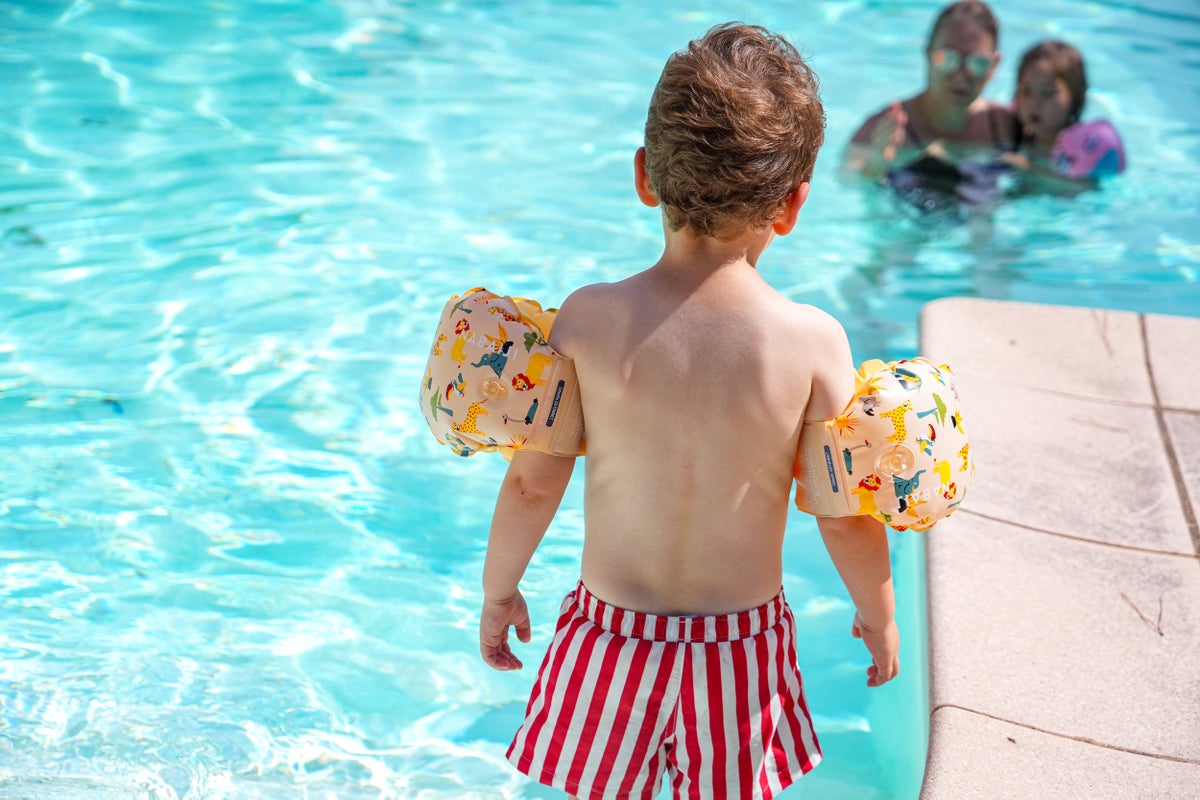
Inflatable water wings and cute animal-shaped floaties are pool toys, not safety devices. They provide zero protection against drowning and can easily slip off or deflate. When non-swimmers are near water outside of a direct, hand-holding scenario, they require a Coast Guard-approved personal flotation device.
The Cost of Silence
The rise in pediatric drowning is not an act of God. It is a systemic failure driven by aggressive marketing of backyard pools, unrealistic expectations of human endurance, and a refusal to modernize safety regulations.
Until society stops treating child drownings as tragic individual accidents and starts recognizing them as predictable failures of environmental design and public policy, the death toll will continue to climb. The water does not negotiate, and it does not forgive a moment of distraction.