Malaysia’s inaugural Hyrox fitness race is facing intense public and regulatory friction over a beer sponsorship deal, exposing a fundamental clash between global sports commercialization and local cultural sensitivities. As international endurance franchises expand rapidly across Southeast Asia, the standard Western playbook of pairing high-intensity athletic events with alcohol brands is colliding head-on with Malaysia’s strict socio-religious norms and advertising laws. For local organizers, the controversy threatens both public goodwill and official permitting before a single athlete crosses the starting line.
The Anatomy of a Commercial Mismatch
Global fitness races operate on tight margins. Staging a Hyrox event requires renting massive indoor convention centers, shipping tons of specialized equipment like SkiErgs and sleds, and coordinating thousands of heat times down to the second. Ticket sales cover the baseline, but corporate sponsorships generate the real profit.
In Europe and North America, alcohol brands—particularly non-alcoholic or low-calorie beers—have become fixtures at endurance events. They pay top dollar to own the post-race recovery zone, associating their labels with camaraderie, reward, and peak physical achievement. When Hyrox expanded into Asia, that exact commercial template traveled with the franchise rights.
Malaysia is not Europe. While non-Muslim Malaysians legally consume alcohol and major breweries operate openly in the country, the public square is governed by acute sensitivity toward Islam, the religion of the federation and the majority Malay population.
Bringing an alcohol sponsor into a mass-participation sporting event immediately triggers a localized firestorm. Critics, conservative commentators, and local advocacy groups view the pairing of an intoxicant with a health-focused athletic competition as contradictory at best and culturally provocative at worst.
How Global Franchises Miss Local Guardrails
The friction rarely stems from malicious intent. Instead, it is almost always the result of copy-paste expansion.
When a rapidly growing fitness brand licenses its event to a regional promoter, the commercial deck often comes pre-packaged with global or regional tier-one sponsors. A regional beverage conglomerate might sign a multi-country deal covering Singapore, Hong Kong, Thailand, and Malaysia in a single stroke. On a spreadsheet in a regional headquarters, this looks efficient. On the ground in Kuala Lumpur, it becomes an operational liability.
Consider a hypothetical scenario common in regional event management. A regional marketing director secures a six-figure commitment from a major brewer to activate across four Southeast Asian capitals. The contract mandates logo placement on step-and-repeat banners, digital leaderboard integration, and sampling booths near the finish line. In Singapore or Bangkok, local authorities process the permits without friction. When the same activation plan reaches Malaysian municipal councils or venue operators, red flags go up immediately.
Venue operators in Malaysia enforce strict internal guidelines regarding alcohol promotion, especially when events are marketed to general audiences or youth demographics. Even if the promoted product is a zero-alcohol variant—a common workaround used by brewers globally—Malaysian regulators and the public rarely distinguish between a brand's 0.0% SKU and its flagship alcoholic lager. The brand name itself carries the stigma.
The Regulatory Minefield in Malaysian Sports
Malaysia’s legal framework surrounding alcohol promotion is unambiguous, even if its enforcement often relies on municipal discretion. Under the Malaysian Communications and Multimedia Content Code and broader Ministry of Health guidelines, direct advertising of alcoholic beverages on broadcast media and public billboards is prohibited.
Sports present an even steeper hurdle. The Ministry of Youth and Sports has historically maintained strict stances against alcohol and tobacco companies sponsoring athletic events, viewing such partnerships as fundamentally incompatible with national health objectives and youth development.
The Zero-Alcohol Loophole Fails the Public Test
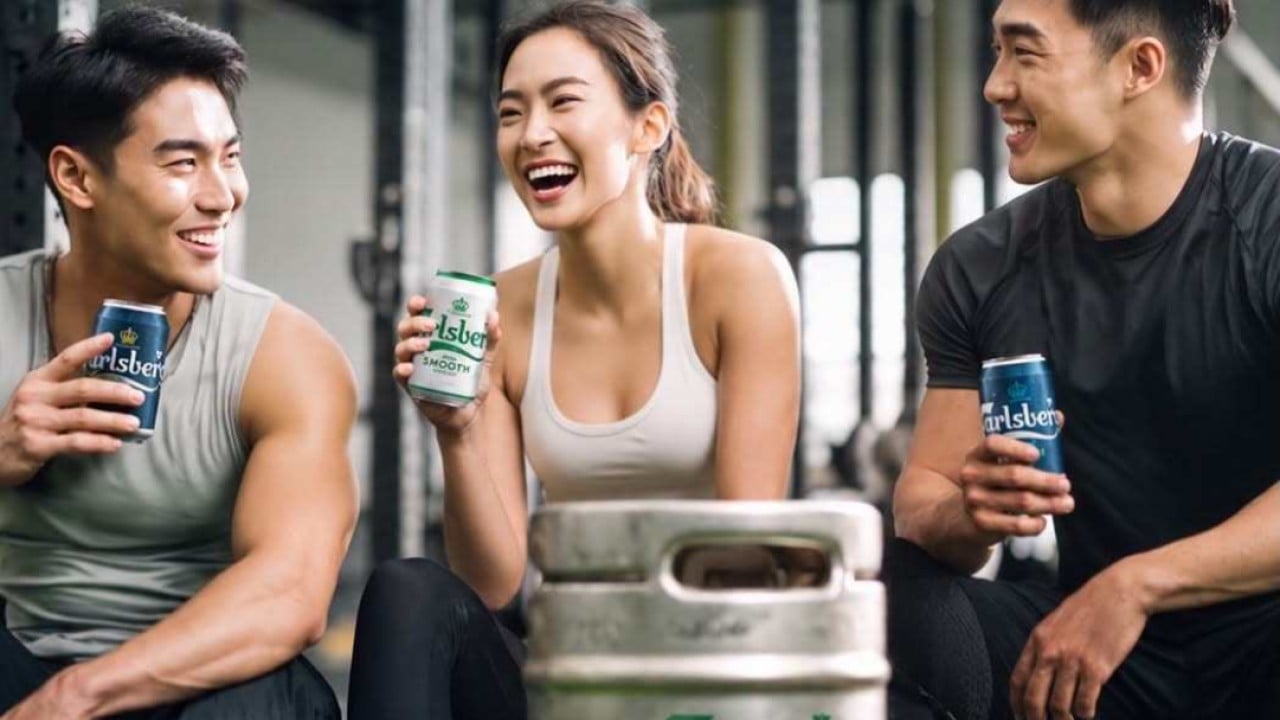
Global brewers frequently attempt to bypass these restrictions through surrogate marketing. By launching alcohol-free beers under the exact same brand name, typography, and color palette as their alcoholic products, companies claim they are merely promoting a soft drink or a post-workout isotonic alternative.
In Western markets, this distinction satisfies regulators. In Malaysia, it routinely backfires.
Social media backlash in Malaysia moves fast and carries significant political weight. Once images of promotional materials linking a local fitness event to a beer brand circulate online, nuance disappears. Public discourse does not pause to examine whether the cans at the finish line contain 0.0% or 5.0% alcohol by volume. The narrative immediately hardens into an accusation that organizers are normalizing alcohol consumption within a family-friendly sports environment.
The Athlete Demographic Dilemma
To understand why this row cuts so deep, you have to look at who actually competes in Hyrox. Unlike underground powerlifting meets or niche ultra-marathons, Hyrox markets itself as the fitness race for everybody.
The demographic in Malaysia reflects this broad appeal:
- Corporate professionals looking for a structured training goal.
- Hijab-wearing Muslim women who form one of the fastest-growing segments of the boutique gym and functional fitness boom in Kuala Lumpur and Selangor.
- CrossFit and functional training enthusiasts accustomed to tight-knit, inclusive gym communities.
- Amateur runners transitioning into hybrid strength-endurance formats.
Muslim athletes represent a massive, vocal, and deeply engaged portion of the Malaysian fitness market. Many train at Muslim-owned gyms where halal lifestyle principles dictate everything from the supplements sold at the front desk to the music played during classes.
When a flagship event like Hyrox attaches itself to a beer sponsor, it forces a significant portion of its core customer base into an uncomfortable moral compromise. Athletes who have spent months training and hundreds of ringgit on registration fees suddenly find themselves questioning whether participating means endorsing a brand that violates their personal beliefs. Some threaten boycotts. Others demand refunds. Gym owners who organized group sign-ups face pressure from their own members to pull out.
Historical Precedents Organizers Ignored
This controversy did not happen in a vacuum. Malaysia’s corporate and sporting sectors have experienced repeated, high-profile collisions over alcohol sponsorships over the past decade.
In 2024, a major uproar erupted over a brewery’s long-standing involvement in charity fundraising concerts for Chinese vernacular schools. Despite the program having operated quietly for decades to raise millions for education, viral photos of mock checks bearing a beer logo ignited a national political debate, forcing cabinet-level discussions and immediate policy reviews.
Earlier instances in Malaysian football and motorsports saw similar outcomes. Event organizers who assumed that keeping alcohol confined to VIP lounges or non-Muslim hospitality suites would insulate them from criticism quickly learned otherwise. In an era where every attendee carries a smartphone, a single photo of an athlete standing in front of a beer-branded backdrop can trigger demands for license revocations from local authorities.
For an incoming sports franchise, failing to study these precedents is a critical lapse in due diligence. You cannot import a commercial model into a market without auditing how identical sponsorships have fared in adjacent local industries.
The Financial Trap for Local Promoters
Once a sponsorship row goes public, local event organizers find themselves trapped between two unforgiving forces.
On one side sits the corporate sponsor. The brewery has signed a binding contract, likely paid an upfront deposit, and expects the brand visibility it was promised. Pulling their logos down days or weeks before the event constitutes a breach of contract, inviting legal disputes, financial penalties, and the loss of a lucrative commercial partner.
On the other side sit regulators, venues, and athletes. If the organizers hold firm and keep the sponsor, they risk losing municipal event permits, facing protests at the venue doors, or suffering a wave of athlete withdrawals that could permanently damage the brand’s reputation in the country.
The Cost of Crisis Management
Navigating this standoff drains resources that should be spent on race operations. Instead of refining heat schedules, calibrating judging standards, and ensuring athlete safety, leadership teams are forced into emergency crisis management.
Every hour spent drafting apologetic press releases, negotiating contract exits with sponsors, or meeting with local council officials to save a venue booking is an hour taken away from delivering a world-class race. Worse, the controversy overshadows the athletic achievement of the competitors. The headline shifts from the growth of hybrid fitness in Southeast Asia to a cultural dispute over beer.
Rethinking Event Monetization in Southeast Asia
The Hyrox beer row serves as a blunt warning for every international sports and fitness brand eyeing expansion into Malaysia, Indonesia, and Brunei. The era of assuming global sponsorship deals can be applied uniformly across Asia is over.
Successful operators in the region have already adapted their commercial playbooks. Instead of relying on alcohol or high-sugar beverage giants, they target categories that align seamlessly with both athletic performance and local cultural norms:
- Isotonic and electrolyte brands with certified halal status, which offer natural sampling opportunities at finish lines without regulatory friction.
- Athletic apparel and footwear companies looking to capture the booming Southeast Asian activewear market.
- Consumer electronics and wearable tech brands eager to put fitness trackers and recovery devices directly onto the wrists of data-obsessed hybrid athletes.
- Automotive and financial services firms seeking association with affluent, health-conscious urban demographics.
These sectors provide the exact same capital injection as breweries, minus the reputational volatility. More importantly, they allow every athlete—regardless of background or belief—to stand on the podium and pose for finish-line photos without hesitation.
The Path Forward for Fitness Franchises
Global headquarters must decentralize their sponsorship approvals. Regional licensing agreements need explicit clauses allowing local promoters to veto or substitute global tier-one sponsors when those partnerships conflict with local laws or cultural standards.
Before a single promotional graphic is published in a new market, organizers must run their commercial deck past local legal counsel and cultural advisors—not just marketing executives. If a sponsor requires a lengthy explanation about why their product is technically acceptable under a regulatory loophole, that sponsor does not belong on the banner.
Malaysia’s debut Hyrox race will likely proceed, bolstered by the undeniable enthusiasm of a fitness community hungry for international competition. Yet the controversy surrounding its launch leaves an indelible mark on the industry. In Southeast Asia, respecting the local cultural contract is no longer just a matter of good etiquette—it is the baseline requirement for staying in business.