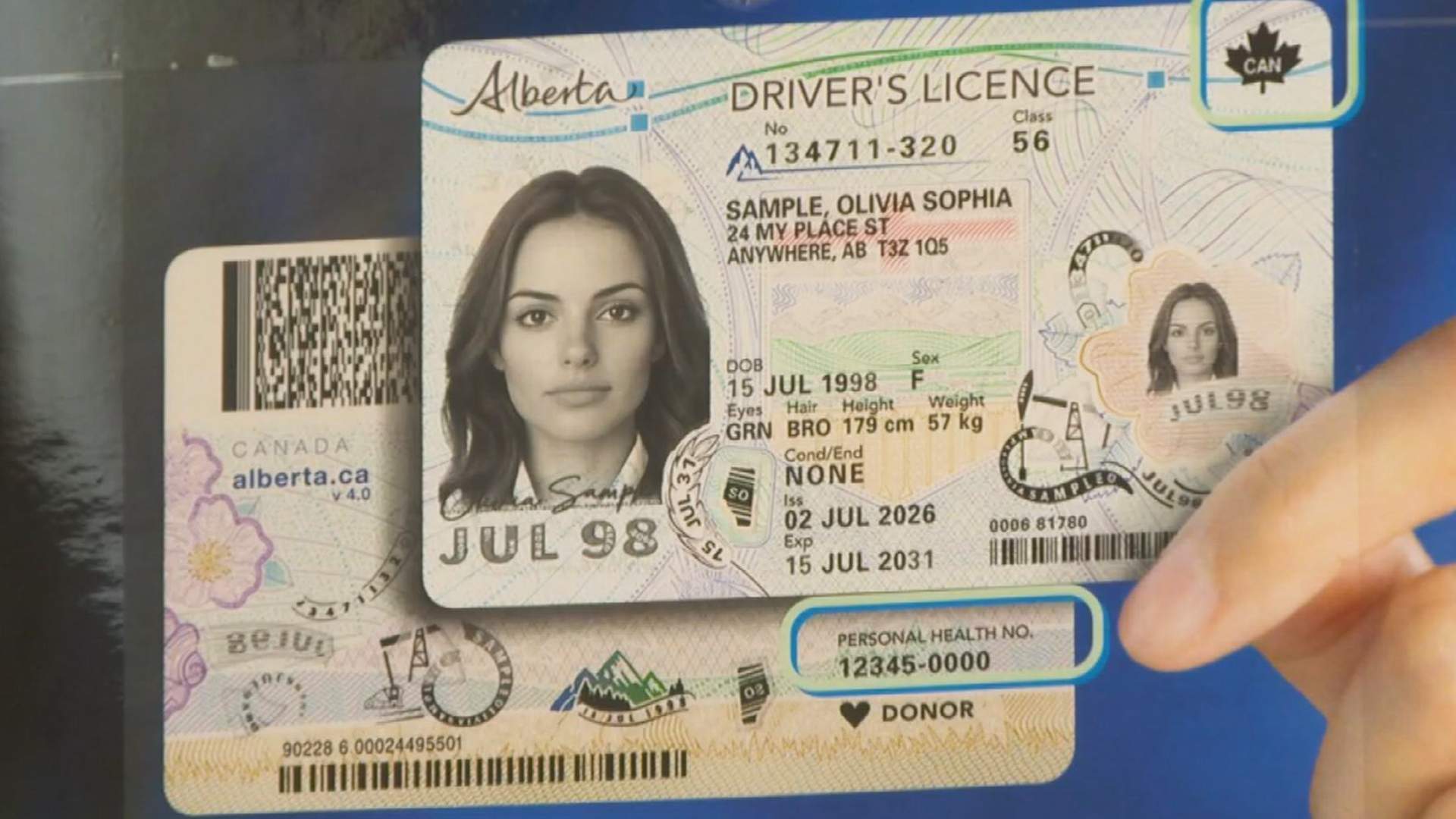
Alberta quietly tightened its identification rules for driver’s licence renewals, triggering widespread administrative headaches across the province before adding three targeted exemptions to stop eligible residents from being stranded without valid ID. Under the updated framework, drivers renewing or replacing their cards face stricter proof-of-residency and legal-status verification requirements—a policy shift that caught thousands of long-term residents, seniors, and rural Albertans off guard at registry counters. To relieve the bottleneck, Service Alberta introduced three specific exemptions covering verified senior citizens, individuals with documented medical or mobility barriers, and residents caught in federal immigration processing backlogs.
The sudden friction at registry offices across Calgary, Edmonton, and smaller municipalities did not happen in a vacuum. For years, provincial transportation authorities and registry agents operated under a system that prioritized convenience at the counter, relying heavily on existing database records once a driver had initially established their identity. When the province moved to align its credentialing standards with heightened federal anti-fraud benchmarks and cross-border security expectations, that institutional muscle memory broke down overnight.
Why Routine Renewals Suddenly Became an Obstacle Course
Walk into any Alberta registry office on a Tuesday morning, and you will see the exact point where policy design collides with human reality. Under the tightened rules, walking up to the counter with an expiring plastic card and a credit card is no longer enough for large segments of the population. Applicants have increasingly been required to re-verify foundational documents—proving Canadian citizenship, permanent residency, or lawful entitlement to remain in the country, alongside current physical residency in Alberta.
On paper, asking citizens to prove who they are and where they live sounds entirely reasonable. In practice, administrative systems rarely account for the messy paper trails of real life.
Consider what happens to a resident who has lived in the same Red Deer bungalow for forty years. Their original birth certificate may have been lost in a house move decades ago, damaged in a basement flood, or issued under a maiden name that requires a chain of marriage certificates to link to their current legal identity. Under the stricter verification protocols, registry clerks—who face strict compliance audits and potential penalties for issuing non-compliant credentials—had zero discretion to wave through long-time customers they personally recognized.
The result was predictable. Clerks were forced to turn away valid, lifelong drivers over missing secondary paperwork. Those drivers then had to apply for replacement vital statistics documents, wait weeks or months for processing, and pay additional administrative fees simply to renew a licence they had held without incident for half a century.
Breaking Down the Three New Alberta Driver’s Licence Exemptions
Facing mounting complaints from registry agents, municipal leaders, and frustrated constituents, provincial officials carved out three distinct exemptions designed to clear the worst logjams without scrapping the underlying security overhaul.
1. The Long-Term Senior Verification Exemption
The first exemption directly addresses older Albertans who have held an active provincial driver’s licence or identification card continuously for decades. Seniors frequently bear the brunt of sudden documentation mandates because older vital records are harder to retrieve, and many no longer hold active passports that would otherwise satisfy primary identity checks.
Under this exemption, eligible seniors with an established, uninterrupted provincial driving record are shielded from having to re-produce foundational citizenship or birth records during a standard renewal, provided their existing file shows no unresolved identity flags or changes to their legal name. Rather than forcing an 82-year-old in Lethbridge to track down a mid-century provincial birth registry extract just to drive to the grocery store, registry agents can rely on the historical integrity of the existing motor vehicle database.
2. The Medical and Mobility Hardship Exemption
Strict in-person verification rules create an immediate crisis for residents who cannot physically stand in line at a registry office or travel to government service centers to gather replacement documents. The second exemption establishes an alternative verification pathway for applicants with documented medical conditions, severe disabilities, or mobility restrictions.
When supported by appropriate medical attestation or existing provincial accessibility records, these applicants can complete renewals through authorized representatives or modified verification workflows without triggering automatic rejection for missing secondary residency proofs. It closes a glaring equity gap where the people most dependent on valid government photo identification to access healthcare and social services were the ones least able to navigate the new bureaucratic hurdles.
3. The Federal Immigration Processing Bridge Exemption
The third exemption tackles one of the most contentious friction points in modern Canadian licensing: the gap between federal immigration timelines and provincial credential expiration dates. Temporary foreign workers, international students, and permanent residency applicants in Alberta routinely experience months-long delays while waiting for Immigration, Refugees and Citizenship Canada (IRCC) to issue renewed work permits, study permits, or permanent resident cards.
Previously, if a worker’s physical permit expired while their renewal application sat in a federal queue, their Alberta driver’s licence hit a hard wall. Even though federal law grants these individuals maintained status—allowing them to continue living and working legally in Canada while awaiting a decision—provincial registry systems often rejected their renewal applications due to the lack of a new physical expiry date.
The bridge exemption allows eligible applicants to present official federal acknowledgment receipts and proof of ongoing maintained status to secure temporary or conditional licence validity, preventing them from losing their ability to commute to work or maintain valid auto insurance while waiting on Ottawa.
The Structural Tension Between Security and Access
To understand why Alberta stumbled into this mess—and why exemptions alone will not permanently eliminate registry friction—you have to look at how driver’s licences evolved. What began a century ago as a simple permit proving you knew how to operate a motor vehicle has morphed into the primary de facto national identity card in North America.
Banks, airlines, pharmacies, voting stations, and law enforcement agencies all treat a provincial driver’s licence as indisputable proof of identity, age, and address. Because the card carries so much institutional weight, provincial governments face relentless pressure from federal agencies, insurance underwriters, and law enforcement networks to harden the issuance process against identity theft and synthetic fraud.
Every time a security loophole is closed, however, the burden of proof shifts onto the legitimate applicant.
In Alberta’s privatized registry model—a system unique in Canada where private business operators deliver government licensing services under provincial oversight—that tension is amplified. Private registry agents are caught in the middle. They are the customer-facing storefront absorbing the anger of residents turned away at the counter, yet they have zero authority to bend provincial policy. When Service Alberta updates its compliance manuals without sufficient public awareness campaigns or transitional grace periods, registry staff become unpaid crisis managers.
What the Exemptions Still Fail to Solve
While the three exemptions relieve acute pressure on seniors, medically vulnerable residents, and immigrants caught in federal backlogs, they are targeted patches rather than a comprehensive fix. Several major gaps remain across the system.
First, interprovincial movers still face steep documentation cliffs. A Canadian citizen relocating to Alberta from Ontario or British Columbia who arrives without a valid passport or original birth certificate—perhaps because their documents are packed in a moving truck or locked in a safety deposit box—cannot use these exemptions to bypass initial verification. Without primary citizenship proof, they cannot exchange their out-of-province licence, which quickly cascades into problems securing Alberta health coverage and registering a vehicle.
Second, name-change chains remain a persistent trap for non-exempt adults. Anyone who has changed their surname through marriage, divorce, or personal petition and lacks an unbroken paper trail linking their birth certificate to their current name will still be stopped cold at the counter. Digital databases across Canadian provinces still do not communicate seamlessly enough to verify historical vital statistics automatically, leaving the burden entirely on the citizen to assemble physical certificates from multiple jurisdictions.
Third, rural access disparities continue to magnify every administrative delay. In urban centers, a rejected applicant can visit a vital statistics office, order a rush document, and return to a registry within days. In northern communities or remote agricultural towns, a single failed renewal trip can mean burning half a tank of fuel and taking unpaid time off work, only to be told to come back in six weeks once a mailed certificate arrives.
How Alberta Drivers Can Avoid Getting Turned Away at the Counter
If your licence is coming up for renewal within the next six months, assuming the process will work the way it did five years ago is a gamble you do not need to take. Registry veterans point to a handful of practical steps that prevent ninety percent of counter rejections.
- Check your expiry date ninety days out. Do not wait until the final week before your birthday. If your renewal triggers a secondary document audit, you need buffer time to order replacement records before your driving privileges legally lapse.
- Audit your primary ID before leaving home. If you hold a valid Canadian passport or a permanent resident card, bring it even if you think your expiring driver’s licence is sufficient. A valid passport resolves almost every citizenship and foundational identity check instantly.
- Verify your proof of Alberta residency. Utility bills, bank statements, or property tax assessments must show your current physical street address—not a post office box—and match the exact legal name on your identification file.
- Confirm exemption documentation in advance. If you qualify under the medical hardship rule or the federal immigration bridge exemption, call your local registry office ahead of time to confirm which specific federal receipts or medical forms their compliance system requires.
Provincial licensing rules will only grow stricter as digital identity verification and fraud-prevention standards tighten across North America. Until Alberta builds an automated back-end system capable of verifying vital statistics without forcing citizens to act as their own paper couriers, the burden of proof remains squarely on the driver standing at the counter.