The transition of capital from heavy industrial manufacturing into land-based self-sufficiency remains one of the most effective risk-mitigation strategies in economic history. In 1906, Robert Moran executed a textbook liquidity event, selling the Moran Brothers Company shipyard in Seattle for a reported $3.5 million. Rather than reinvesting into competing maritime enterprises or speculative urban real estate during a period of intense regional expansion, Moran redirected his capital reserves toward an isolated island ecosystem in the San Juan archipelago. This move transformed a high-stress industrial operator into an early pioneer of capital preservation, infrastructural autonomy, and conservation economics.
The Macroeconomic Mechanics of the 1906 Industrial Exit
To understand the magnitude of a $3.5 million valuation in 1906, one must evaluate the structural realities of Pacific Northwest heavy industry at the turn of the twentieth century. The regional economy was expanding rapidly, fueled by the Klondike Gold Rush, transcontinental railroad connections, and maritime trade routes extending across the Pacific Rim. Moran Brothers Company was not a boutique workshop; it was a vertically integrated shipbuilding and heavy engineering titan capable of constructing complex naval vessels, including the battleship USS Nebraska, launched in 1904.
Shipbuilding during this era operated under extreme capital expenditure cycles. Yards required massive fixed assets, specialized dry docks, skilled labor unions, and raw material inputs subject to severe price volatility. Furthermore, heavy manufacturing exposed operators to intense sovereign risk, as government defense contracts dictated cash flow timing while exposing balance sheets to political friction and technological obsolescence.
Moran faced a classic founder dilemma. Scale demanded larger capital inputs, tighter operational margins, and relentless physical strain. The physical and mental toll of managing thousands of workers, municipal political pressures from his prior tenure as Mayor of Seattle, and complex federal contracting compliance pushed his operational capacity to its limits. When a medical professional issued a terminal cardiac prognosis in 1905, predicting rapid system failure from chronic overwork, it served as an undeniable trigger for an immediate strategic exit.
The subsequent sale of the shipyard to a New York syndicate for $3.5 million converted high-beta, illiquid industrial risk into highly liquid, low-risk capital assets at precisely the right macro juncture. The transaction insulated Moran from the looming capital freezes and economic contractions that preceded World War I, proving that strategic liquidation under duress can outperform continued operational exposure when systemic fatigue sets in.
Capital Allocation and Infrastructural Autonomy on Orcas Island
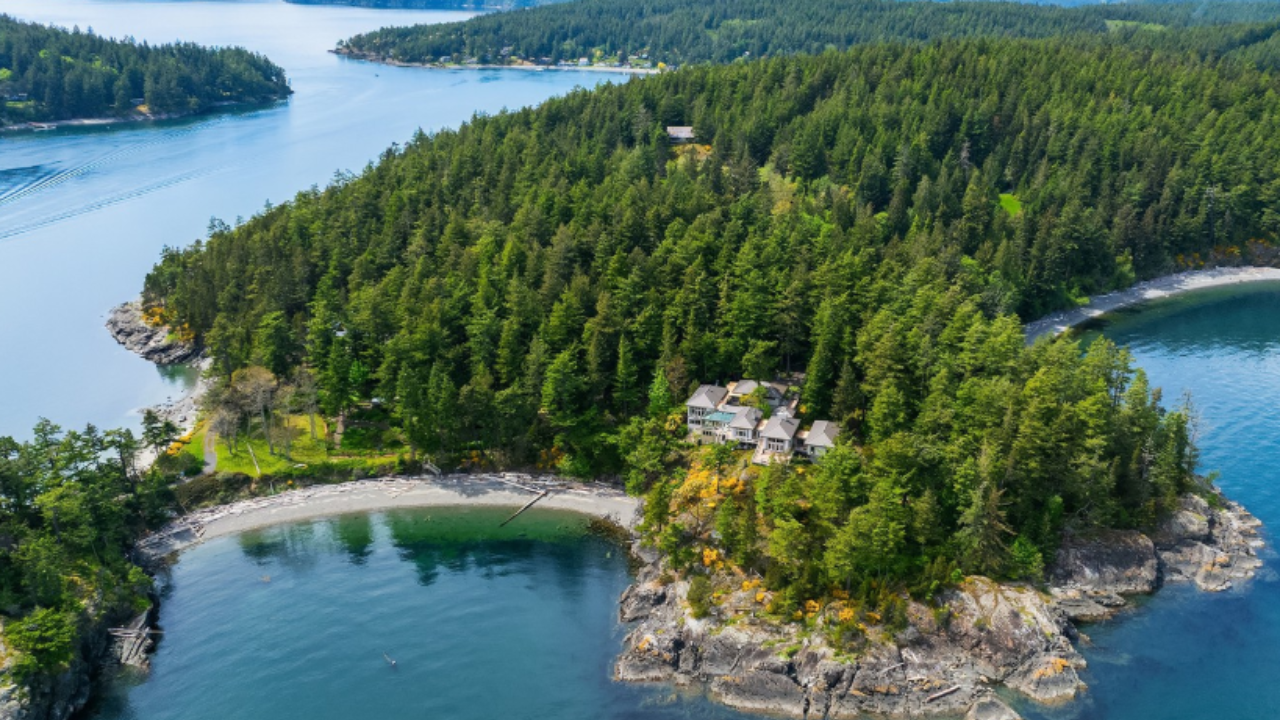
Moving to Orcas Island did not represent passive retirement or luxury consumption; it represented an exercise in industrial-scale self-reliance. Moran did not buy a scenic summer cabin. He acquired an initial footprint that expanded to roughly 7,800 acres, encompassing forests, lakes, and rugged shoreline.
Rather than depending on external supply chains or municipal utilities, Moran applied his engineering background to construct an entirely closed-loop ecosystem at Rosario. The estate required independent infrastructure to sustain its operations in total isolation from the mainland grid. Moran engineered a comprehensive hydroelectric power system, utilizing the elevation differential between Mountain Lake and Cascade Lake. By constructing concrete dams and artificial water courses, he channeled water through turbines that generated continuous electrical current for the mansion and surrounding facilities—a hydroelectric plant that remains functionally integrated into the property's utility framework over a century later.
This infrastructure design reflects a core economic principle: reducing operational dependency minimizes external vulnerability. By building a private water system, a marine dock, local lumber processing capabilities, and localized energy generation, Moran insulated his personal balance sheet from utility inflation, supply chain bottlenecks, and municipal taxation pressures. The capital expenditure required to build these systems upfront was heavily offset by near-zero marginal living costs thereafter.
The Mechanics of Real Estate Stewardship and Land Banking
The acquisition and subsequent disposition of the Rosario estate offer a case study in land banking and the friction of public-private wealth transfer. Moran initially consolidated vast tracts of pristine forest to protect them from industrial logging and commercial exploitation, drawing inspiration from contemporary conservation philosophies. However, holding thousands of acres of undeveloped timberland incurred significant carrying costs, property taxes, and maintenance overhead without generating cash flow.
By the early 1920s, the economic reality of maintaining an expansive private estate collided with changing personal priorities, particularly following the shifting demographics of his household and advancing age. Moran attempted to divest a massive portion of his land holdings to the state of Washington to establish a permanent public sanctuary.
The transaction encountered severe bureaucratic friction. Public agencies moved slowly, lacking the statutory framework, budgetary allocation, and management infrastructure required to absorb thousands of acres of remote forestland. Moran had to repeatedly adjust his strategy, downsizing the initial gift and removing restrictive covenants to eliminate the administrative blocks stalling acceptance. In 1921, the state finally accepted 2,731 acres, establishing the foundation for Moran State Park.
This negotiation illustrates a recurring bottleneck in philanthropic asset transfers: administrative capacity constraints on the recipient side often outweigh the donor's willingness to give. Donors seeking to convert private real estate into public commons must account for the operational readiness of public institutions, absorbing transaction delays and legal structuring costs to ensure execution success.
The Economic Legacy of Founder Burnout Mitigation
The trajectory of Robert Moran provides an empirical counter-narrative to the modern glorification of endless professional hustle. Most industrial leaders of his era pursued expansion until corporate bankruptcy or physical collapse forced an involuntary exit. Moran diagnosed his own operational fatigue, recognized the diminishing returns of scaling further, and executed a clean exit while his enterprise possessed peak asset value.
The decision to transition from heavy urban manufacturing to remote ecological stewardship preserved both his personal capital and his biological longevity. While his physicians predicted death within months in 1905, Moran lived until 1943, surviving for nearly four decades post-exit. The radical reduction in cortisol-inducing environmental stressors, combined with physical labor focused on construction and land stewardship rather than corporate crisis management, altered his physiological trajectory entirely.
Strategic Execution Blueprint
- Audit Operational Strain Continuously: Measure whether the marginal return on executive stress exceeds the asset appreciation of the enterprise. If organizational scaling requires personal deterioration, the asset is mispriced.
- Execute Liquidity Events Prior to Terminal Burnout: Do not wait for structural market contractions or absolute physical failure to divest. Capitalize operational success when market demand for heavy industrial assets peaks.
- Prioritize Infrastructural Autonomy: When deploying capital into residential or long-term assets, construct localized utility loops—power generation, water capture, and resource self-reliance—to eliminate external dependencies and long-term cost volatility.
- Anticipate Institutional Friction in Philanthropy: When attempting large-scale asset donations or land transfers to public entities, audit the recipient's operational capacity, budget constraints, and legal readiness to absorb the overhead before initiating the transfer.
- Optimize Asset Liquidity Over Status: Trade high-beta, labor-intensive industrial holdings for liquid reserves and durable real assets that compound security rather than prestige.