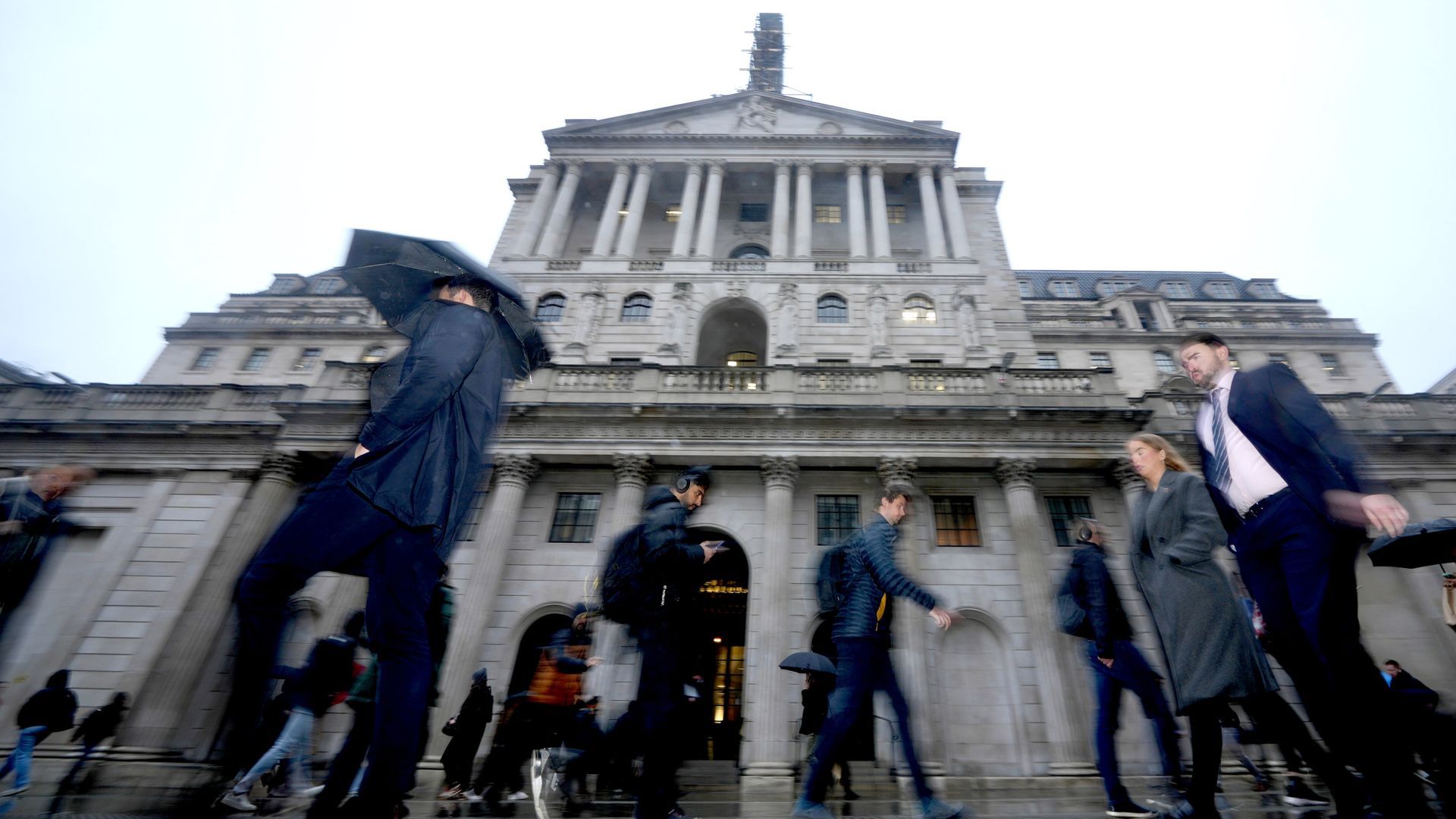
The Bank of England doesn't need to jack up borrowing costs any further this year. That is the verdict from the International Monetary Fund, which just wrapped up its latest health check on the UK economy.
If you are a homeowner sitting on a variable-rate mortgage or a business owner trying to budget for the next twelve months, this provides a rare moment of clarity. The global financial watchdog believes the current base rate of 3.75% is already heavy enough to do its job. Pushing it higher right now would risk breaking an economy that is already dealing with some nasty geopolitical headwinds.
But don't start celebrating a wave of rapid interest rate cuts just yet. The IMF isn't saying the battle against inflation is won. Instead, it is suggesting that a long, flat plateau is the safest path forward.
The logic behind holding the line
The central argument from the IMF is straightforward. The monetary policy currently in place is already restrictive enough to drag inflation back down to the 2% target over the medium term. Think of it like hitting the brakes on a heavy vehicle. You don't need to keep pushing the pedal harder if the current pressure is already bringing the truck to a halt before the intersection.
We saw a stronger-than-expected economic start to the year, with a solid 0.6% GDP expansion in the first quarter. Because of that early momentum, the IMF actually bumped up its overall 2026 UK growth forecast to 1.0%, a slight rise from its previous 0.8% estimate. But that upgrade hides a rougher reality under the hood.
The ongoing war in the Middle East is driving up global energy prices. Higher energy bills act like an administrative tax on consumers and businesses alike. They drain disposable income and drive up production costs. The IMF expects this energy shock to drag down growth for the rest of the year and push headline inflation up toward 4% by the end of 2026.
Usually, spiking inflation triggers a knee-jerk reaction from central banks to hike rates. The IMF is explicitly telling Threadneedle Street to resist that urge. Why? Because this specific bout of inflation isn't being driven by an overheated domestic economy where people have too much cash to burn. It is an external supply shock. Jacking up borrowing costs can't fix global oil or gas pipelines, but it can easily push a fragile domestic economy into a ditch.
Reading between the lines for your money
What does this mean for your personal finances or business strategy? The era of rapid interest rate adjustments is pausing, leaving us on a high plateau.
- For borrowers and mortgage holders: The threat of immediate, painful increases to your monthly payments has dropped significantly. If you are on a tracker or standard variable rate, your outgoings should remain stable for the rest of the year. If you need to refinance a fixed-rate deal soon, you can plan around the current 3.75% baseline without factoring in a sudden spike.
- For savers: The peak yields on savings accounts are likely behind us, but returns will remain decent for a while. Lock in fixed bonds now if you want to preserve these yields, because once the energy shock fades in late 2027, the next major directional move for rates will be downward.
- For businesses: Capital allocation decisions just got slightly less volatile. You don't have to price in a 4.5% or 5% base rate into your worst-case scenarios for 2026. However, your cost of capital is going to stay high for longer than previously hoped. Cheap money isn't coming back anytime soon.
The hidden risks that could spoil the plan
The IMF advice is built on an assumption that energy prices will ease off in 2027. If the geopolitical situation deteriorates further, all bets are off.
The real danger the Bank of England is watching isn't the initial spike in oil or gas prices. It is the second-round effects. When energy bills stay high, workers naturally demand higher wages to keep their heads above water. Businesses then raise their prices to cover those higher wage bills. This creates a domestic inflation loop that is incredibly difficult to break.
The IMF made it clear that while holding rates steady is the ideal baseline, the Bank of England must remain data dependent. If workers and businesses start a wage-price spiral, the central bank will have to respond forcefully. That means rate hikes are still on the table as an emergency backup plan.
Adding to this headache is a sudden surge in British political instability. Speculation over the Prime Minister's future has already pushed 10-year government borrowing costs to heights not seen since 2008. When government bond yields rise, it puts upward pressure on fixed mortgage rates, regardless of what the central bank does with the base rate. The IMF warned that this domestic political drama could easily damage consumer confidence and spook corporate investors, dragging economic growth below that 1.0% projection.
Your tactical financial checklist
Stop waiting for a major drop in borrowing costs to rescue your budget or your business plan. It isn't happening this year. The IMF wants a long pause, and the Bank of England is likely to give them exactly that.
Audit your debt stack right now. If you have corporate loans or personal debts rolling off fixed terms in the next six months, stress-test your cash flow against a flat 3.75% base rate stretching deep into next year.
For business leaders, look at managing your input costs rather than banking on revenue growth from an enthusiastic consumer base. With the economy slowing to a crawl under the weight of high energy prices, top-line growth will be hard to find. Focus on operational efficiency, lock in your energy contracts where possible to avoid volatility, and use this rate plateau to build a cash cushion. Stability is the word of the day, so make sure your financial planning reflects it.