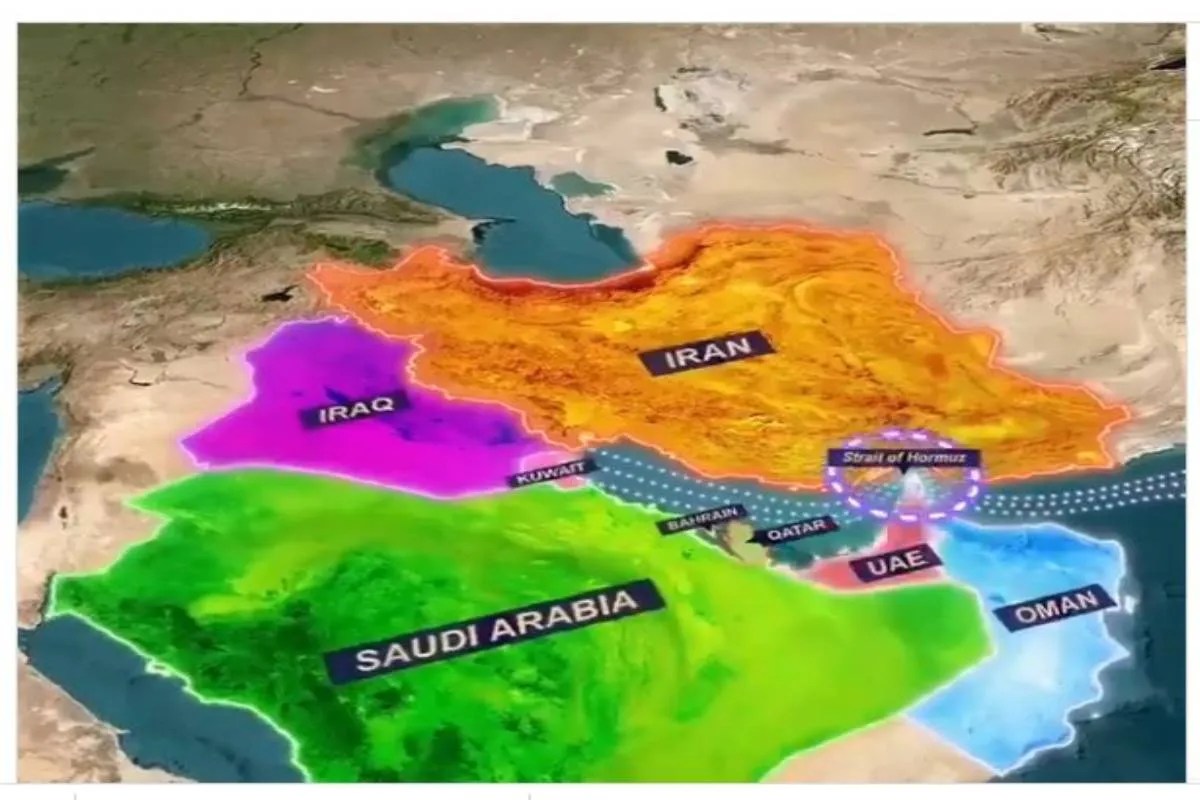
Geography is a cruel master. You can sign as many MoUs as you want in air-conditioned suites in New Delhi or Riyadh, but you cannot legislate away a mountain range, and you certainly cannot "disrupt" a choke point by drawing a line on a map that crosses three active conflict zones.
The current obsession with the India-Middle East-Europe Economic Corridor (IMEC) as a "Hormuz-killer" is the kind of lazy thinking that keeps consultants in business and keeps logistics costs high. The narrative is simple: the Strait of Hormuz is a liability, the Red Sea is a shooting gallery, so let’s just put everything on a train.
It sounds visionary. In reality, it’s a logistical nightmare masquerading as a strategic masterstroke.
The Myth of the Multimodal Shortcut
The central premise of IMEC—and the "new lifeline" touted by the competition—is that we can bypass maritime bottlenecks by offloading containers in the UAE, railing them across Saudi Arabia and Jordan, and reloading them in Israel for shipment to Europe.
If you have ever managed a supply chain, your skin should be crawling.
Each "touch" in logistics—every time a container is moved from a ship to a crane, a crane to a rail car, and then back again—adds cost, time, and a massive margin for error. We call this the transshipment penalty. In a world where margins are measured in cents per TEU (Twenty-foot Equivalent Unit), the IMEC route introduces at least four extra transshipment points compared to the straight shot through Suez.
To make IMEC competitive, the rail transit would have to be essentially free, or the Suez Canal would have to be permanently closed. Neither is happening. Egypt isn't going to sit idly by while its primary source of foreign currency is bypassed; they will drop tolls faster than a Saudi train can hit top speed.
The Suez Canal is Not Your Enemy
The "Hormuz is dead" crowd loves to cite the vulnerability of the Strait. Sure, 20% of global oil flows through there. But look at the math of shipping. A single Ultra Large Container Vessel (ULCV) can carry 24,000 containers. To move that same cargo by rail, you would need roughly 100 trains, each a mile long.
Now, imagine the infrastructure required to process those 100 trains at the port of Haifa or Piraeus every single day. We aren't just talking about laying tracks; we are talking about building the most sophisticated, high-throughput automated terminals on the planet in a region where "stability" is a term used with heavy irony.
Sovereign Risk is the Elephant in the Room
The competitor article ignores the most basic rule of international trade: A chain is only as strong as its most volatile link. IMEC relies on the continued, flawless cooperation of India, the UAE, Saudi Arabia, Jordan, Israel, and the EU. This isn't just a trade route; it’s a 3,000-mile geopolitical hostage situation. One flare-up in the West Bank, one shift in the Saudi succession line, or one populist surge in Europe, and your "lifeline" is severed.
Investors are being told this is a "hedge" against the Red Sea crisis. It’s not a hedge; it’s a multiplication of risk. In the Red Sea, you deal with one group of rebels with drones. On the IMEC route, you deal with the customs bureaucracies, security apparatuses, and shifting political whims of five different nations.
I’ve watched companies dump billions into "alternative corridors" in Central Asia only to realize that a corrupt border guard in a "friendly" nation is more effective at stopping trade than a blockade in international waters.
The High Cost of Green Washing Logistics
There is a sub-narrative that IMEC will be a "Green Corridor." This is the ultimate distraction. Hydrogen pipelines and clean rail are great for slide decks, but they don't move the needle for a manufacturer in Chennai trying to get textiles to Berlin.
The energy required to offload, transport by rail, and reload is significantly higher than the steady-state cruise of a modern LNG-powered ship. If you want to decarbonize trade, you optimize hull designs and invest in green methanol. You don't build a massive, redundant rail network across a desert.
The Real "Masterstroke" is Digital, Not Physical
While everyone is arguing over rail gauges and port depths, they are missing the actual bottleneck: Information.
The reason the Middle East is a trade headache isn't just because of Houthi drones; it’s because the documentation, clearing, and financing of trade in the region is stuck in 1985. If you want to bypass the volatility of the Middle East, you don't build a new track. You build a unified, blockchain-backed digital customs layer that makes the physical route irrelevant because the cargo never gets stuck in a warehouse.
Why You Should Be Skeptical of the "Lifeline"
Let’s run a thought experiment. Suppose the IMEC is completed. It’s 2032. A ship from Mumbai arrives at Jebel Ali.
- Port Delay: The ship waits 12 hours for a berth because the "Green Rail" schedule is backed up.
- The Transfer: Cranes move containers to a rail yard. Cost: $150 per box.
- The Transit: The train crosses 2,000 km of desert. Maintenance on these tracks is a nightmare due to heat-induced rail expansion and sand encroachment.
- The Border: The train hits the Jordan-Israel border. A sudden diplomatic "cooling" results in a "security inspection" that lasts three days.
- The Final Load: The container reaches Haifa. It waits for a feeder ship to take it to Italy.
Total time saved? Maybe two days. Total cost added? $600-$800 per TEU.
In what universe does that win?
The only people who win are the construction firms and the politicians cutting ribbons. For the actual shippers—the people who move the world’s goods—this "lifeline" is an expensive insurance policy they will never actually want to use.
The Pivot Nobody Admits
The real reason for the push behind IMEC isn't trade efficiency. It’s a desperate attempt to create a "Western" alternative to China’s Belt and Road Initiative (BRI). It’s a political project wearing a logistics hat.
When you treat infrastructure as a weapon of diplomacy rather than a tool of commerce, you end up with "White Elephants." Look at the empty ports in Sri Lanka or the underutilized rail lines in Pakistan. These are the "masterstrokes" of yesterday.
If you are a business leader, do not bank on the "Arab gamble" or the "new lifeline." The sea is still the most efficient, cost-effective, and—strangely enough—reliable way to move things from point A to point B.
The Strait of Hormuz isn't going anywhere. The Red Sea will remain the artery of the world. Everything else is just a very expensive detour through a desert of broken promises.
Stop looking for the "new route" and start fixing the old ones. The world doesn't need a new lifeline; it needs the courage to defend the ones it already has.