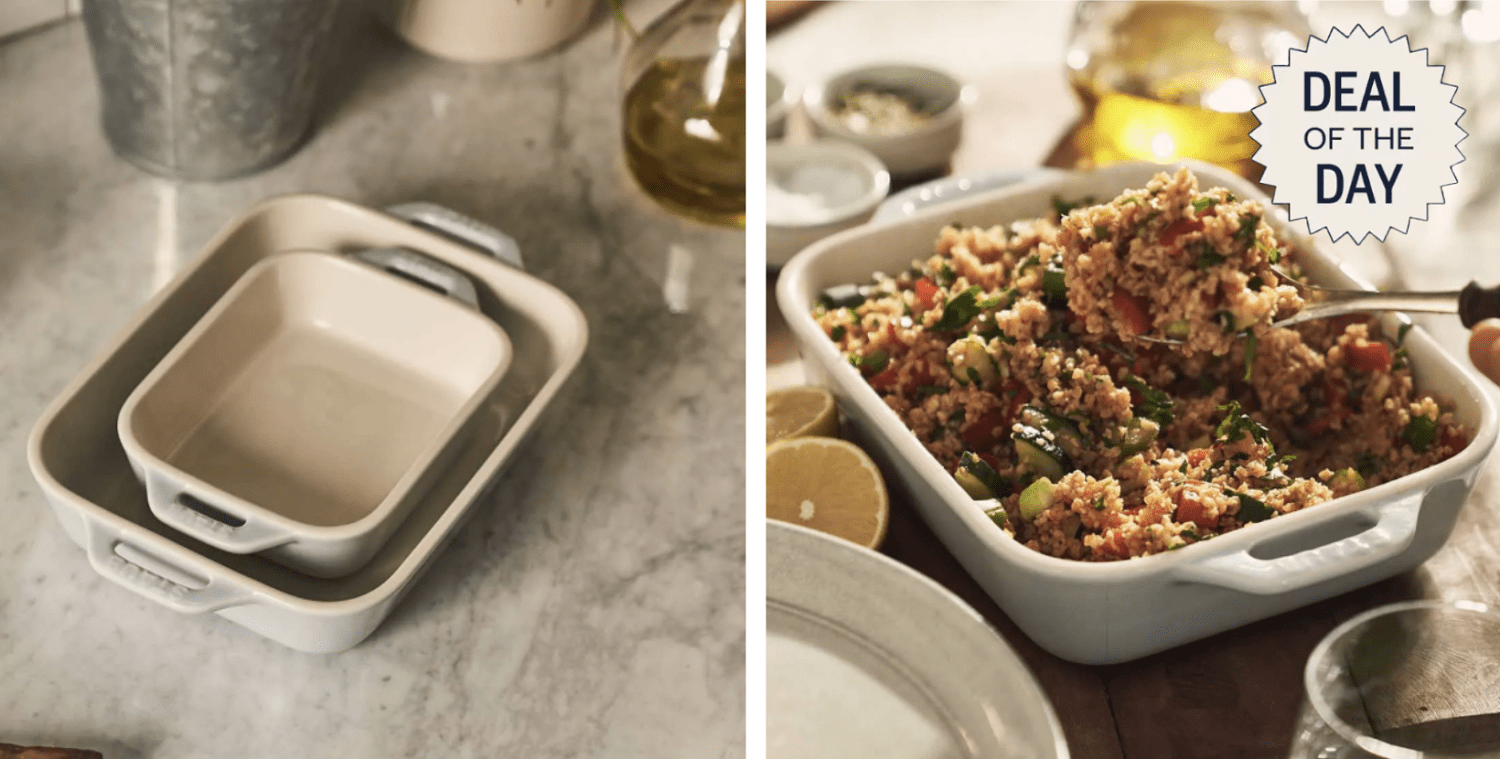
The recent retail frenzy over a Staub two-piece rectangular baker set dropping below sixty dollars across major kitchenware outlets looks like a classic consumer triumph. Shoppers are told they are snapping up a piece of legendary French-engineered culinary status for less than the cost of a modest dinner out. Media outlets have hurried to amplify the promotion, framing it as an urgent, once-in-a-season anomaly.
But this deal is not an accident, nor is it a temporary mistake by retail software. It is a highly engineered product of modern supply chain economics and brand tiering. When a premium nameplate like Staub marks down ceramic bakeware by nearly sixty percent, it reveals less about a seasonal sale and more about how luxury kitchen brands protect their highest margins while filling the lower end of the market. Understanding the mechanics behind this price drop helps clear up why these ceramic dishes are priced this way, how they differ from the company's famous cast iron, and whether the purchase actually makes sense for your kitchen.
The Chemistry Behind the Price Tag
To understand the economics of the sixty-dollar price point, you must understand the material difference between what made the brand famous and what is currently sitting in discount digital shopping carts.
The company built its reputation on heavy, enameled cast iron manufactured in France. Those Dutch ovens cost hundreds of dollars because cast iron production requires specialized foundries, intensive labor, complex multi-coat enameling processes, and steep international shipping costs for heavy freight.
[Premium Heritage Product] ➔ French Enameled Cast Iron ($200 - $400+)
[High-Volume Entry Product] ➔ Overseas Vitreous Ceramic ($50 - $100)
The rectangular baker set on sale is not cast iron. It is ceramic stoneware. While the brand designs these pieces with the same classic aesthetics, distinct handles, and rich color palettes as their flagship pots, the manufacturing reality is completely different. Stoneware is fired from clay at high temperatures, coated in a vitreous glass porcelain enamel finish, and produced at a fraction of the cost of cast iron. Most of this ceramic bakeware is manufactured in China or Portugal rather than France.
By utilizing overseas ceramic manufacturing, the parent company, Zwilling J.A. Henckels, can produce high volumes of products that carry the prestigious visual markers of the brand without the prohibitive production costs. The list price of roughly one hundred to one hundred and forty dollars is less an objective reflection of manufacturing costs and more a anchoring mechanism. It establishes a premium perception so that when the price drops to fifty-nine dollars, the consumer experiences a rush of perceived value.
The Persistent Myth of the Absolute Markdown
Retailers use price anchoring to manipulate consumer psychology. When you see a ceramic set listed with a high strike-through price, your brain categorizes the item as a luxury good that has temporarily become accessible.
The reality is that these ceramic sets are almost permanently on promotion. If you trace the pricing patterns across the retail sector over the last twenty-four months, these specific two-piece and three-piece nesting baker sets oscillate between ninety-nine dollars and fifty-nine dollars with predictable regularity. They are the gateway drugs of the premium kitchenware world.
Brands know that a consumer who might hesitate to spend three hundred and fifty dollars on a flagship cocotte will easily spend sixty dollars on a pair of baking dishes. Once those dishes are in the cabinet, the consumer is locked into the ecosystem. They see the logo every time they roast vegetables or bake a lasagna, which builds the brand familiarity required to justify a more expensive purchase later.
The sixty-dollar price point is not a loss-leader for the retailer either. Even at fifty-nine dollars, the profit margins on mass-produced ceramic stoneware remain incredibly healthy. The consumer is not beating the system. They are participating in a carefully managed distribution strategy designed to clear warehouse inventory and maintain high manufacturing volume.
Performance Realities in the Home Kitchen
Stripped of the marketing prestige and the psychological thrill of the discount, the product must still perform on the oven rack. How does an entry-level piece of stoneware hold up under actual kitchen conditions?
Stoneware behaves differently than metal or cast iron. It is a slow conductor of heat, meaning it takes longer to warm up but retains that heat for an extended period once it reaches temperature. For specific culinary applications, this is an advantage.
Where the Stoneware Excels
- Uniform Heat Diffusion: Unlike thin aluminum pans that create hot spots and scorch the bottom of a casserole, thick ceramic walls distribute heat evenly. This prevents the edges of a macaroni and cheese or a bread pudding from burning before the center is fully cooked.
- Moisture Retention: The vitreous enamel finish is completely non-porous. It prevents the clay beneath from absorbing moisture from the food, which keeps baked goods from drying out during long roasting cycles.
- Thermal Retentiveness: Because the material holds heat well, it functions effectively as serveware. A dish taken out of a four-hundred-degree oven will keep a side dish warm on a dining room table for thirty to forty minutes.
The Thermal Shock Vulnerability
The primary vulnerability of any ceramic material is thermal shock. While the marketing copy notes that these dishes can transition from the freezer to a hot oven, doing so recklessly invites structural failure.
Microscopic imperfections inside the fired clay can expand at uneven rates when subjected to sudden temperature swings. If you take a ceramic baker filled with frozen leftovers and place it directly into a preheated oven, the rapid expansion can cause the dish to crack cleanly in half. The same risk applies when placing a hot dish directly from the oven into a sink of cold water or onto a wet granite countertop.
$$T_{\text{shock}} \propto \frac{\sigma_f k}{\alpha E}$$
The ability of a ceramic material to survive sudden temperature changes depends on its tensile strength, thermal conductivity, thermal expansion coefficient, and elastic modulus. Because mass-market stoneware has a higher thermal expansion coefficient than specialized lab glass or thermal borosilicate, care must be taken regardless of the brand name stamped on the bottom.
Comparing the Competitive Alternatives
Before spending sixty dollars on a promotional set, it is worth comparing what that same capital buys across the rest of the kitchenware market. The two-piece set typically includes a small seven and a half inch baker and a medium ten and a half inch baker.
| Attribute | Staub Ceramic Set | Le Creuset Heritage Stoneware | Great Jones Hot Dish | Standard Pyrex Glass |
|---|---|---|---|---|
| Average Sale Price | $59.99 | $55.00 - $75.00 | $75.00 | $15.00 - $22.00 |
| Material Type | Vitreous Ceramic | High-Fire Stoneware | Ceramic Enameled | Borosilicate / Soda-Lime |
| Country of Origin | China / Portugal | Thailand / China | China | United States |
| Max Temperature | 572°F | 500°F | 500°F | 425°F |
| Scratch Resistance | High (Glass Enamel) | High | Moderate | High |
Le Creuset offers a comparable two-piece heritage stoneware set that frequently sees similar markdowns. Performance differences between the two are negligible; both use high-fire clay bodies with glass-enamel glazes. The decision between them usually comes down to aesthetic preference, specifically whether you prefer the blocky, traditional handles of Staub or the stepped, classic rings of Le Creuset.
For consumers focused purely on utility rather than brand prestige, classic American tempered glass or basic commercial-grade aluminum bakers offer superior thermal shock resistance at a third of the price. They lack the elegant look needed to go directly from oven to table, but they handle raw kitchen abuse far better than enameled stoneware.
The Real Cost of Cabinet Real Estate
A major oversight in fast-commerce reporting is ignoring the physical constraints of the modern home kitchen. People buy things because they are cheap, not because they have a place to put them.
This two-piece set nests together, which saves some vertical space. The handles, however, extend significantly past the rim of the dishes. While those handles make the baker safe to pull out of a hot oven with bulky mitts, they also increase the total footprint of the dish inside a cabinet or drawer.
Before purchasing, measure your storage areas. A ten and a half inch baker sounds modest, but with the handles included, the total length approaches thirteen inches. If your kitchen suffers from shallow cabinets or crowded pull-out wire baskets, these pieces end up stored in inconvenient places, which reduces the likelihood that you will actually use them.
Deciding if the Sale Matches Your Cooking Style
If you frequently cook casseroles, gratin potatoes, roasted root vegetables, or fruit crisps, a sixty-dollar investment in a heavy ceramic set is highly practical. The even heating properties improve the texture of those specific dishes in ways that metal pans cannot replicate. The scratch-resistant enamel means you can cut a piece of lasagna with a metal knife directly inside the dish without ruining the surface.
If your cooking style leans toward quick weeknight proteins, stir-fries, or sheet-pan meals, these bakers will simply collect dust. They are too deep for efficient roasting of high-moisture proteins, which will steam rather than brown when trapped inside three-inch vertical ceramic walls.
Do not let a marketing alert convince you that you are outsmarting a luxury brand. You are buying a solid, mass-produced ceramic dish that is priced exactly where it belongs. Buy it if you need the tool, but ignore the artificial urgency of the countdown timer.