China does not need to extract cesium from domestic salt lake brines to break the West's hold on the market because Beijing already owns the West's entire supply chain.
Recent industry reports detailing Chinese advancements in extracting rare alkali metals from geothermal waters and lithium-production brines have been framed as a quest for self-sufficiency. This narrative fundamentally misunderstands the geometry of the critical minerals market. For a nation to seek an alternative production method to bypass foreign dependence, it must first be dependent. In the case of cesium, China answers to no one. Through a series of quiet, highly targeted corporate acquisitions over the past decade, Chinese state-linked firms have secured an absolute monopoly over the world’s operational hard-rock cesium mines.
Western defense planners and industrial analysts frequently sound the alarm over lithium, cobalt, and rare earths. Yet cesium remains the quietest vulnerability in modern geopolitics. Without it, aircraft guidance systems fail, global positioning satellites lose synchronization, and high-pressure, high-temperature oil exploration grinds to a halt. China’s research into alternative brine-extraction technologies is not a defensive play to cut reliance on Canadian or Australian ores. It is an offensive optimization strategy designed to lower costs, maximize domestic industrial output, and cement an unassailable strategic chokehold.
The Monopolist's Chessboard
To understand why brine extraction is a luxury rather than a necessity for Beijing, one must look at where the world’s cesium actually comes from. Cesium is an exceptionally rare, highly reactive alkali metal. Economically viable deposits are almost exclusively found in a specific, highly fractionated granite pegmatite mineral known as pollucite.
Globally, only four major hard-rock cesium assets have historically mattered: the Tanco mine in Manitoba, Canada; the Bikita mine in Zimbabwe; the Sinclair mine in Western Australia; and emerging deposits in Quebec.
Look closely at the ownership structures of these assets:
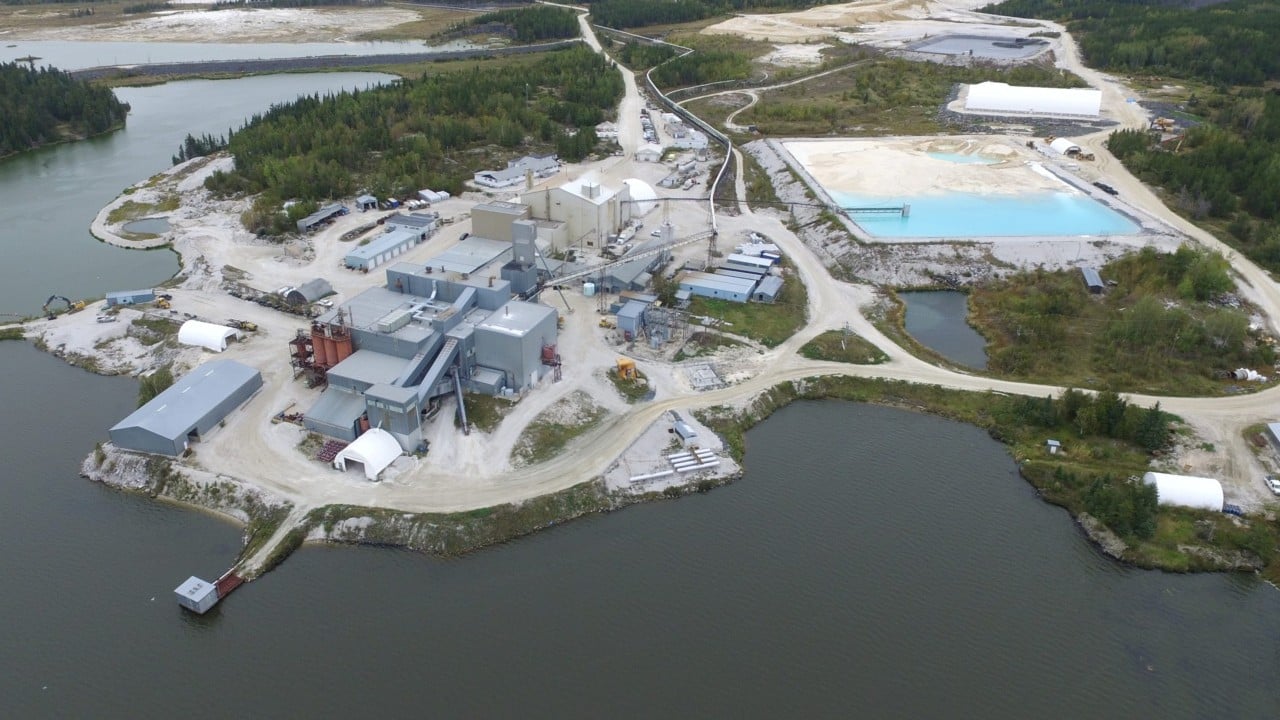
- The Tanco Mine (Canada): This operation holds the largest known historical deposit of high-grade pollucite in North America. It is owned and operated by Sinomine Resource Group, a Chinese mining conglomerate.
- The Bikita Mine (Zimbabwe): Home to massive lithium reserves and substantial cesium stockpiles, this site was acquired by Sinomine in 2022 for $180 million. Sinomine immediately poured hundreds of millions into constructing a massive critical minerals processing ecosystem here.
- The Sinclair Mine (Australia): Commercial extraction of its primary pollucite ore reserves wrapped up around 2019. The remaining stockpiles and distribution networks have consistently fed international supply routes heavily influenced by Chinese off-take agreements.
The strategic reality is stark. When a tech firm in Silicon Valley, an aerospace manufacturer in Munich, or a drilling operation in the North Sea requires refined cesium compounds, they are ultimately buying from Chinese-controlled entities. Tanco and Bikita feed Chinese processing hubs.
The United States Geological Survey reports that the West is 100% net import reliant for cesium minerals. It notes that there is no primary cesium mine production outside of Chinese-controlled operations. The narrative that China is desperately trying to engineer its way out of a Canadian or Australian resource trap is a myth. China is the trap.
The Chemistry of Dominance
If China already controls the global supply of hard-rock pollucite ore, why invest millions into extracting cesium from the complex, low-grade brines of its domestic salt lakes? The answer lies in chemical economics and the inherent limits of mining.
+----------------------------------------------------------------------+
|                      GLOBAL CESIUM REFINING PIPELINE                 |
+----------------------------------------------------------------------+
|                                                                      |
|  [Hard-Rock Pollucite] ---> (Tanco / Bikita Mines: China Owned)      |
|                                     |                                |
|                                     v                                |
|  [Domestic Brines/Runoff] --> (Jiangxi / Qinghai Chemical Plants)     |
|                                     |                                |
|                                     v                                |
|  [Monopolized Processing] -> Fine Cesium Compounds (Cs2CO3, Formate) |
|                                                                      |
+----------------------------------------------------------------------+
Hard-rock mining is a brutal, depleting business. At the Tanco mine in Manitoba, decades of continuous room-and-pillar mining have left the richest cesium veins trapped in structural rock pillars that hold up the mine’s ceiling beneath Bernic Lake. Extracting those pillars carries immense engineering risks and environmental hurdles, prompting complex negotiations regarding lake drainage and structural stability. Hard rock must be blasted, crushed, milled, and subjected to aggressive acid leaching to convert cesium oxide into industrial-grade chemicals.
Brine tech offers a radically different paradigm. In regions like Qinghai, Tibet, and Jiangxi, large-scale lithium extraction from salt lakes and lepidolite mining generates massive volumes of liquid waste and industrial runoff. These liquids contain trace amounts of rubidium and cesium. Historically, these elements were treated as impurities and discarded into tailings ponds because their low concentrations made separation incredibly difficult.
By perfecting selective ion-exchange resins and advanced solvent extraction techniques, Chinese chemical engineers are turning an environmental liability into a secondary revenue stream. They are not replacing hard-rock mining. They are vacuuming up the crumbs left behind by their existing operations.
This process yields a massive cost advantage. The energy footprint of pumping and filtering brine is a fraction of the energy required to crush solid granite. By commercializing brine-extraction technologies, China lowers its blended cost of production, making it economically impossible for any Western upstart to open a competing, independent hard-rock cesium mine without bleeding cash.
The Asymmetric Weapon
Cesium’s importance is entirely decoupled from its volume. The global market is tiny, estimated at just a few thousand tons annually. This small footprint is precisely what makes it an effective geopolitical lever.
Because the market is small, it lacks a public spot market or a transparent futures exchange like copper or gold. Pricing is opaque, negotiated via private contracts behind closed doors. This lack of transparency allows a dominant player to manipulate supply with surgical precision.
Consider the role of cesium formate. This high-density, low-viscosity fluid is the gold standard for deep-well, high-pressure, high-temperature drilling in the oil and gas sector. It prevents catastrophic well blowouts while protecting delicate reservoir structures.
Oil majors do not buy cesium formate; they rent it. After a well is completed, the brine is recovered, returned, and reprocessed. The global rental fleet of cesium formate is effectively managed by Sinomine subsidiaries. If Beijing decides to restrict access to these fluids under the guise of domestic environmental conservation, deep-water exploration projects in the West could stall instantly.
Beyond oil, the stakes get higher.
$$^{133}\text{Cs}$$
The stable isotope of cesium is the beating heart of atomic clocks. The precise definition of a single second—the measurement that underpins all global telecommunications, high-frequency financial trading, and military GPS networks—is based on the microwave emissions of cesium atoms.
If a nation loses access to ultra-pure cesium metal, its ability to manufacture and maintain sovereign defense infrastructure degrades. The G7 nations have spent years discussing supply chain diversification, yet they remain entirely dependent on a competitor for a mineral that synchronizes their cruise missiles and cellular networks.
The Failure of Western Defense Capital
The West’s current predicament is an instructive lesson in the limits of free-market capitalism when facing state-directed industrial strategy. For years, Western governments knew the Tanco mine was a vital strategic asset. Yet, when its previous corporate owners sought a buyer, no Western consortium or government-backed fund stepped up to match China's long-term capital deployment.
Sinomine walked in, acquired the asset, and integrated it into a global processing loop. The mineral is mined in Canada, but the high-value chemical conversion and value-add processing happen primarily in factories across Jiangxi.
Canada has tried to correct course by tightening Investment Canada Act regulations to block foreign state-owned enterprises from buying into critical mineral projects. But this policy closes the barn door long after the horse has bolted.
While Western junior mining operations scramble to locate new, unexploited pollucite deposits in northern Ontario or Quebec, they face a steep uphill battle. Exploration takes years. Permitting takes longer. Building a proprietary chemical processing plant capable of refining cesium without relying on Chinese intellectual property or existing toll-milling facilities requires hundreds of millions of dollars in capital that the public markets are hesitant to provide.
Meanwhile, China’s refinement of brine-extraction technology acts as a market-insulation mechanism. Even if a Western junior mining firm discovers a world-class cesium deposit, Beijing can rapidly scale its domestic brine-recovery systems to flood the market with cheap cesium carbonate or cesium chloride. They can easily depress global prices to point where independent Western projects become financially unviable before they ever reach commercial production.
The ongoing research into Chinese brine extraction is not a sign of vulnerability or a frantic search for alternatives. It is the final stage of industrial consolidation. By mastering both the high-grade hard-rock assets abroad and the low-grade liquid resources at home, Beijing ensures that no matter how the global regulatory environment shifts, the path to advanced technology will always run through its chemical processing hubs. Western policymakers who view this as an opportunity to reclaim mineral independence are misreading the map. China has already won the cesium race; the West is just realizing it ran the wrong way.