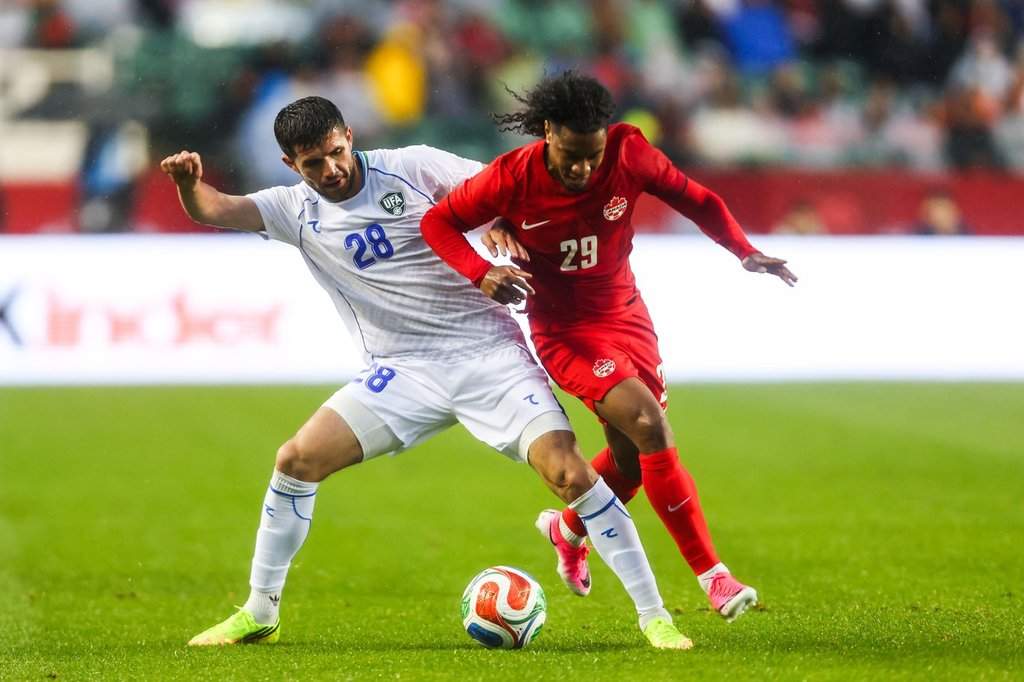
Canada will advance past the group stage of the 2026 FIFA World Cup, but achieving this feat requires overcoming a brutal combination of roster exhaustion, catastrophic injuries, and historically devastating defensive flaws rather than relying merely on home-field sentiment. While local optimism spikes ahead of the June 12 opening match against Bosnia and Herzegovina in Toronto, a cold assessment of Jesse Marsch’s squad reveals that survival in Group B demands tactical perfection. Canada cannot simply ride a wave of domestic euphoria to secure points against highly disciplined European and unpredictable Middle Eastern opponents.
Public confidence found a voice through Alan Koch, the University of Guelph men’s soccer coach and former Major League Soccer manager who famously handed Alphonso Davies his professional debut at age 15. Koch publicly insisted that Canada must reach the knockout rounds for the tournament to be deemed a success. Yet, the path through Bosnia and Herzegovina, Qatar, and Switzerland is fraught with systemic issues that domestic enthusiasm alone cannot fix.
The Medical Room Crisis
The structural integrity of Canada’s campaign suffered a devastating blow before a single ball was kicked on home soil. The national team’s tactical depth has been stripped down by injuries to crucial defensive and midfield components.
- The Marcelo Flores Tragedy: The Tigres UANL midfielder, who chose Canada over Mexico and England to build his international legacy, was completely ruled out of the tournament after suffering a torn ACL. Flores offered the creative spark and press-resistance Marsch needed to unlock stubborn, low-block defenses.
- The Moise Bombito Concern: Compounding the issue is the unstable physical status of center-back Moise Bombito. Dealing with an acute leg injury, Bombito’s potential absence leaves a gaping hole in a backline that already lacks elite international pedigree.
Without Bombito at 100%, Canada’s central defense relies heavily on MLS-grade depth to contain European attackers who operate at a completely different tempo. Marsch’s signature high-pressing system requires central defenders who can defend in vast open spaces behind a high defensive line. If the backline lacks the recovery speed to track back, the system transforms from an aggressive trap into a suicide mission.
Group B Tactically Unpacked
The belief that playing in Toronto and Vancouver guarantees passage to the Round of 32 ignores how these specific opponents exploit Canada's flaws.
| Opponent | Venue | Key Tactical Threat | Historical Context |
|---|---|---|---|
| Bosnia and Herzegovina | Toronto | Physical aerial presence, veteran game-management | Opening match pressure on home soil |
| Qatar | Vancouver | Compact defensive block, transition speed | Former Asian champions with tournament familiarity |
| Switzerland | Vancouver | Elite elite-midfield ball retention, tactical discipline | Consistent knockout-stage regulars |
The tournament opener in Toronto against Bosnia and Herzegovina presents a massive psychological and physical barrier. Eastern European sides traditionally excel at disrupting the rhythm of high-tempo teams. They slow down the game, draw fouls, and maximize set-piece opportunities. For a Canadian team missing key physical components in the air, defending set pieces will be an exercise in pure anxiety.
Qatar represents a complete tactical wildcard. While mainstream analysts dismiss them because of their underwhelming performance as hosts in 2022, their roster possesses years of shared chemistry. They are comfortable playing without the ball and striking efficiently on the counter-attack. If Canada overcommits numbers forward in Vancouver to satisfy a demanding home crowd, Qatar’s wingers will ruthlessly exploit the space behind full-backs Alistair Johnston and Richie Laryea.
Switzerland remains the ultimate gatekeeper. Featuring an elite midfield engine room that excels at ball retention, the Swiss are designed to neutralize high-pressing systems. They pass through pressure rather than panicking under it. If Canada has not secured four points before meeting the Swiss in their final group match, relying on a result against them creates a incredibly bleak scenario.
The Alphonso Davies Conundrum
The tactical blueprint lives and dies with Alphonso Davies. The Bayern Munich star is undeniably the most talented player to ever wear the Canadian jersey. However, international tournaments regularly expose the limits of a single superstar carrying a structurally unbalanced roster.
In past iterations, Canada frequently shifted Davies up the pitch into an attacking winger role to maximize his goal-scoring threat. Marsch prefers using him as an inverted left-back or a wide midfielder who can drive forward from deep positions. This creates a severe tactical paradox. If Davies pushes forward to drive the attack, he leaves the left flank completely unprotected, forcing a depleted center-back pairing to cover his tracks.
Opposing managers no longer get surprised by Davies' electric pace. They deploy double-coverage schemes, forcing him to pass the ball inside to less technically gifted teammates. If Ismaël Koné and Stephen Eustáquio cannot consistently find creative passing lanes through the middle, Canada’s attack becomes entirely predictable, restricted to hopeful crosses from wide areas toward Cyle Larin and Jonathan David.
The High Cost of the Press
Jesse Marsch’s appointment as head coach brought an intense, energetic identity to the Men's National Team. The Red Bull-inspired philosophy of aggressive counter-pressing looks spectacular when it works. It forces turnovers high up the pitch and generates immediate scoring opportunities for elite finishers like David.
The physical demands of this system over a compressed short-tournament schedule are immense. The modern European club season has already pushed stars like Eustáquio and Tajon Buchanan to their physical limits. Forcing these players to execute a relentless, high-intensity press every six days in mid-summer heat will inevitably lead to second-half fatigue.
Canada’s historical lack of tournament depth means the quality drops significantly when Marsch goes to his bench. If the starting XI cannot secure early leads, the drop-off in the final 30 minutes of matches will be exploited by veteran European squads who excel at exploiting tired legs.
Surviving the Home Crowd Trap
The ultimate variable is the psychological burden of playing a World Cup on home soil. Media narratives focus heavily on the positive energy generated by local fans in Toronto and Vancouver. Veteran international players understand that home advantage is a double-edged sword.
When a home team fails to score in the opening 30 minutes, the energy in the stadium shifts from loud encouragement to palpable anxiety. Players feel that tension on the pitch. They begin rushing their passes, taking low-percentage shots, and abandoning their tactical discipline to force a breakthrough.
Canada has never won a single match in the history of the men's FIFA World Cup. Breaking that historic curse while managing the immense expectations of an expectant nation requires an emotional maturity that this young roster has rarely been forced to display. Koch's confidence is grounded in his intimate knowledge of the players' raw talent. Transforming that raw talent into a disciplined defensive unit under the brightest lights in global sports remains an unresolved challenge.
The margin between a historic run to the knockout rounds and a devastating group-stage exit is razor-thin. It will not be decided by national pride or inspiring media profiles. It will be decided in the quiet spaces of the defensive penalty box when the ball is whipped in at the 89th minute.
Canada Coach Jesse Marsch on World Cup Roster Selection
This broadcast clip provides critical context on the 26-player squad chosen by Jesse Marsch to navigate these tactical vulnerabilities on home soil.