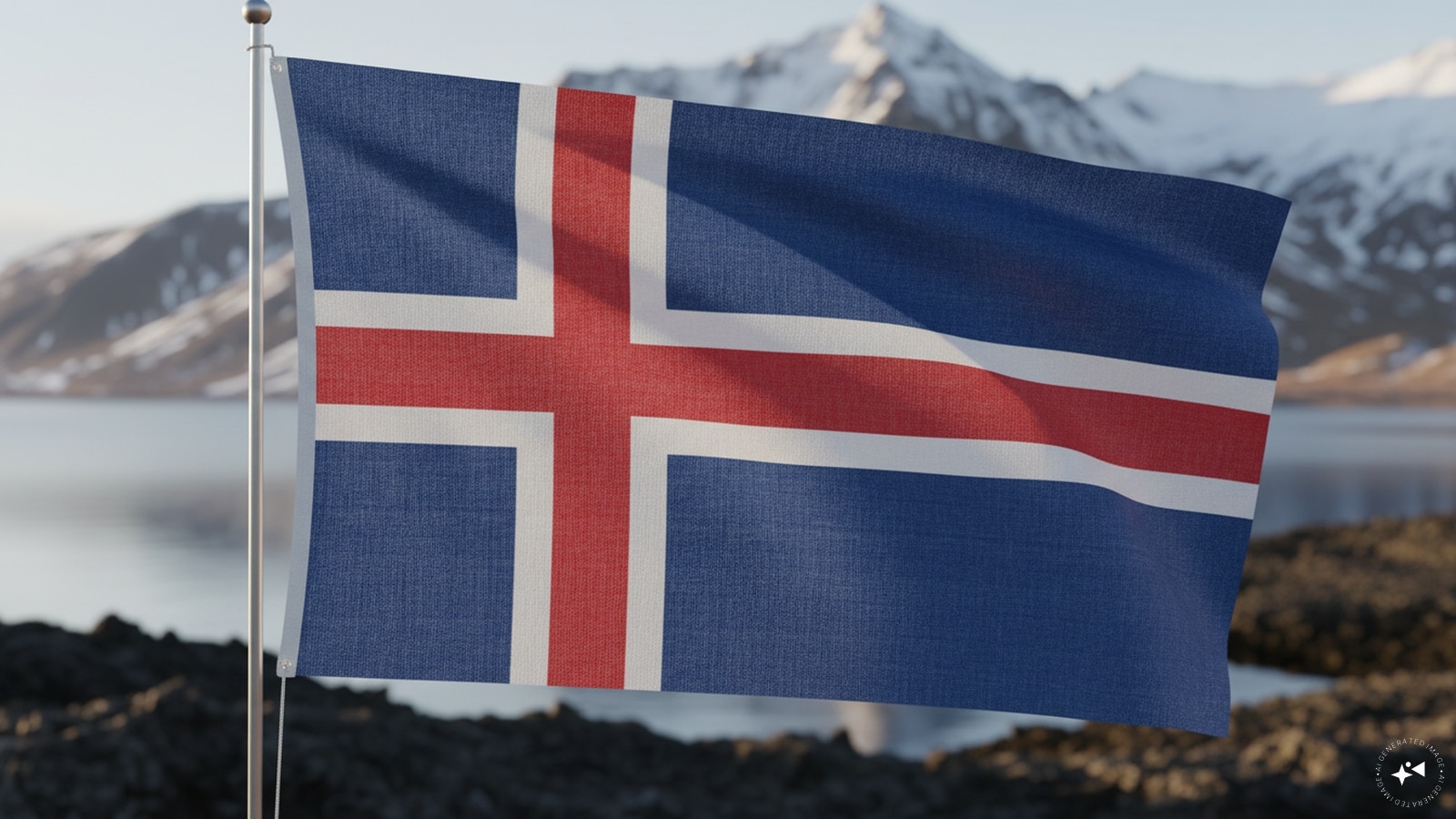
Every time Reykjavik's political class panics over inflation or currency volatility, a familiar phantom rises from the Atlantic foam. The European Union membership debate returns like clockwork. Commentators in Brussels and liberal broadsheets across Europe treat this as a slow-motion inevitability, a historical correction where a stray Nordic sheep finally wanders back into the continental corral.
They are entirely wrong.
The lazy consensus says Iceland is too small to stand alone, that its floating krona is an anachronism, and that Brussels offers a cozy harbor of regulatory safety. I have watched trade negotiators and macroeconomic forecasters lose their minds trying to force a square peg into a bureaucratic round hole. They look at a population of roughly four hundred thousand people and see a province waiting for a governor.
What they miss is structural sovereignty.
Iceland operates outside the European Union not through administrative oversight or historical accident, but through a cold, calculated calculation of national self-interest that larger economies abandoned decades ago. Surrendering control of fisheries and monetary policy to an institution designed for continental superpowers is not integration. It is economic self-harm disguised as international cooperation.
Let us dismantle the core arguments driving this recurrent obsession.
The Fishery Fallacy
The single biggest barrier to Icelandic accession has never been agricultural subsidies or corporate tax rates. It is fish.
Brussels operates under the Common Fisheries Policy. This regulatory framework treats member state waters as a shared resource. For a continental nation with minor coastal interests, sharing fish stocks is a bureaucratic abstraction. For Reykjavik, the exclusive economic zone is the entire balance sheet.
Imagine a scenario where a regulatory committee in Strasbourg determines catch quotas for cod in the North Atlantic based on political compromises between landlocked Central European states and Mediterranean fleets. That is not a hypothetical anxiety; it is the daily operational reality of the Common Fisheries Policy.
Icelandic fishermen manage stocks through a system of Individual Transferable Quotas that, while politically contentious at home, keeps stocks sustainable and profits localized. Handing that management over to bureaucrats who view the North Atlantic as a distant peripheral zone is economic suicide. No political party in Reykjavik survives the moment it signs away control of the continental shelf.
Monetary Sovereignty is Painful Until You Need It
Critics love to bash the Icelandic krona. It is volatile. It trades in thin volumes. It gives international investors headaches. During the 2008 financial collapse, the currency cratered, taking the entire domestic banking sector down with it.
That disaster is precisely why abandoning the krona for the euro remains a trap.
A small, resource-dependent economy needs a shock absorber. When commodity prices shift or global tourism freezes, a floating currency drops, automatically adjusting export competitiveness and protecting domestic employment. Peg that same economy to the euro, and you trade currency volatility for structural unemployment. Ask the youth of Southern Europe how monetary union worked out for them when external shocks hit.
The krona is volatile because Iceland is a macro-economic speedboat, not a cargo ship. Speedboats rock in rough water. But they maneuver faster than ocean liners. Adopting the euro means trading your steering wheel for a seat in the engine room while someone else charts the course.
The Sovereignty Tax
Proponents argue that membership brings a seat at the table. This is the oldest delusion in European diplomacy.
Small states in the European Union do not shape policy; they absorb regulations written in Berlin and Paris. Look at how Norway and Iceland already interact with the single market through the European Economic Area agreement. They pay for market access without voting on the rules. It is an expensive arrangement, often cited by EU maximalists as proof that integration is necessary.
Yet, freedom from the agricultural policy, freedom from foreign policy integration, and freedom from forced judicial harmonization are worth every euro of that EEA bill. Sovereignty has a cost. Paying it directly is cheaper than trading it away for nominal voting power that gets steamrolled by qualified majority voting every single time vital national interests clash with continental consensus.
The push for EU membership is driven by tired elites who confuse institutional paperwork with genuine stability. Iceland does not need a savior in Brussels. It needs to protect its fisheries, manage its currency with brutal realism, and remember that being an outsider in a bureaucratic empire is infinitely safer than being a footnote inside one.