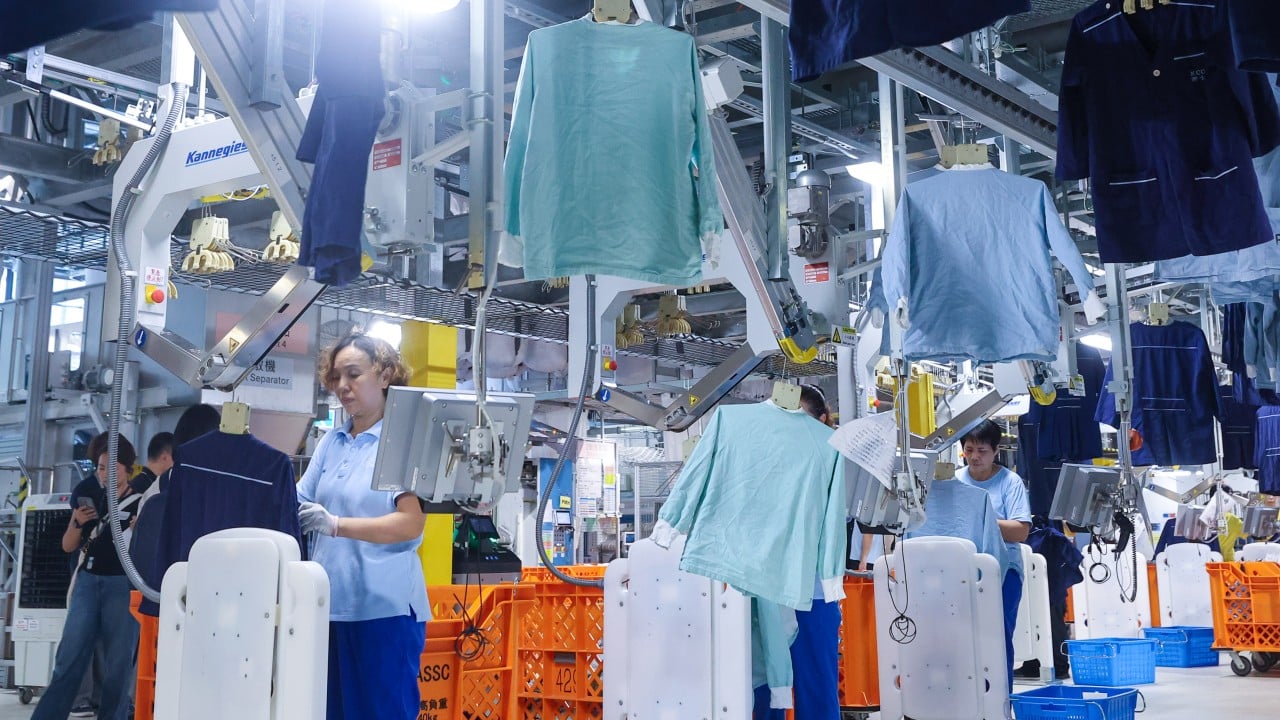
The headlines write themselves. Hong Kong rolls out robotic arms and automated guided vehicles in public hospital laundry and meal centres, and the tech press treats it like the dawn of clinical utopia. Efficiency metrics soar. Handling times drop.
It is a comforting illusion. I have watched hospital administrators burn capital on shiny multi-million-dollar sorting rigs while their core clinical logistics rot from the inside out.
Everybody loves a story about metal arms folding hospital sheets. It looks great in a press release. It screams modernization. But beneath the shiny polish of these automated hubs lies a brittle, single-point-of-failure nightmare that hospital executives are completely ignoring.
Let us dismantle the lazy consensus.
The Myth of the Hands-Off Hospital
The core argument for full automation in healthcare support services goes like this: human hands are slow, prone to error, and expensive. Therefore, replace them with robotic arms and conveyors.
This logic works fine in an automotive plant. A car door is uniform. A bolt is standardized. But a hospital linen cart or a kitchen tray delivery loop is a chaotic, stochastic environment.
When you centralize laundry and meal production into massive automated mega-centres, you trade localized flexibility for rigid, fragile throughput. I have seen facilities spend three years integrating automated meal assembly lines, only to find that a single custom diet change—common in geriatric wards—brings the entire conveyor belt system to a grinding halt because the software cannot handle edge cases without manual overrides.
You do not remove human labor by installing a robotic arm; you just shift those humans from visible tasks to hidden, high-stress exception-handling roles.
The Fragility Tax Nobody Talks About
Let us talk about supply chain resilience. When a public hospital relies on a decentralized network of smaller, adaptable local kitchens and laundry pods, a localized failure is a minor inconvenience. If one machine breaks, staff wheel out a backup cart.
When you consolidate thousands of meals and tons of linens into one mega-automated facility, a single mechanical jam or software patch failure takes down support operations for an entire regional health district.
The maintenance overhead is staggering. You are no longer running a hospital; you are running an industrial manufacturing plant without the profit margins to support its upkeep. Proprietary maintenance contracts from equipment vendors drain operating budgets year after year. The moment a critical servo motor fails and the foreign vendor's technician takes two weeks to fly in, your clean linen supply hits zero.
That is not efficiency. That is hostage-taking.
How to Actually Fix Hospital Logistics
If you want to modernize hospital support services without building a fragile house of cards, you have to stop copying Amazon fulfillment centers. Healthcare is not e-commerce. You cannot afford to lose a delivery batch when patient care is on the line.
Here is the counter-intuitive playbook:
- Automate the movement, not the judgment: Use simple, low-cost autonomous mobile robots for horizontal transport down wide hospital corridors, but keep human oversight at the decision nodes where sorting requires cognitive adaptation.
- Decentralize processing: Keep smaller, modular prep units closer to the point of care. Redundancy beats centralization every single time in life-critical infrastructure.
- Invest in software flexibility over hardware spectacle: A robotic arm that looks cool on camera is useless if its proprietary API locks your IT team out of making emergency workflow adjustments during a surge event.
Stop worshipping the machine for the sake of the machine. True operational maturity means building systems that bend before they break.
Your shiny automated laundry centre is just one power surge away from a catastrophe. Fix your architecture before you buy another arm.