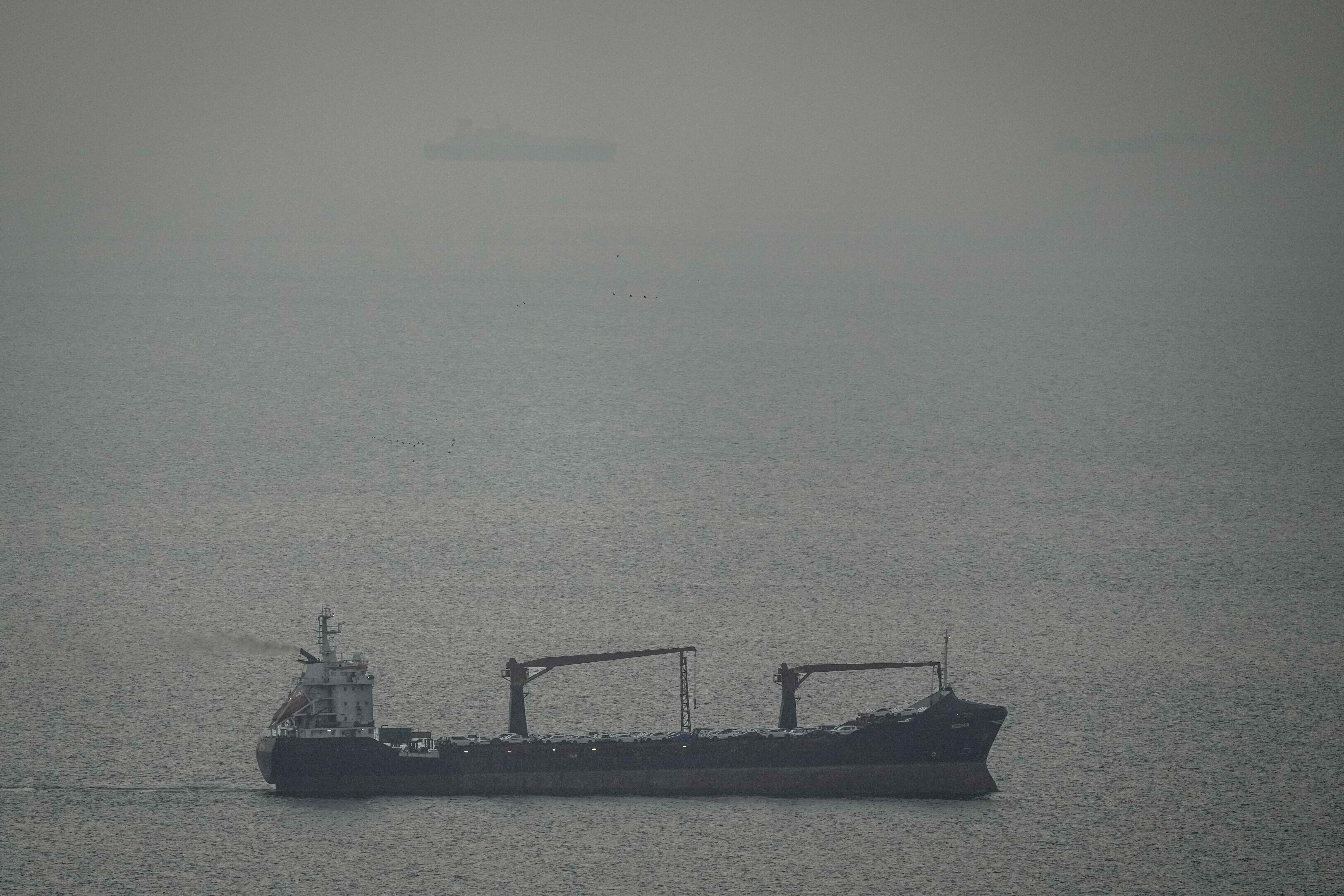
Western media loves a good pirate story. When an Iranian fast-attack craft buzzes a VLCC (Very Large Crude Carrier) in the Strait of Hormuz, the news cycle treats it like a scene from a Michael Bay movie. The "lazy consensus" screams that global energy security is hanging by a thread, oil prices should spike to triple digits, and the world economy is one skirmish away from a cardiac arrest.
They are wrong. They are looking at the smoke and missing the fire.
The Strait of Hormuz is not a "chokepoint" in the way 1970s textbooks describe it. It is a theater. The actual risk isn't a blockade—which would be an act of economic suicide for Tehran—but the systemic failure of the West to understand how insurance, logistical rerouting, and internal Iranian politics actually function. If you are tracking "gunboats," you are tracking the wrong metric.
The Myth of the Total Blockade
Let's address the elephant in the room: the idea that Iran can "close" the Strait of Hormuz.
In theory, yes, the geography is tight. In practice, closing the Strait is the "nuclear option" that destroys the very entity trying to execute it. Iran’s economy is gasping for air under sanctions, yet it still moves millions of barrels of "shadow fleet" crude. You don't blow up the bridge you're using to smuggle your own goods.
Military analysts often cite the "Tanker War" of the 1980s as a precedent. During that conflict, over 450 vessels were attacked. Did the oil stop? No. Global production actually rose during that decade. The logic of the market is far more resilient than the logic of a skirmish. Modern tankers are massive, double-hulled fortresses. Taking one down with a machine gun or a small-yield rocket is like trying to stop a freight train with a BB gun. It creates a headline; it doesn't stop the flow.
The Insurance Shell Game
If you want to know the "truth" about a regional conflict, stop reading the Pentagon’s press releases and start reading the Lloyd's Market Association (LMA) circulars.
The real impact of Iranian aggression isn't physical destruction; it’s the War Risk Surcharge. When a gunboat fires a warning shot, the price of oil doesn't go up because of a shortage. It goes up because the cost of insuring the hull jumped by 15% overnight.
I have watched traders lose their shirts betting on "scarcity" when they should have been betting on "overhead." The physical barrel of oil is rarely at risk. What's at risk is the margin of the shipping company. By focusing on the "threat to energy security," the media ignores the fact that this is essentially a tax on Western logistics, managed by actuaries in London, not generals in D.C.
Tehran’s Calculated Theater
We need to stop treating these incidents as "escalations." They are negotiations by other means.
When the Islamic Revolutionary Guard Corps (IRGC) harasses a tanker, they aren't trying to start a war with the U.S. Navy's Fifth Fleet. They are signaling to domestic hardliners and international diplomats. It is a highly choreographed ritual.
- The Trigger: Usually a Western seizure of an Iranian vessel or a breakdown in back-channel talks.
- The Performance: Fast boats circle a tanker, perhaps some small arms fire, or a boarding for "technical violations."
- The De-escalation: A period of quiet while the diplomats check their phones.
The "insider" secret is that both sides know the choreography. The U.S. Navy maintains a Presence (capital P), but they aren't looking to sink the Iranian navy over a harassed merchant ship. If they did, the price of Brent Crude actually would hit $150, and the incumbent administration would lose the next election. Stability is the goal, and ironically, these small skirmishes act as a pressure valve to prevent a larger explosion.
The Redundancy Reality
The "Chokepoint" narrative ignores the massive infrastructure built specifically to bypass it.
The Saudi East-West Pipeline (Petroline) can move 5 million barrels per day (bpd) to the Red Sea. The Abu Dhabi Habshan–Fujairah pipeline bypasses the Strait entirely, dumping 1.5 million bpd directly into the Gulf of Oman. When you add the strategic petroleum reserves (SPR) of the U.S., China, and Japan, a temporary disruption in the Strait is a logistical headache, not an existential crisis.
We are no longer in the 1973 era of total vulnerability. The world has built a "workaround" economy.
Why the "Experts" Get It Wrong
Most geopolitical analysts are generalists. They don't understand the Draft of a ship or the ULCC (Ultra Large Crude Carrier) mooring constraints. They see a map and draw a red circle.
I've been in the rooms where these risks are assessed for hedge funds. The smartest money isn't looking at the gunboats; they are looking at the Chinese Demand Signal. If China is buying, the oil moves. If the Strait were truly blocked, China’s economy would crater. Since China is Iran’s primary customer and diplomatic lifeline, Beijing effectively guarantees the Strait stays open.
Iran isn't going to bite the hand that feeds it just to make a point to a tanker from a Greek shipping magnate.
The High Cost of the Wrong Focus
By obsessing over the Strait, we ignore the real threats to energy stability:
- Cyber Warfare: A hack on the Saudi Aramco SCADA systems is 100x more damaging than a bullet hole in a tanker hull.
- Underinvestment: The lack of CAPEX in traditional oil and gas fields is what creates long-term price spikes, not a week of naval tension.
- The Shadow Fleet: There are hundreds of "ghost ships" with no insurance and questionable maintenance hauling oil through these waters. A mechanical failure leading to a massive oil spill is a far greater threat to the Strait’s navigability than the IRGC.
Stop Asking "Will They Close It?"
The question is a trap. It's built on the false premise that Iran is an irrational actor seeking total chaos. They aren't. They are a rational, albeit aggressive, actor seeking leverage.
When you read a headline about "Gunboats Firing," don't check the price of oil. Check the status of the "War Risk" insurance premiums. Check the volume of the East-West pipeline. Check the tone of the latest communiqué from Beijing.
The Strait of Hormuz isn't a wall; it's a doorway. And nobody—not even the most hardline general in Tehran—is interested in locking themselves in a burning house.
The gunboats are just the noise. The silence of the pipelines is what you should actually fear.
Buy the dip. Ignore the theater.