Hong Kong has a massive structural problem hiding behind a comforting hospital statistic. When a woman gives birth in a local hospital, the system celebrates. Over 81% of mothers leave the maternity ward breastfeeding. It looks like a resounding victory for public health.
Then reality hits. Within four months, that number collapses. Only 18% of mothers manage to maintain exclusive breastfeeding. By six months, the drop-off is even more severe, trailing far behind the global targets set by the World Health Organization.
The question isn't whether Hong Kong women want to breastfeed. They clearly do. The question is why a city with a world-class healthcare system lets them drop out of the pipeline the moment they step into the real world.
The current downward trend isn't a failure of maternal will. It’s the predictable result of an environment that treats breastfeeding as a private lifestyle choice rather than a critical infrastructure project. If Hong Kong wants to reverse this slide, it needs to stop telling women to try harder and start fixing the structural barriers that make success nearly impossible.
The Post-Hospital Care Vacuum
The first breakdown happens the moment the hospital door closes. In Hong Kong public wards, a new mother gets roughly 48 hours to recover from delivery, learn how to care for a newborn, and master the complex physics of a proper infant latch. It’s an information dump delivered under conditions of extreme sleep deprivation.
Once home, the physical isolation sets in. The traditional Chinese practice of "doing the month" (tso yuet) means many women stay homebound for the first thirty days. While meant for rest, it often cuts women off from physical access to lactation consultants or community support groups.
When a mother experiences cracked nipples, low milk supply, or engorgement on day five, she can't easily jump on a train to get help. The Department of Health’s Maternal and Child Health Centres do incredible work, but they are chronically stretched. Booking a timely, face-to-face appointment with a lactation specialist when you're in acute pain can feel like winning the lottery.
This is where the formula industry wins. Formula is accessible, predictable, and doesn't hurt. Without immediate, hands-on intervention at home, a mother's self-efficacy plummets. A recent trial highlighted by researchers at the University of Hong Kong pointed out that virtual peer support via video calls can bridge this gap, but the mainstream system hasn't integrated this aggressively enough. We need a dedicated, public-funded army of home-visiting peer counselors who can walk into a flat within 24 hours of a distress call.
The 14-Week Math That Doesn't Work
Hong Kong extended its statutory maternity leave from 10 weeks to 14 weeks. It was a step forward, but let’s look at the math.
The World Health Organization explicitly recommends exclusive breastfeeding for the first six months of an infant's life. Fourteen weeks equals three and a half months. The math fundamentally doesn't work.
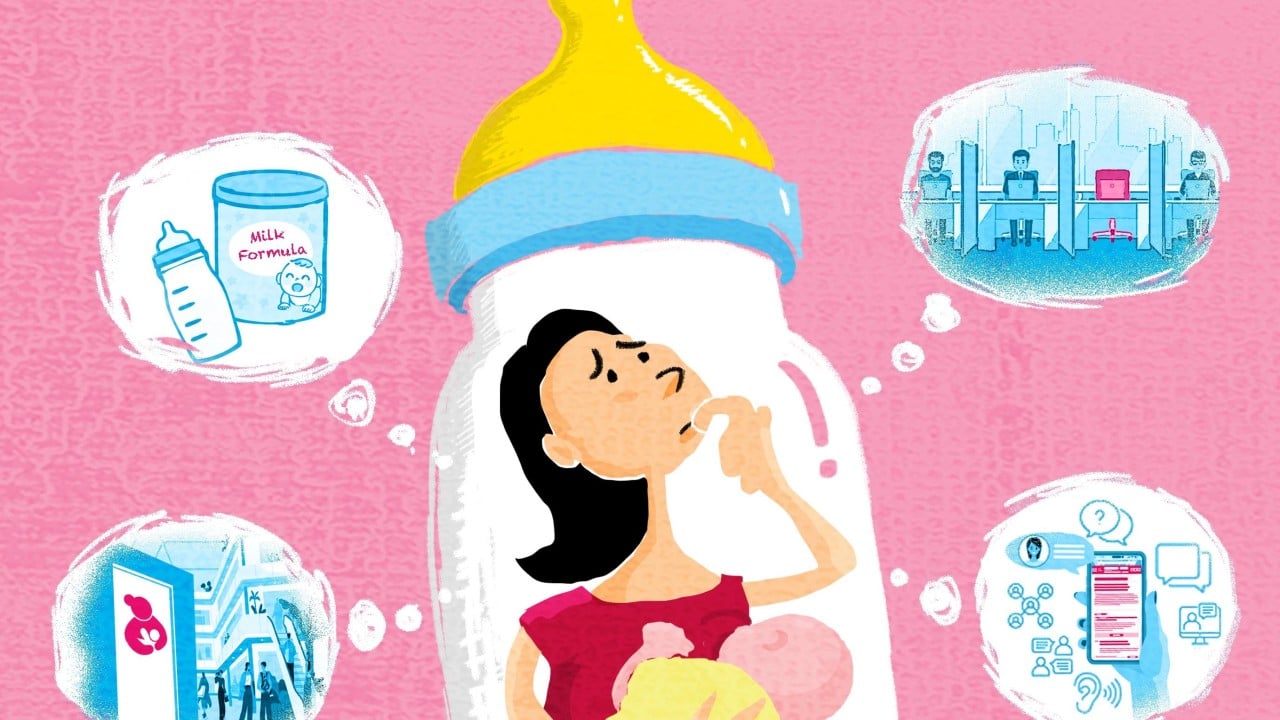
A mother returning to an intense corporate role in Central or Kowloon at 14 weeks faces an immediate logistical nightmare. To maintain her milk supply, she needs to pump every three to four hours. That requires a private space, a refrigerator, and an understanding boss.
While the government has updated guidelines for a "Breastfeeding Friendly Workplace" and amended the Sex Discrimination Ordinance to prohibit discrimination against breastfeeding women, reality on the ground remains hostile. A policy on a human resources PDF doesn't change the culture of a high-pressure office.
Many working mothers report having to express milk in cramped toilet cubicles, server rooms, or storage closets. The physical stress of pumping in an unsanitary bathroom, combined with the anxiety of missing a high-stakes meeting, kills milk production. It’s basic biology: adrenaline blocks oxytocin, the very hormone needed for milk let-down. If a woman is hiding in a restroom stall while her colleagues knock on the door, her breastfeeding journey is effectively over.
The Erasure of Intergenerational Knowledge
We also have to acknowledge a massive cultural blind spot: the loss of family knowledge. The breastfeeding rate in Hong Kong hit an all-time low of roughly 5% in the 1970s due to the aggressive marketing and modernization of infant formula.
Think about what that means for a woman giving birth today. Her own mother and her mother-in-law likely didn't breastfeed. They don't possess the generational wisdom of how to navigate a growth spurt, how to handle a clogged duct, or how to read an infant’s feeding cues.
Instead, well-meaning grandmothers often look at a crying baby and assume the mother's milk is "thin" or insufficient. They pressure the new mother to supplement with formula, fearing the child isn't getting enough nutrition. This well-intentioned sabotage chips away at a mother's confidence.
Because the family unit cannot provide the necessary clinical or emotional guidance, the state must fill the void. Education can't just be aimed at pregnant women; it needs to target the extended family. Prenatal classes should actively invite grandmothers and partners, dismantling the myth that formula is superior or that breast milk is inherently unreliable.
Commodification and the Normalization of Formula
Walk into any supermarket or pharmacy in Tsim Sha Tsui or Mong Kok, and you're confronted by walls of premium infant formula. The marketing is sophisticated. It promises brain development, gut health, and future academic success.
While the Hong Kong Code of Marketing of Formula Milk for Infants and Young Children exists, it’s voluntary. It lacks the legal teeth needed to stop the subtle, pervasive positioning of formula as an aspirational product. The commodification of infant feeding has successfully shaped social norms. It has made formula feeding seem like the baseline standard, while breastfeeding is viewed as an optional, high-effort luxury.
This normalization is backed by massive corporate budgets that public health campaigns simply can't match. When a new mother is struggling at 3:00 AM, the formula tin on her counter offers an effortless solution backed by glossy advertising. To counter this, Hong Kong must shift from a voluntary code to binding legislation that strictly regulates the promotion of substitute milks, ensuring that medical facilities are completely free from commercial influence.
The Scale of the Crisis vs. Creative Solutions
The government’s Committee on Promotion of Breastfeeding has made strides. The establishment of the Hong Kong Breast Milk Bank, which has collected over 2,700 liters of milk from hundreds of registered donors, is a phenomenal achievement for critically ill and premature infants in neonatal intensive care units. It proves that the spirit of solidarity among mothers is alive and well.
But the general population needs systemic, daily support. If Hong Kong wants to see its six-month exclusive breastfeeding rate move closer to global benchmarks, it needs a radical overhaul of its urban and corporate policy.
- Enforceable Workplace Mandates: Moving beyond voluntary corporate pledges. Companies should face penalties if they fail to provide clean, private, non-bathroom spaces and dedicated 30-minute pumping breaks twice a day for returning mothers.
- Subsidized Postnatal Lactation Care: Every mother should receive three mandatory, subsidized home visits from a certified lactation consultant or trained peer mentor during the critical first month postpartum.
- Public Space Infrastructure: Mandating high-quality baby-care rooms not just in new buildings, but retrofitting existing major transit hubs, shopping malls, and government offices. A mother should never feel trapped at home because she can't find a place to feed her child in public without facing stares.
Fixing the falling breastfeeding rate isn't about printing more informational brochures or launching public awareness campaigns. It’s about building a physical and cultural safety net that catches a mother the moment she leaves the hospital. Until the city provides the space, time, and hands-on clinical protection these women require, the numbers will continue to drop, no matter how high the initial discharge rates look on paper.