Hong Kong is rewriting its five-year blueprint to transform its identity from a pure financial hub into a multifaceted cultural and innovation powerhouse. For decades, the Special Administrative Region operated on a singular, undisputed premise: money. Money made the harbor deep, the towers tall, and the policy trivial. If capital flowed, everything else was secondary.
That single-engine model is sputtering. Property values face structural shifts, regional competitors are capturing trade volume, and the global geopolitical chessboard treats Hong Kong less as a neutral bridge and more as a contested border.
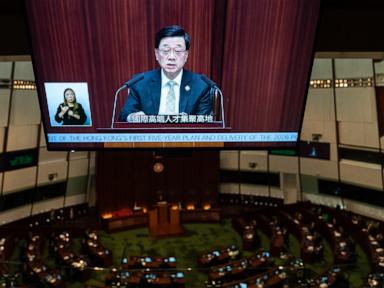
The administration has rolled out a sweeping five-year plan designed to anchor the city in arts, technology, culture, and intellectual property. This shift represents the most significant pivot in the territory's modern history. Yet a blueprint on paper and capital allocation on the ground are two entirely different realities.
The Cost of Monoculture
When a city builds its entire civilization on a banking sector, real estate speculation, and container ports, it creates a fragile ecosystem. Every policy decision defaults to protecting property prices and liquidity pools.
For thirty years, this formula generated staggering wealth. It also priced out the creative class, suffocated homegrown manufacturing, and relegated local arts to the status of decorative charity work for property tycoons. The city became an expensive office building where people slept in cubicles.
When global liquidity tightens or regulatory headwinds blow from Beijing and Washington, a financial monoculture feels the shockwaves instantly. There is no cushion. No software sector to absorb displaced talent. No independent cultural industry to generate soft power.
The new five-year plan attempts to inject life into fields that cannot be measured merely by stock market turnover. Cultural equity and technological sovereignty are the new buzzwords in the legislative chambers of Admiralty. But shifting a population of over seven million people away from the securities counter and toward the biotechnology lab or the design studio requires dismantling entrenched economic incentives.
The Hardware Versus Software Paradox
Beijing wants Hong Kong to remain an international window while serving as an innovation incubator for the Greater Bay Area. The physical infrastructure is unmatched. Mega-bridges connect the territory to Shenzhen and Zhuhai within an hour. Laboratories at local universities rank among the best globally for basic research.
Hardware is not the bottleneck. Software is.
Innovation thrives on friction, dissent, risk-taking, and the freedom to fail spectacularly. A financial center values risk mitigation, compliance, predictability, and stability. These two cultural operating systems clash.
If young entrepreneurs or filmmakers must clear endless administrative hurdles or self-censor to secure state-backed funding, the creative economy stalls before it starts. The government can pour billions of dollars into West Kowloon cultural district venues and Cyberport incubation hubs, but creativity cannot be mandated by administrative decree. It demands an organic environment where ideas are tested against global standards, not just local compliance metrics.
The Geopolitical Tightrope
Hong Kong does not exist in a vacuum. Its pivot away from pure finance is happening precisely as Western capital reevaluates its exposure to the Chinese market.
International investors want clarity. If Hong Kong positions itself as a tech and cultural nexus for Asia, it must attract talent from Tokyo, London, New York, and Singapore. Yet immigration policies, geopolitical tensions, and shifting legal frameworks complicate talent retention.
Global brain drain over the past several years hollowed out middle-management ranks across law, accounting, media, and education. Replacing those professionals requires more than tax breaks or housing subsidies. It requires a convincing narrative that Hong Kong offers a unique, vibrant lifestyle and unobstructed career mobility that cannot be replicated in Shanghai or Shenzhen.
The five-year plan acknowledges this reality by emphasizing IP trading, green finance, and digital assets. It attempts to carve out a niche where the city can act as an intermediary for capital that cannot flow directly between Western markets and mainland entities.
Beyond the Balance Sheet
Can a city built on aggressive capitalism reinvent itself as a creative sanctuary?
The answer depends entirely on how much control the bureaucracy is willing to surrender. True cultural and technological booms are messy. They are driven by dissidents, counter-culture movements, garage inventors, and international misfits who care little for official five-year targets.
If the administration treats the creative industries as another sector to be micromanaged through committee approvals and patriotic vetting, the result will be sterile. Beautiful museums filled with sparse audiences. Technoparks producing patents with zero commercial application.
Conversely, if the policy allows for genuine autonomy in artistic expression and technological research, Hong Kong might just unlock a resilient new identity. One that survives market crashes, regulatory shifts, and geopolitical storms.
The golden handcuffs of high finance are heavy, but breaking them requires more than a government white paper. It requires cultural courage.
The clock on the five-year horizon is ticking, and the harbor outside Central remains as busy as ever, waiting to see if the ships are sailing toward a new destination or just circling in place.