The World Bank recently introduced "Water Forward," a massive initiative designed to funnel billions into global water security. On its face, the program addresses a terrifying reality. By 2030, the gap between global water supply and demand will reach 40%. The Bank’s plan focuses on modernizing infrastructure, digitizing utility management, and de-risking private investment in emerging markets. However, beneath the press release jargon lies a familiar and troubling pattern. While the program claims to solve thirst, its actual architecture functions as a sophisticated mechanism to privatize public resources and tether developing nations to high-interest technological dependencies.
The math of water scarcity is brutal. We are currently consuming groundwater at rates that exceed natural recharge in nearly every major agricultural basin. When the World Bank steps in with "Water Forward," it isn't just offering a bucket; it is offering a complex financial instrument. The core of this strategy relies on "blended finance," a term that essentially means using public taxes to guarantee that private corporations don't lose money on risky infrastructure projects.
The Infrastructure Illusion
Building pipes and treatment plants costs money that most water-stressed nations don’t have. "Water Forward" proposes to fill this void by inviting private equity and global utility conglomerates to take the reins. The logic is that private efficiency beats public waste. History suggests a different outcome.
When water systems are handed to private entities, the primary metric of success shifts from public health to revenue per cubic meter. We have seen this play out from Cochabamba to Manila. Rates climb. Maintenance is deferred in low-income neighborhoods. The "innovation" promised by the World Bank often translates to smart meters that can remotely shut off a family’s access the second a payment is missed. This isn't just about efficiency; it's about the enforced commodification of a biological necessity.
The technological components of the program are equally fraught. The Bank is pushing for "digital twins" of urban water systems. These are high-tech maps that use sensors to track every drop. It sounds brilliant. In practice, these systems are proprietary. A city in Sub-Saharan Africa or Southeast Asia that adopts these tools becomes locked into a lifetime of licensing fees and hardware updates from Western tech firms. They are not buying a solution; they are subscribing to a dependency.
Debt as a Barrier to Liquidity
The World Bank operates on loans, not gifts. Even the "Water Forward" grants usually come with strings attached—specifically, structural adjustments. To qualify for water funding, nations are often required to slash subsidies. For a subsistence farmer in India or a laborer in Brazil, those subsidies are the only thing keeping water affordable.
When these subsidies vanish, the local economy stumbles. The farmer can no longer afford to irrigate. Crop yields drop. Food prices rise. The nation then has to take out more loans to manage the resulting food insecurity. This is the feedback loop of the "Water Forward" model. It treats water as an isolated economic asset rather than the foundation of social stability.
The Hidden Cost of Desalination
A significant portion of the new funding is earmarked for desalination technology. Turning the ocean into drinking water is the ultimate technological fix. It is also an energy vampire.
Desalination requires immense amounts of electricity, usually derived from fossil fuels in the regions where these plants are being built. It creates a "carbon-for-water" swap. You solve the immediate thirst by accelerating the climate change that caused the drought in the first place. Furthermore, the brine byproduct—a toxic, hyper-salty sludge—is often pumped back into the ocean, killing local fisheries. For coastal communities that rely on fishing, the World Bank’s "solution" destroys their primary food source to provide a utility they may not be able to afford.
The Missing Middle of Conservation
You will look in vain through the "Water Forward" documentation for significant mandates on industrial regulation. The program focuses almost entirely on supply-side infrastructure. It ignores the fact that 70% of global freshwater withdrawals are for agriculture, often for export crops that leave the country.
Large-scale mining and textile manufacturing consume and pollute billions of gallons of water daily. Yet, the World Bank’s framework rarely demands that these corporations pay the true cost of their consumption. Instead, the burden of "sustainability" is placed on the individual consumer through higher tariffs and metered usage. We are asking the person washing their hands to save the world while the industrial plant upstream dumps chemical runoff into the aquifer with impunity.
The Myth of De-Risking
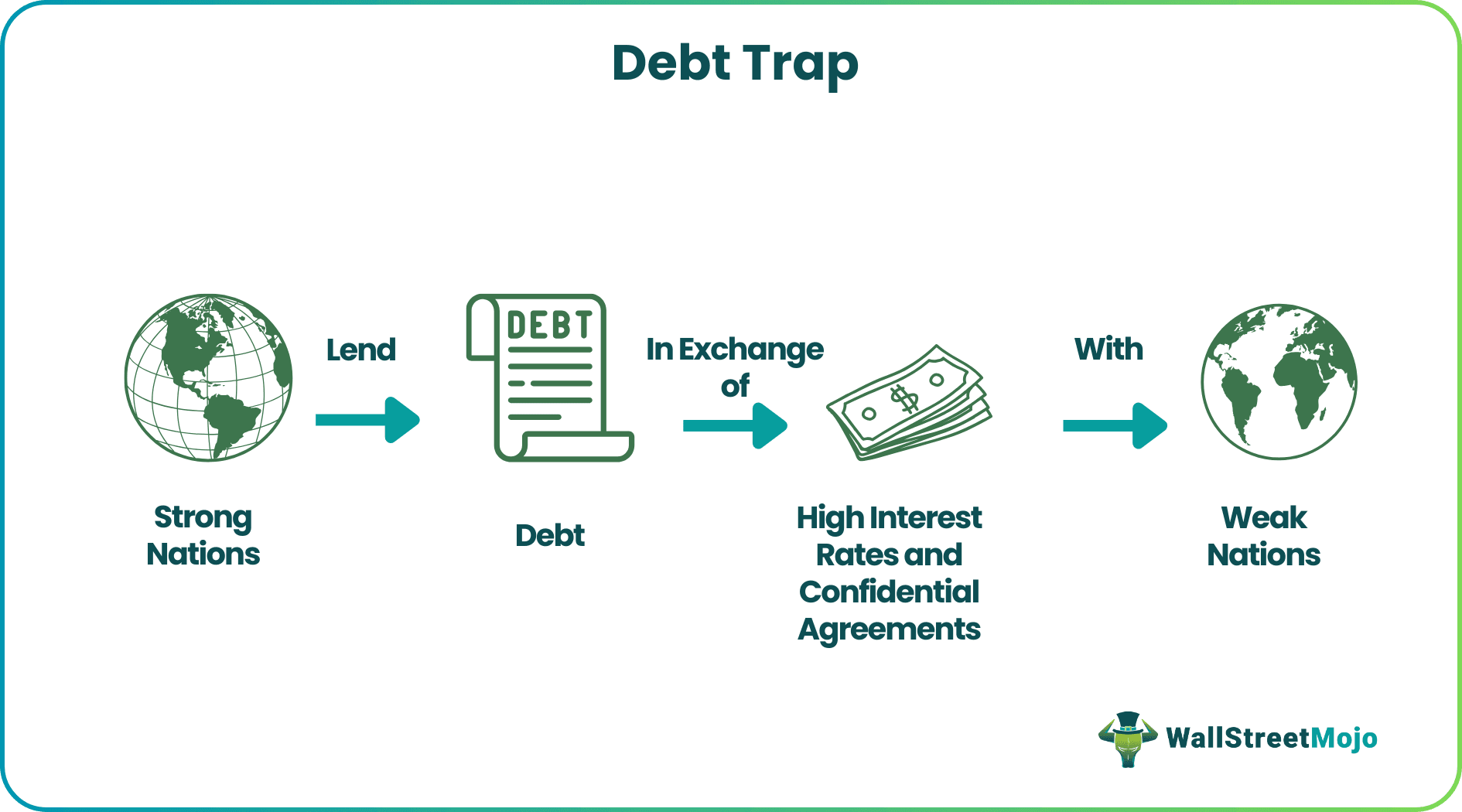
The Bank spends a great deal of time talking about "de-risking" the water sector. In plain English, this means if a water project fails, the taxpayers of the borrowing country—or the international community—foot the bill, while the private investors walk away with their guaranteed returns.
This moral hazard is baked into the "Water Forward" program. When there is no risk for the investor, there is no incentive to build for the long term. They build for the contract duration. They optimize for the ten-year horizon of a private equity fund, not the hundred-year horizon of a city.
A Different Path Forward
Genuine water security does not require a revolutionary financial product. It requires the protection of watersheds and the empowerment of local public utilities.
$$W = P + R - (E + S)$$
In the basic water balance equation above, $W$ represents the available water, $P$ is precipitation, $R$ is recharge, $E$ is evaporation, and $S$ is human extraction. The World Bank focuses almost exclusively on $S$—how we extract and sell it. We should be focusing on $R$—how we restore the natural systems that keep the earth's "sponge" full.
This means investing in "green infrastructure" like restored wetlands, which filter water for free. It means supporting regenerative agriculture that keeps moisture in the soil. These methods are cheaper, more resilient, and—most importantly—they cannot be easily commodified or sold to the highest bidder. They don't require a Silicon Valley dashboard to operate. They require land rights and local sovereignty.
The "Water Forward" initiative is a masterclass in modern neoliberal policy. It identifies a real crisis and proposes a solution that happens to enrich the world’s largest financial institutions and technology providers. If we want to solve global water stress, we must stop treating the liquid of life as a high-yield asset class. We must stop building pipes that lead back to a bank.
Stop looking at the shiny new desalination plants and start looking at the interest rates on the loans that built them. The true test of a water program isn't how much money it moves; it's whether the poorest person in the basin can still afford to take a drink ten years after the "experts" have gone home.