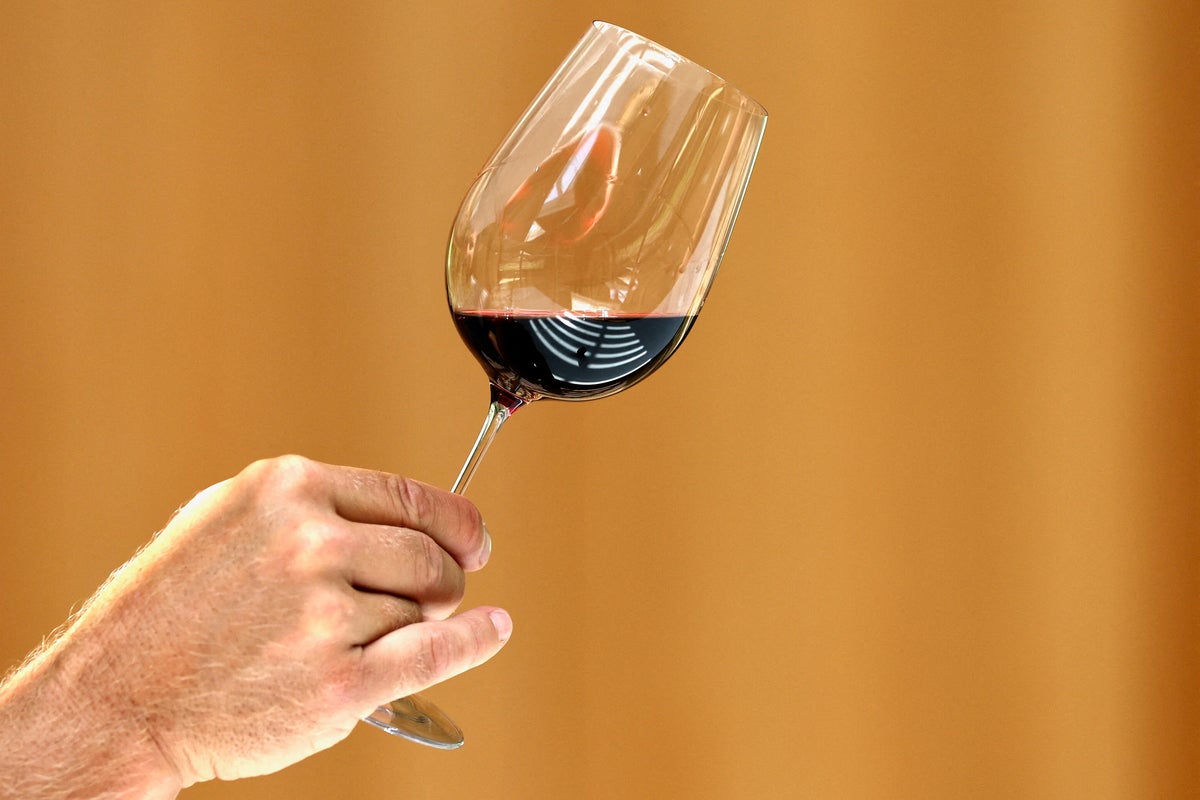
The ground in the Medoc should not feel like stone in June.
When I walked the rows of vines three summers ago, the soil beneath my boots fractured instead of yielding. It was dry. Not the comforting dryness of a passing dry spell, but an ancient, parchment-like crispness that spoke of aquifers retreating deep into the dark of the earth. Pierre, a vigneron whose family has pruned these exact vines since the armistice of the First World War, knelt down and scooped up a handful of dirt. He let it sift through his fingers like gray ash.
He didn't curse. He didn't shake his fist at the sky. He just looked at the small, premature berries clinging to the canopy, berries the size of green peppercorns that had stopped growing entirely because the plant, in its ancient wisdom, had shut down its own circulation to survive.
"They are waiting for rain that will not come," Pierre told me, his voice rough as sandpaper. "And if it does come too late, it will only drown what the sun has already baked."
That autumn brought the reckoning. Official reports would later dry the tragedy out into sterile percentages, noting with bureaucratic coldness that France had suffered its worst wine harvest in thirty years. A drop of nearly thirty percent across the nation. Billions of euros vanished into the thin, shimmering air of relentless heatwaves. Headlines treated it as an economic hiccup, a supply chain footnote for restaurants in Paris and importers in New York.
They missed the point. Entirely.
This was never just about a shortage on a wine list. This was the sound of a rhythm breaking.
To understand what happened to France during those scorched months, you have to unlearn the way we look at agriculture. We think of a vineyard as a factory outdoors. We expect inputs to equal outputs. Sun plus water plus dirt equals bottle. But winemaking is an act of translation. The grape is a translator, taking the specific geography of a summer—the sudden thunderstorms of July, the cool fog of an August dawn, the brutal afternoon glare—and writing it into juice.
When the summer becomes a continuous, blowtorch heat, the translator stops speaking poetry and starts screaming.
Consider what actually happens inside a vine when the thermometer refuses to drop below thirty-five degrees Celsius week after week. The leaves curl inward, folding like hands shielding a face from a fire. Photosynthesis sputters out. The vine makes a harsh, desperate choice: it sacrifices its children to save its own wood. It stops pumping water to the clusters. The grapes shrivel. The skins thicken defensively, hoarding whatever moisture remains, concentrating acids and sugars into a thick, unbalanced paste that tastes more like jam than the subtle, iron-and-blackberry architecture of a classic Bordeaux or a Burgundian Pinot Noir.
By the time the harvest began weeks ahead of schedule—a frantic, sweaty scramble under August suns that used to be reserved for harvesting olives in Greece—the vignerons were picking grapes that felt like raisins before they even hit the sorting table.
I remember standing in a cellar in the southern Rhône, the air heavy with the sweet, suffocating musk of premature fermentation. The vats were running hot. Winemakers had to wrap the stainless-steel tanks in wet blankets and pump cold water through internal jackets just to keep the yeast from dying of heat exhaustion. Yeast, microscopic engines of transformation, will simply give up and perish if the juice gets too warm.
Jean-Luc, a man whose forearms are permanently stained the purple-black of a Malbec stain, wiped sweat from his forehead and handed me a glass of the freshly pressed must.
"Taste it," he whispered.
It was a shock to the palate. It burned with a fierce, alcoholic heat, lacking the cool, balancing spine of acidity that makes a great wine dance across the tongue. It was a wine that had lived too fast, burned too bright, and aged decades in the span of a single July.
"The earth is getting faster," Jean-Luc said, staring down into the stainless steel drain. "We used to have generations to adapt. Now we have seasons."
The numbers tell a brutal story. Across France, production plummeted by nearly a third compared to historical averages. In regions like the Loire Valley and parts of Burgundy, late spring frosts had already bitten the early buds, acting as a cruel prologue to the summer droughts that followed. Spring ice and summer fire. A double tap that left ancient cooperatives staring at empty ledgers.
Yet numbers are cowards. They hide the human weight.
In a village near Sancerre, I met a woman named Claire who represents the fifth generation of her family to tend a precarious slope of limestone. Her grandfather planted those vines right after the Second World War, using mules to plow the steep inclines because tractors could not hold the grade. Those roots are deep—twenty, thirty meters down, searching for ancient water tables. Even those deep roots began to gasp.
Claire showed me a ledger from her grandfather’s era. In 1947, another famously hot year, they harvested early. But the notes in the margins were different then. It was an anomaly. A dramatic exception to a stable rule.
"My grandfather wrote of a miracle," Claire told me, her fingers tracing the faded ink of the old notebook. "He wrote that the heat gave the wine a royal richness, a strength to endure. He did not write about fear."
Fear is the new terroir. It is bottled in every vintage that pushes past fifteen percent alcohol because the sun refused to set gently. It is tasted in the lack of freshness, the heavy, tired finish of a wine that needed rain that never arrived.
We are watching the slow migration of flavor. Winemakers in the south are quietly buying land in the north, edging up toward Normandy and the cool, chalky cliffs of Britain, chasing the ghost of the climate they used to have. They are planting Portuguese and Spanish varieties—Touriga Nacional, Garnacha—drought-hardened warriors that can laugh at a heatwave, displacing the delicate Pinot Noirs and Chardonnays that have defined French identity for a thousand years.
When you pull a cork from a bottle marked by those scorching years, you are holding history in your hand. Not just human history, but the diary of a planet running a fever.
The glass is lighter than it looks. But the emptiness inside it, the missing third of the harvest that vanished into the dry air of a changing world, weighs heavier than any stone.
The sun will rise tomorrow over the hills of Burgundy. The vines will wake up, stretch their weary arms against the trellis, and begin the impossible work of trying to remember who they used to be.