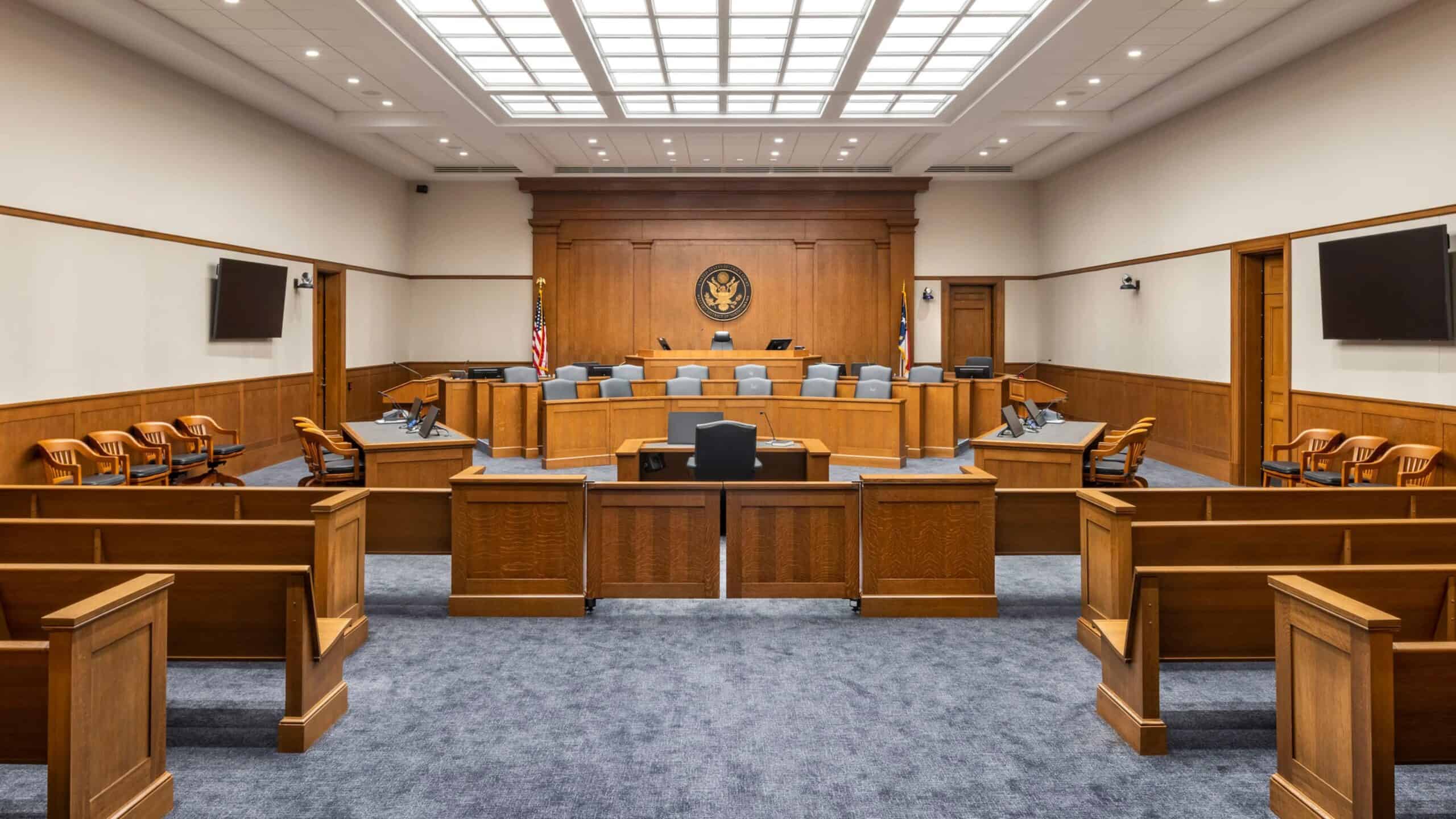
The shadow of Robert Menzies falls long across the Canberra limestone. Decades after the High Court of Australia clipped the wings of a prime minister bent on outlawing a political adversary, the bench faces another existential reckoning. At stake is whether the executive branch can unilaterally proscribe political organizations and criminalize dissent under the banner of national security.
When the federal government enacted sweeping hate group legislation in the wake of the Bondi Beach massacre, the political consensus was swift. Parliament rushed to hand the Home Affairs Minister extraordinary powers to blacklist organizations deemed harmful to social cohesion. Yet expediency in the legislative chamber often breeds constitutional vulnerability in the courtroom. Now, the entity known as the White Australia Party stands before the High Court, arguing that the ban against it violates core tenets of the Australian Constitution, including the implied freedom of political communication.
This legal challenge forces an uncomfortable question for a liberal democracy. How do you defend an open society against forces explicitly dedicated to its destruction without adopting the authoritarian mechanics of the enemy?
The Anatomy of a Legislative Fast-Track
To understand the current crisis, one must look at the mechanics of the law itself. Following severe public pressure and rising security threats, the federal parliament passed legislation allowing the executive branch to designate specific groups as prohibited hate groups. Under this framework, a ministerial decree can effectively criminalize an organization and its associated activities, carrying penalties of up to fifteen years imprisonment for defiance or material support.
The targets were obvious from the outset. Figures from the defunct National Socialist Network sought to rebrand their movement, eventually filing paperwork with the Australian Electoral Commission to register the White Australia Party. Home Affairs Minister Tony Burke acted quickly, classifying the newly minted political entity as a successor organization and pulling the trigger on the proscription powers.
Speed is the enemy of constitutional durability. By bypassing traditional judicial pathways and vesting punitive power directly in the hands of a government minister, the legislation stepped onto a geological fault line in Australian constitutional law. The separation of powers is not a bureaucratic suggestion. It is the architectural barrier designed to prevent the executive branch from donning the robes of the judiciary and dispensing political punishment at will.
Ghosts of the Cold War
The legal arguments echoing through the High Court chambers carry historical ghosts. In the landmark 1951 case of Australian Communist Party v Commonwealth, the High Court struck down Robert Menzies' attempt to outlaw the Communist Party. The core holding of that era remains a bedrock principle. The parliament cannot simply recite that an organization is a threat and thereby legislate it into oblivion. Facts must be proven, and constitutional limits must be respected.
Legal scholars have pointed out the alarming elasticity of the current rules. When power is granted to a minister to ban groups based on criteria as broad as preventing psychological harm or incitement of racial hatred without a prior court conviction, the potential for mission creep expands exponentially.
Consider a hypothetical scenario in a future political climate. A government of a different political stripe, armed with the exact same statutory mechanisms, could designate radical environmental campaigns, aggressive industrial labor unions, or anti-war coalitions as threats to public safety or economic stability. If the executive can ban a fringe political party today without judicial oversight, the barrier protecting mainstream political dissent tomorrow becomes dangerously thin.
The lawyers representing the White Australia Party are leaning heavily on these structural fears. They argue that no recognized head of legislative power permits the Commonwealth to dissolve a political party, that the measures crush the implied freedom of political communication, and that executive proscription represents an unconstitutional accumulation of punitive authority.
The Trap of Illiberal Defense
The government finds itself trapped in a profound philosophical paradox. To protect the public from the vitriolic rhetoric of neo-Nazi ideologies, the state adopted measures that constitutional purists argue undermine the very architecture of Australian freedom.
Public safety is a legitimate responsibility of the state. Few would argue that violent extremism and organized racial hatred should enjoy unchecked operational freedom in the suburbs. Yet the mechanism chosen by Canberra shifts the power of political life and death from independent courts to political actors. Once a government claims the right to decide which political parties are permissible based on ministerial fiat, the definition of democracy begins to fray at the edges.
The High Court does not operate in a vacuum, but it is strictly bound by text, structure, and precedent. Chief Justice Stephen Gageler and the bench face a delicate balancing act. Upholding the legislation validates a powerful tool for counter-terrorism and social defense, but it risks normalizing executive overreach. Striking the laws down hands a propaganda victory to extremists who cloak themselves in the language of civil liberties, yet it preserves the structural integrity of the constitution against legislative panic.
The courtroom lights stay on late into the evening as submissions are weighed. Whatever the bench decides, the underlying friction will not disappear with a single judgment. When a democracy decides to fight its most malignant elements by sacrificing its procedural safeguards, it discovers that the cure often leaves permanent scars on the body politic. The judges must now determine whether the constitution permits the state to burn down the village rules in order to save it.