Two fingers extended. A thumb cocked upward. A curled index trigger.
Every child on every playground across the country knows this shape before they even learn to tie their shoes. It is the universal shorthand for play, a harmless pantomime of cowboys and bandits, or an unspoken punctuation mark tossed across a crowded room between old friends. In almost every zip code in America, that gesture carries the weight of air.
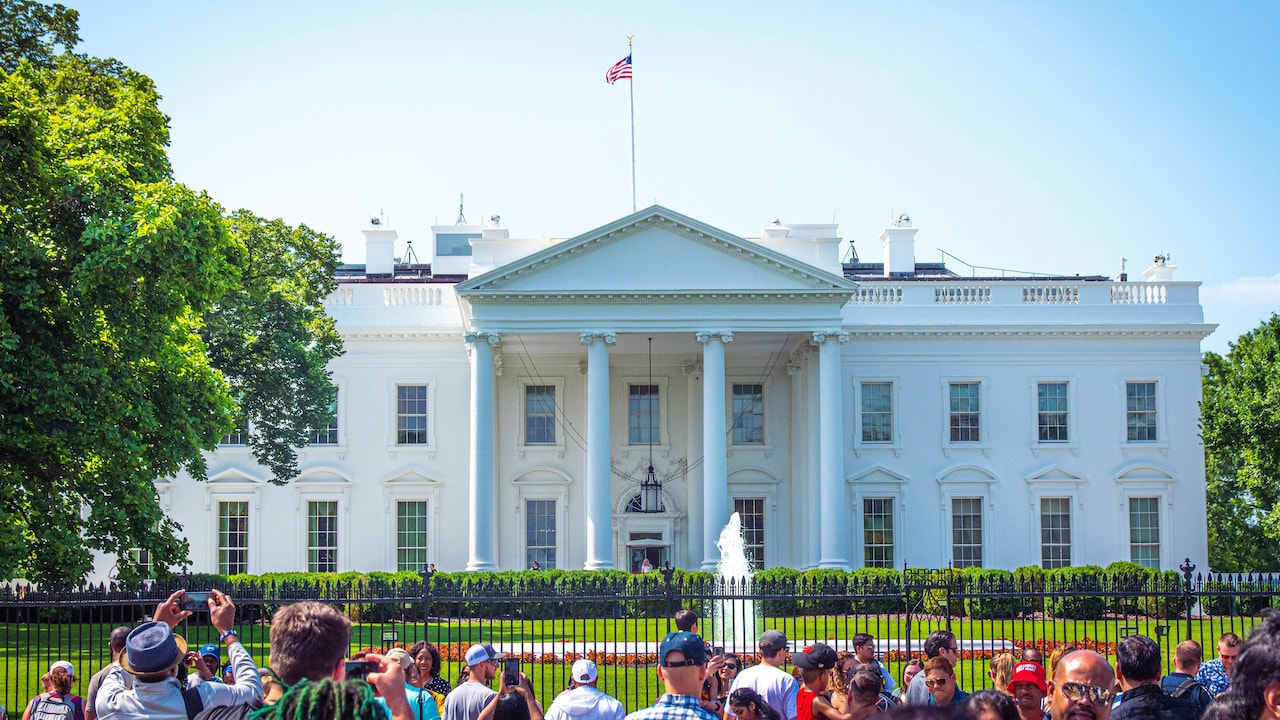
Then you walk onto the pavement outside 1600 Pennsylvania Avenue, and the rules of gravity suddenly shift.
Consider what happens next when a citizen steps up to the black iron fencing surrounding the White House, raises a hand, and shapes their fingers into the silhouette of a firearm. To the pedestrian, it might be an impulsive joke, a theatrical flourish for a tourist's camera, or an act of clumsy political theater. To the uniformed officers watching from behind reinforced glass and tactical perimeters, that split-second movement is an active threat assessment in real time. Within heartbeats, sirens wail, cruisers block the asphalt, and a man finds himself pressed against the hood of a patrol car, wrists locked in steel, facing criminal charges for a weapon made entirely of bone and skin.
It sounds absurd until you stand on that sidewalk yourself.
The Invisible Perimeter
I remember the first time I walked past the North Lawn after the security perimeters were permanently expanded. The air around Lafayette Square feels different from the rest of Washington, D.C. You hear the low, constant hum of idling Secret Service Suburbans, the rhythmic crunch of heavy boots on gravel, and the sharp, watchful silence of snipers stationed high along the roofline. You are technically standing in a public park, surrounded by tourists eating pretzels and squirrels begging for crumbs, yet you are brushing up against the most heavily guarded nervous system in the world.
In that environment, ambiguity does not exist.
Law enforcement professionals who guard the executive mansion operate under a doctrine built on worst-case scenarios. They do not have the luxury of assuming a gesture is ironic. When an individual makes a finger gun gesture toward a Secret Service officer or the White House complex, the reaction is immediate and unforgiving. In real-world incidents documented along Pennsylvania Avenue, suspects have been detained on charges ranging from disorderly conduct and unlawful entry to felony threats against the president or federal officers, depending on accompanying words, demeanor, and proximity to restricted zones.
Panic. Confusion. Flashing red and blue lights reflecting off historic marble.
To understand why a harmless hand shape triggers a full tactical response, imagine a hypothetical scenario. Picture a man named Arthur, visiting the capital for the first time. He has spent the morning touring monuments, his feet aching, his mood lightened by two drinks at a nearby tavern. As he strolls past the security checkpoint near the Treasury Building, he catches the eye of a uniformed officer. Feeling bold, maybe even a little rebellious, Arthur points his thumb and forefinger like a pistol, mimics a recoil, and mouths a silent bang. He expects a stern look, maybe an eye roll. Instead, he hears the sharp bark of commands, feels the sudden grip of tactical gloves on his shoulders, and watches his afternoon dissolve into an interrogation room.
Arthur made a fatal miscalculation. He brought playground rules into a zero-tolerance zone.
Where Expression Collides With Threat
The legal friction surrounding a finger gun arrest sits right on the jagged fault line between the First Amendment and public safety statutes. Most people assume that because no actual weapon is present, no crime has occurred. They look at the empty hand and see protected symbolic speech, no different from wearing a protest t-shirt or shouting a slogan from across the street.
The law sees something far more complicated.
Under federal statutes—specifically 18 U.S.C. Section 871, which governs threats against the President, and 18 U.S.C. Section 111, which covers assaulting, resisting, or impeding federal officers—the physical presence of a firearm is not a prerequisite for an arrest. Courts across the United States have repeatedly grappled with whether a simulated weapon constitutes a "true threat" or an act of intimidation. A true threat is defined by the Supreme Court as a statement or action where the speaker means to communicate a serious expression of an intent to commit an act of unlawful violence to a particular individual or group.
Think of the legal system like a smoke detector wired directly to a fire station. The sensor cannot tell the difference between burnt toast and an electrical fire; it only registers particulates in the air and triggers the alarm. Outside the White House, the sensitivity dial is turned all the way up. If a person pairs a finger gun gesture with aggressive posture, erratic behavior, or verbal hostility, prosecutors argue that a reasonable officer had every right to perceive an imminent danger. Even without words, mimicking the act of shooting at a protected site crosses the threshold from passive observation into simulated violence.
History explains why that dial never turns down. The architecture of White House security is written in the aftermath of real tragedies and near-misses—from the 1950 assassination attempt on Harry Truman at Blair House to individuals scaling the fence with knives, firing rifles from the South Lawn perimeter, or crashing vehicles into barricades. Every single layer of fencing, every magnetometer, and every strict behavioral rule exists because someone, at some point, exploited a gap that once seemed harmless.
The Anatomy of a Split-Second Decision
Step inside the boots of the officer standing at the gate for just a moment.
Your shift started at dawn. You have watched ten thousand faces pass by, scanning hands, waistbands, backpacks, and eyes for the subtle anomalies that signal danger. Behavioral threat assessment relies heavily on pre-attack indicators—movements that mirror the mechanics of drawing or aiming a weapon. When a human hand snaps upward into a horizontal line aimed at your chest or toward the residence behind you, your nervous system reacts before your conscious mind can zoom in to verify whether cold steel is gripped in that palm.
Adrenaline floods the bloodstream in milliseconds. Vision narrows.
In those fractions of a second, asking an officer to pause and debate the nuances of satirical mime is asking them to gamble with their lives and the lives of everyone standing nearby. What looks like a silly gesture on a smartphone video replay looks, in real time and from thirty feet away, remarkably like the silhouette of a concealed subcompact pistol being leveled at a target.
This is the hidden reality that headlines rarely capture. When a news ticker flashes the words Man Arrested For Making Finger Gun Gesture Near White House, the public naturally laughs or shakes its head at perceived overreach. It feels like a punchline. Yet strip away the sensational framing, and you find a collision between two completely incompatible worlds: a civilian culture desensitized to casual mock violence, and a protective apparatus trained to treat every simulation as a rehearsal.
What Happens After the Handcuffs Click
The consequences of that split-second impulse do not vanish once the police realize the suspect is unarmed.
Many people harbor the comforting illusion that if they are arrested for something obviously non-lethal, the officers will simply laugh it off, issue a warning, and send them on their way. Inside the District of Columbia's federal and local justice systems, the machinery does not stop so easily. Once an arrest is initiated near a high-security federal zone, a formal chain of custody and documentation begins.
First comes the transport to a processing facility, followed by fingerprinting, background checks, and an exhaustive vetting by Secret Service intelligence units. Agents will comb through social media profiles, travel records, mental health histories, and past encounters with law enforcement to ensure the gesture was an isolated lapse in judgment rather than a warning sign of a deeper fixation. Even if prosecutors ultimately decline to pursue felony threat charges—often reducing the matter to a misdemeanor disorderly conduct charge or dropping it entirely after hours of detention—the arrest record itself remains a stubborn stain.
Background checks for jobs, security clearances, and international visas rarely capture the nuance of a dismissed misunderstanding. They simply show a federal arrest near the White House.
I have spoken with people who have brushed up against federal security perimeters out of sheer carelessness—a photographer stepping over a temporary barrier for a better angle, a protester tossing an empty water bottle near a checkpoint. The universal emotion afterward isn't defiance; it is shock at how fast ordinary life evaporates. One moment you are planning where to eat dinner, and the next you are explaining your entire life story to federal agents while trying to keep your voice from shaking.
Navigating the Line Between Protest and Provocation
Does this mean citizens must walk past the seat of their government in rigid, fearful silence? Not at all.
Pennsylvania Avenue remains one of the most active, loud, and fiercely protected stages for free expression in the world. Every single day, people gather outside the gates with megaphones, banners, chants, and pointed criticism aimed directly at the occupant of the Oval Office. Courts have consistently defended the right to peaceable assembly and vocal dissent right up to the edge of the security barriers. You can denounce policies, wave flags, hold signs depicting fierce caricatures, and speak your mind with full constitutional protection.
The distinction lies in the simulation of physical force.
Words and signs communicate ideas; mimicked weaponry communicates an act of harm. Recognizing that boundary is not about surrendering civil liberties—it is about understanding the grammar of high-security spaces. When you enter an airport terminal, you do not joke about bombs in your luggage, because federal law explicitly criminalizes false threats regardless of comedic intent. The sidewalk outside the White House operates under an unspoken version of that exact same rule.
If you find yourself standing before those iron bars, looking through the gaps at the white columns and the manicured grass, keep your hands visible, your movements unhurried, and your focus on the history in front of you. The cameras are always rolling, the eyes behind the glass never blink, and the distance between a thoughtless joke and a federal booking desk is measured in inches.
Two fingers raised. A thumb snapped down. And the heavy clang of a cell door echoing long after the laughter stops.



