The chime of a cash register used to mark the end of a transaction. You handed over a folded twenty or tapped a piece of plastic, took your receipt, and walked out into the afternoon sun with a brown paper bag swinging from your fingers. That was the whole deal. Money for goods. An honest exchange between strangers who owed each other nothing once the glass doors swung shut.
Now, the receipt is just the opening line of a conversation you never asked to have.
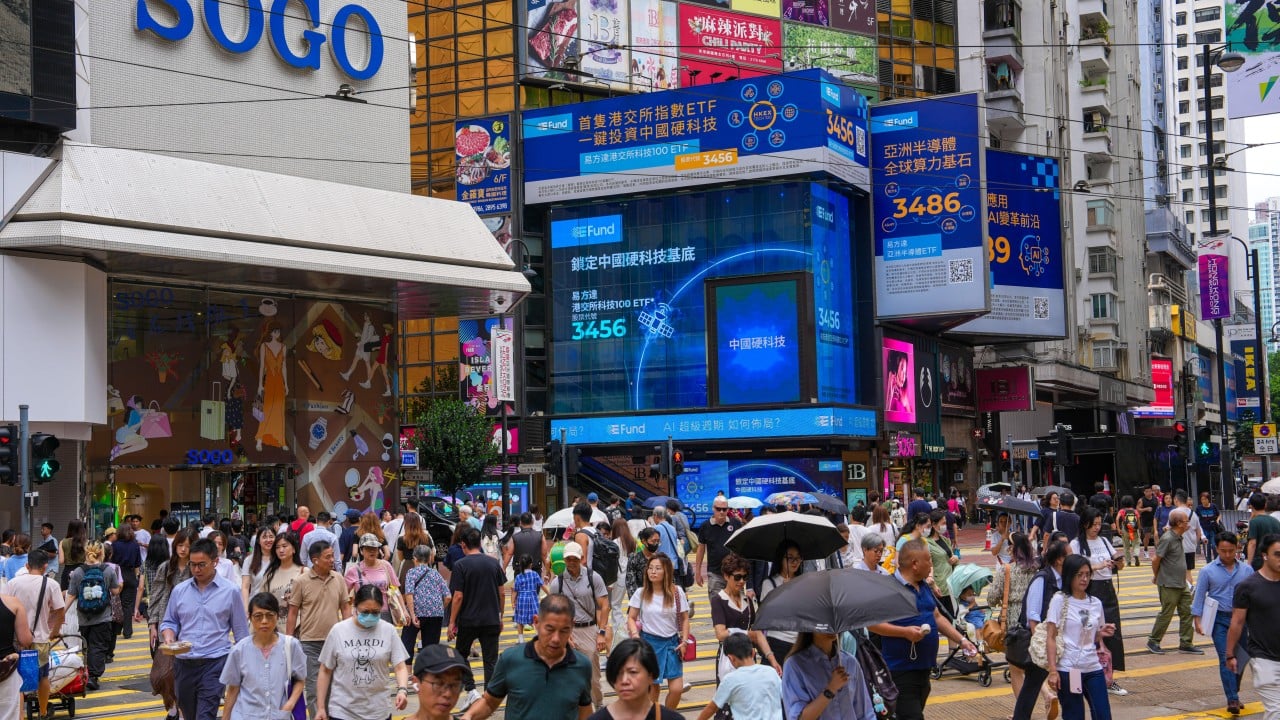
Consider Mei-Ling, a hypothetical shopper in Hong Kong whose Tuesday afternoon routine mirrors that of millions across Asia. She stands at the perfume counter of Sogo in Causeway Bay, debating between two bottles of citrus cologne. When she reaches for her wallet, the clerk smiles and asks the question we have all been trained to answer without thinking. Do you have a rewards card with us? Mei-Ling pulls out her phone, opens the Sogo Rewards app, and scans a barcode. A tiny chime confirms she has earned points toward a future discount. Two blocks away, at a gleaming Chow Sang Sang jewelry counter, another hypothetical shopper, David, buys a gold bracelet for his mother’s seventieth birthday. To get the warranty registered and earn member privileges, he hands over his full name, his mobile number, his email address, and his date of birth.
Both Mei-Ling and David walked out of those stores feeling appreciated. They felt like insiders. They had no idea they had just handed over the keys to their digital lives to companies that were about to leave the front door wide open.
When news broke that Sogo Hong Kong and the heritage jeweler Chow Sang Sang had both been struck by severe data breaches—exposing the personal records of roughly 820,000 Sogo members alongside an undisclosed trove of Chow Sang Sang customer data—the headlines treated it like a routine corporate fender-bender. Numbers were tallied. Spokespeople issued statements expressing "deep regret." Regulatory bodies were notified. To the casual reader scrolling past on a morning commute, 820,000 looks like a sterile statistic. It is too big to picture, so the brain quietly files it away under someone else’s problem.
Stop and look closer at that number. Eight hundred and twenty thousand people is more than ten percent of the entire population of Hong Kong. If you stood every affected Sogo member shoulder to shoulder, the line would stretch from the tip of Kowloon all the way into the mountains of the New Territories and back again.
And what did those 820,000 people actually lose? Not their credit card numbers, the companies were quick to reassure the public. Both Sogo and Chow Sang Sang emphasized that payment card details were untouched. On the surface, that sounds like good news. If a thief didn't get your Visa number, your bank account is safe, right?
Wrong. That is the oldest, most dangerous myth in modern cybersecurity.
The Architecture of a Modern Ghost
To understand why losing your name, phone number, email address, and birthday is actually worse than losing a credit card, you have to understand how digital identity works today. If someone steals your credit card number, you make one phone call. The bank cancels the plastic, reverses the fraudulent charges, and mails you a new card by Thursday. The wound heals in forty-eight hours.
You cannot cancel your date of birth. You cannot call a bank and ask them to issue you a new mother’s maiden name, a new home address history, or a new lifelong mobile number tied to every two-factor authentication code you receive.
Think of your personal data not as a single locked vault, but as a collection of puzzle pieces scattered across dozens of businesses. On its own, a single piece—say, your email address—is harmless. Scammers already have millions of email addresses. They blast them with clumsy, generic spam about unclaimed inheritances and fake package deliveries that any half-awake person deletes on sight.
The Sogo and Chow Sang Sang breaches changed the game because they handed attackers high-resolution puzzle pieces attached to real-world luxury consumption.
Imagine a criminal syndicate buying that leaked database on a dark web forum. They don't just see a string of random characters. They see a curated list of 820,000 people who shop at high-end department stores and buy fine gold jewelry. They know your exact full name. They know your exact phone number. They know your birthday, your gender, and often your preferred language and shopping habits.
Now, picture what happens three weeks after the breach fades from the news cycle.
David, our hypothetical Chow Sang Sang customer, is sitting at his desk on a rainy Wednesday when his phone buzzes. It is a text message, or perhaps a WhatsApp notification, from a number displaying a convincing corporate logo. The message addresses him by his full, properly spelled name. It references his recent loyalty tier status or a complimentary maintenance check for luxury jewelry purchases. It asks him to click a link to confirm his delivery address or claim a voucher before his birthday month ends.
Because the message knows who he is, where he shops, and when he was born, David’s natural skepticism evaporates. His brain doesn't flag it as spam; it flags it as customer service. He clicks the link. He enters his password—the same password he uses for his primary email, or his cloud storage, or his online banking.
Game over.
I have lived through the slow-motion wreckage of a retail data breach, and the worst part isn't the initial notification email. It is the paranoia that sets in months later. It is the sudden spike in calls from "bank fraud departments" who already know your middle initial and the district where you live. It is watching an elderly parent nearly wire thousands of dollars to a voice on the phone because the caller knew the exact date they bought a piece of jewelry. Once your foundational identity markers are spilled onto the internet, they never dry up. They are copied, sold, merged with other breaches, and resold for years.
Why Luxury Retail Is a Magnet for Digital Thieves
There is a reason hackers target heritage jewelers like Chow Sang Sang and premier department stores like Sogo rather than corner convenience stores. In the underground economy of stolen data, not all records are priced equally. A database of people who regularly buy gold bullion, diamond rings, and designer cosmetics is pure platinum to fraudsters. It pre-screens targets for disposable income.
Yet, while retailers have spent fortunes designing gilded showrooms, velvet display cases, and biometric safes to protect their physical inventory, their digital back rooms often look like screen doors held shut with masking tape.
Let us be candid about why this keeps happening. For decades, retail executives viewed customer data as a marketing asset rather than a toxic liability. Every loyalty program, every "spin-to-win" app, every digital receipt initiative was built by marketing teams desperate to track consumer behavior and boost repeat sales. Security was treated as an expensive afterthought—a cost center that slowed down checkout lines and annoyed customers with extra verification steps.
Think of personal customer data like enriched uranium. In small, tightly controlled amounts, it powers your business. It lets you send a nice birthday coupon or tell a regular shopper when their favorite coat goes on sale. But if you hoard massive stockpiles of it in poorly shielded servers without rigorous encryption and constant monitoring, you aren't running a loyalty program anymore. You are sitting on a radiological hazard. And when the containment fails, it isn't the executives in the boardroom who get poisoned. It is the 820,000 ordinary people who trusted the brand name on the storefront.
When Sogo disclosed that unauthorized third parties had gained access to its member database, and when Chow Sang Sang confirmed a similar intrusion affecting its systems, both companies followed the standard corporate playbook. They hired external cybersecurity experts. They reported the incidents to Hong Kong’s Office of the Privacy Commissioner for Personal Data (PCPD). They urged customers to remain vigilant.
Vigilant. Notice how the burden instantly shifts. The corporation loses the keys to the vault, and the customer is told to stay vigilant for the rest of their life.
The Anatomy of Broken Trust
Look at the timeline of how these breaches unfold, because the silence between the intrusion and the confession is where the deepest damage occurs.
In almost every major retail breach, attackers do not kick down the door, grab the files, and run out in five minutes. They slip in through an unpatched server, a compromised vendor credential, or a single employee tricked by a phishing email. Once inside, they move quietly. They map the network. They test which databases hold the crown jewels. Sometimes they linger in the shadows for weeks or months, siphoning data out in small, disguised packets so they don't trigger alarms on network traffic monitors.
By the time an IT team notices an anomaly—a strange login at 3:00 AM, an unexplained spike in server queries—the data is already gone. Then comes the internal investigation. Lawyers debate what must be disclosed and when. Public relations teams draft careful, passive-voice statements designed to minimize stock price dips and brand damage.
Meanwhile, the customers are still shopping. They are still scanning their loyalty apps at the register, feeding fresh data into a compromised ecosystem, completely unaware that their digital pockets have already been picked.
What makes the pairing of Sogo and Chow Sang Sang so jarring is what these two brands represent in the cultural imagination. Sogo Causeway Bay is a landmark—a bustling vertical city where generations of families have bought school uniforms, wedding gifts, and groceries. Chow Sang Sang, founded in 1934, literally translates to "endless life" and carries the weight of nearly a century of trust. People buy wedding gold there. They trust the purity of the metal because the name stamped on the clasp is supposed to be unimpeachable.
When a ninety-year-old institution fails to protect a basic database of names and phone numbers, it breaks an unspoken social contract. Customers give these companies their loyalty not because they love handing over personal metadata, but because they believe an established, prestigious brand is competent enough to keep a secret.
What You Can Actually Do When Your Data Is Already Gone
It is easy to feel helpless when you realize your information is floating around in the dark corners of the internet. You cannot un-ring the bell. You cannot force a hacker to delete a spreadsheet.
You can, however, make that stolen data useless to the people trying to weaponize it against you.
First, treat every inbound message from a brand you love as a potential trap. If you receive an email, SMS, or WhatsApp message claiming to be from Sogo, Chow Sang Sang, a courier service, or your bank, never click the link inside it. Even if it contains your full name. Even if it mentions your exact birthday. Even if it warns you that your loyalty points will expire at midnight. Close the message, open your web browser, and go to the company’s official website directly, or open their verified app from your home screen. If the offer or alert is real, it will be waiting for you inside your account.
Second, break the chain of password reuse immediately. Scammers rely on a predictable human habit: we use one email address and one favorite password across dozens of sites. When a retail database leaks, automated bots immediately take your email and password and test them against banking portals, government services, and major email providers—a technique called credential stuffing. Use a dedicated password manager to generate long, gibberish passwords for every single account, and turn on app-based two-factor authentication (not SMS codes, which can be intercepted) wherever it is offered.
Third, stop handing over your real identity at the cash register. The next time a clerk asks for your phone number, email, or birthday to "look up your account" or "send an e-receipt," pause. Ask yourself if a five-dollar voucher is worth handing another corporation a permanent piece of your identity. Create a secondary "junk" email address exclusively for retail loyalty programs and online shopping. Use a slightly altered birth date—off by a few days or a month—when signing up for store discounts so your real date of birth stays off marketing servers. If a store demands your national ID number or full residential address just to buy a pair of shoes or a necklace, walk away.
Fourth, monitor your credit and financial alerts like a hawk. Set up instant push notifications on your banking apps for any transaction over a single dollar. Fraudsters often test stolen identity profiles with tiny, unnoticeable charges before attempting a major theft.
The Quiet Price of Convenience
We have spent the last fifteen years trading our privacy for friction-free convenience and ten-percent coupons. Every app on our phones, every plastic loyalty card thickening our wallets, every "Create an Account to Checkout" prompt has trained us to surrender our personal histories without a second thought.
Companies like Sogo and Chow Sang Sang didn't set out to hurt their customers. They simply built massive digital vaults full of human lives without building walls thick enough to keep the wolves out. And until laws impose crushing financial penalties on corporations that treat customer data like cheap scrap paper, the breaches will keep coming.
The next time you stand under the bright fluorescent lights of a department store counter, watching a clerk scan your phone for a handful of loyalty points, listen closely to that tiny electronic chime. It sounds like a reward. More often than not, it is the sound of another door unlocking behind you.