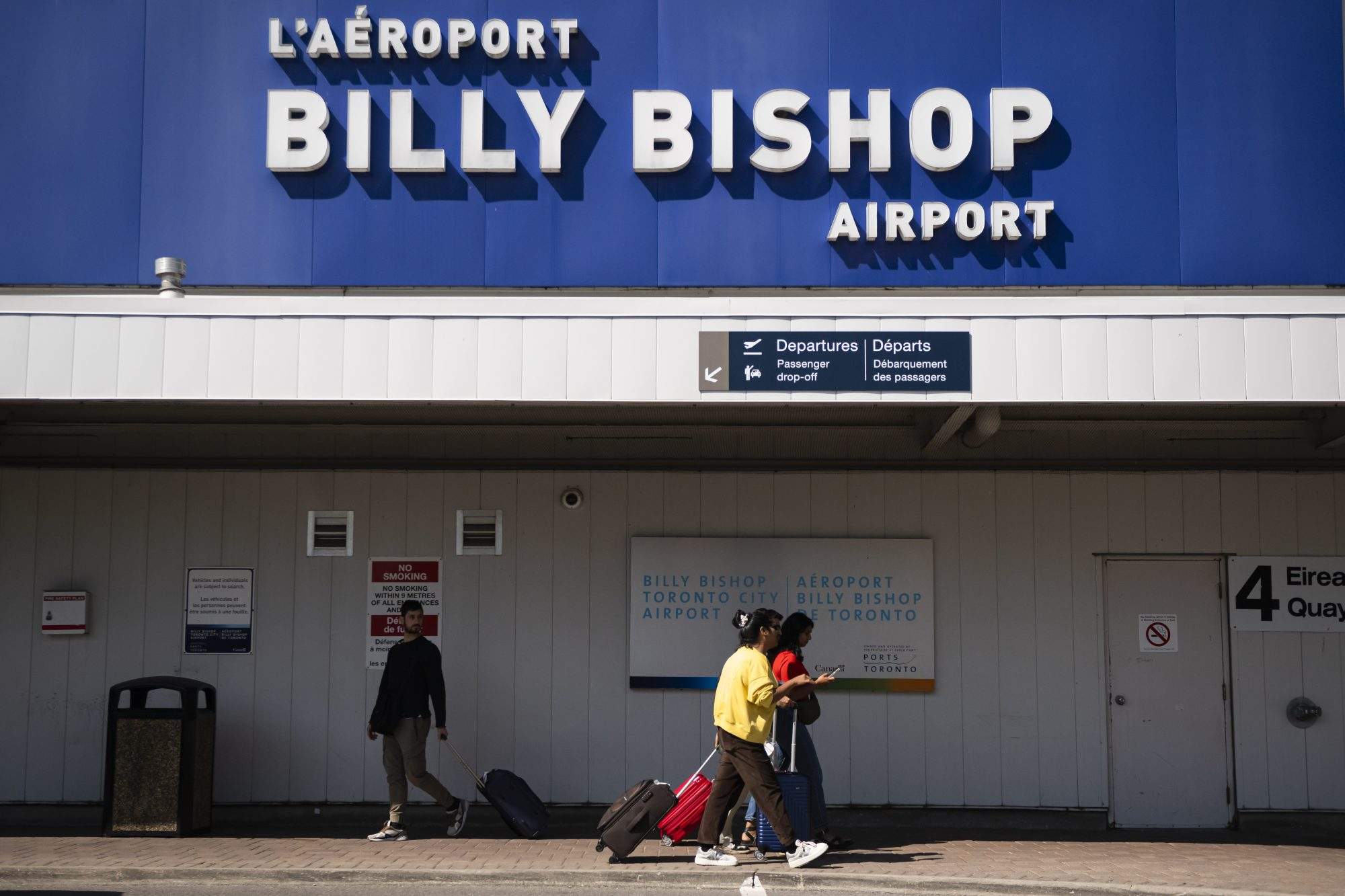
The push to bring commercial jets to Toronto’s waterfront has officially triggered a public health standoff. On July 13, 2026, the Toronto Board of Health voted to task the city’s medical officer of health, Dr. Michelle Murti, with launching an immediate investigation into the physical and neurological consequences of expanding Billy Bishop Toronto City Airport. In partnership with Health Canada, the study aims to quantify how quintupling the airport's annual passenger capacity to 10 million would alter life in Canada’s most densely populated urban center.
The primary objective is simple. The city needs an unvarnished assessment of what happens when short-haul commercial jets fly over a massive municipal population every few minutes. While provincial authorities champion the expansion as an economic necessity to keep Ontario globally competitive, medical professionals and municipal planners warn that the true cost will be paid in human health and environmental destruction.
This is no longer a localized zoning dispute. It is a calculated exercise in provincial overreach that places economic speculation directly above the long-term well-being of nearly half a million people.
The Provincial Power Grab
The escalation began earlier this year when the provincial government passed sweeping legislation to seize control of the airport from the City of Toronto. By invoking expropriation powers over substantial portions of Toronto Island and designating the waterfront a special economic zone, the province systematically stripped municipal authorities of their traditional oversight.
This legal maneuver allows the province to bypass municipal and provincial environmental and planning regulations. Premier Doug Ford has repeatedly pointed to internal polling indicating strong public support for the expansion, though independent observers note these numbers contrast sharply with localized public sentiment. Transportation Minister Prabmeet Sarkaria defended the aggressive intervention as a nation-building project vital to competing against American transportation hubs.
The plan involves extending the existing runway to as much as 2,100 meters. This is a massive leap from the current layout and is designed explicitly to accommodate large commercial jet airliners. Local councillors find themselves caught in the middle. They are facing immense pressure from downtown residents who feel completely alienated by a closed-door provincial process that lacked meaningful public consultation.
The Threat of Ultrafine Particles
Medical concern centers on the fundamental difference between the current turboprop fleet and commercial jets. Jets burn significantly more fuel, emitting a higher concentration of toxic pollutants per passenger-mile on short-haul flights.
Of all the airborne contaminants, ultrafine particles pose the most immediate danger to human biology. These tiny particles bypass the natural filtration defenses of the human respiratory system. They pass directly through the lungs and gastrointestinal tract to enter the bloodstream. From there, they circulate freely to the heart, brain, and other vital organs.
Ultrafine Particle Exposure Pathway:
Jet Fuel Combustion -> Inhalation -> Deep Lung Penetration -> Bloodstream Absorption -> Multi-Organ Impact
The data is troubling. Research from the University of Toronto led by engineering professor Greg Evans demonstrated that ultrafine particle counts spike dramatically with every flight when the wind blows from the airport toward the mainland. At the Bathurst Quay ferry terminal, concentrations have routinely matched levels typically found alongside major multi-lane highways.
Canada enforces no regulatory standards for ultrafine particles. There are no mandatory monitoring systems or legal mechanisms to hold operators accountable when toxic air spikes occur. This regulatory void makes the introduction of high-frequency jet traffic an dangerous real-world experiment.
Neurological and Cardiovascular Toll
The threat extends far beyond breathing difficulties. Long-term exposure to these unregulated particles correlates with an increased risk of heart attacks, strokes, diabetes, and dementia.
A landmark European study published recently revealed elevated health risks for anyone living within 20 kilometers of a major airport. The most acute spikes in chronic disease occur within a five-kilometer radius. While Toronto’s suburban Pearson Airport has roughly 150,000 residents living within that five-kilometer high-risk perimeter, the downtown Billy Bishop site places nearly 450,000 people inside the exact same danger zone.
Aviation noise represents another invisible hazard. The World Health Organization classifies chronic airport noise as a serious public health risk tied to sleep disruption, severe anxiety, and long-term cognitive impairment.
The impact on children is especially pronounced. International studies monitoring schools near major airports documented clear deficits in reading comprehension and memory among students exposed to constant flight paths. When airports closed or redirected traffic, those cognitive deficits disappeared over time, confirming a direct causal relationship. The expanded Billy Bishop footprint sits dangerously close to schools, daycare facilities, and densely populated residential co-ops.
Undermining a Three Billion Dollar Waterfront Cleanup
The environmental damage is not confined to the air. A damning report from Toronto city staff warned that the proposed 2,100-meter runway extension threatens to destroy the city’s water infrastructure.
Toronto is currently executing a $3 billion infrastructure program, the largest stormwater management initiative in its history. The project is designed to keep combined sewer overflows and urban pollutants out of the Inner Harbour and the Don River.
The extended runway threatens this investment by acting as a massive physical barrier in Lake Ontario. Environmental assessments indicate that even a minor extension would reduce water flow through the Western Channel by half, doubling the amount of time water sits stagnant in the basin before naturally flushing into the open lake.
| Runway Status | Water Circulation Impact | Flushing Time | Contamination Risk |
|---|---|---|---|
| Current Layout | Standard flow through Western Channel | Normal natural baseline | Controlled via current infrastructure |
| Proposed 2,100m Extension | 50%+ reduction in channel flow | Doubles stagnant retention time | Severe pollutant and sewage accumulation |
A larger expansion will worsen this effect. Stagnant water will trap toxic runoff from the Don River, stormwater outfalls, and residual sewage overflows. The resulting accumulation of contaminants creates a permanent pollution trap along the public waterfront, neutralizing the benefits of the multi-billion-dollar cleanup.
The Net Zero Conflict
The provincial push also directly contradicts Toronto’s legally binding commitment to achieve net-zero greenhouse gas emissions by 2040.
Aircraft operations at Billy Bishop generated roughly 64,000 tonnes of carbon dioxide equivalent emissions recently. That figure ignores the substantial ground-side gridlock and surface traffic idling at the foot of Bathurst Street.
Quintupling passenger volumes will cause aviation emissions to skyrocket to over 300,000 tonnes annually. This is equivalent to adding more than 70,000 internal combustion vehicles to the downtown core. At a time when the municipal government is struggling to meet its near-term emission reduction targets, locking in a massive, permanent source of fossil-fuel combustion is a major step backward.
The business case for this expansion also ignores incoming infrastructure alternatives. The planned high-speed rail corridor between Toronto and Quebec City represents a cleaner, highly efficient alternative for the exact short-haul routes that Billy Bishop primarily serves. Expanding an urban airport for short flights right as electrified rail options emerge is a shortsighted economic play.
The impending health impact assessment from Dr. Murti and Health Canada will finally bring hard, peer-reviewed science to a debate that has been dominated by political rhetoric and corporate lobbying. Toronto deserves a waterfront driven by data and public safety, not a manufactured economic zone that trades the health of 450,000 residents for corporate convenience.