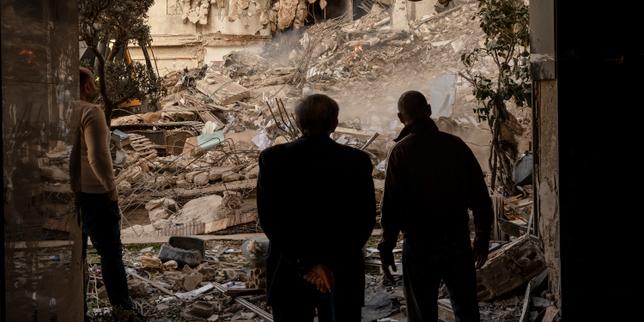
The headlines are screaming about "massive strikes" and "total dominance." They want you to believe that the Middle East has entered a new era because a series of pagers exploded or a bunker was turned into a crater. The press is addicted to the kinetic high of tactical brilliance. They see a high-tech assassination and call it a turning point. They see a flattened block in Dahieh and call it "restoring deterrence."
They are wrong.
In reality, Israel is currently winning a war that no longer exists while losing the one that actually matters. We are witnessing the most sophisticated military display of the 21st century being applied to a 19th-century colonial logic. It is a masterclass in operational excellence and a disaster in strategic thinking. If you think "hitting them everywhere" is a victory condition, you haven't been paying attention to the last forty years of asymmetrical grit.
The Cult of the Kill Chain
The current consensus suggests that by removing the "head" of Hezbollah, the body will wither. This is the "High-Value Target" (HVT) fallacy that the United States spent twenty years and trillions of dollars debunking in Iraq and Afghanistan.
When you kill a commander in a decentralized, ideologically driven militia, you aren't deleting a file. You are triggering a promotion. Hezbollah is not a corporate hierarchy; it is a franchise of martyrdom. The "lazy consensus" argues that chaos in the ranks leads to collapse. History argues that it leads to radicalization and the rise of younger, more aggressive leaders who have no memory of previous diplomatic compromises.
The kinetic obsession—the need to strike "everywhere it is necessary"—is a dopamine hit for a terrified public. It provides the illusion of progress. But look at the math. You can destroy 50% of an arsenal, but if the remaining 50% consists of 75,000 rockets, the "threat" hasn't been neutralized; it has just been provoked.
The Logistics of Rage
Let’s talk about the "buffer zone" obsession. Pundits claim that a ground incursion to push Hezbollah back 20 kilometers will secure northern Israel. This is a geometric solution to a psychological problem.
- The Range Paradox: Hezbollah’s mid-range assets can hit Tel Aviv from the Litani River just as easily as they can from the border. Pushing them back ten miles does nothing to stop the heavy metal.
- The Home Field Trap: Every meter an IDF tank moves into Lebanese territory, the technological advantage shrinks. In the air, Israel is a god. On the ground, in the tangled thickets and hand-carved tunnels of Southern Lebanon, a $5,000 Kornet missile levels the playing field against a $10 million tank.
- The Recruitment Cycle: You cannot bomb an ideology out of existence. Every "successful" strike that claims "collateral" damage serves as the primary marketing material for the next generation of fighters.
I have watched militaries burn through their international political capital to achieve "tactical gains" that evaporate the moment the boots leave the ground. Israel is trading its long-term global standing for the short-term satisfaction of making things blow up. It’s a bad trade.
The Myth of the "Decisive Blow"
Western media loves the phrase "decisive blow." It implies a boxing match where one punch ends the fight. This isn't boxing; it's an ecosystem.
Hezbollah is woven into the social fabric of Lebanon. They run schools, hospitals, and banks. You can’t "defeat" them without dismantling the state of Lebanon itself—a task that Israel tried in 1982 and 2006, only to leave behind a vacuum filled by even more radical actors.
The current strategy assumes that if the pain is high enough, the Lebanese people will turn on Hezbollah. This is a fundamental misunderstanding of tribal and sectarian dynamics. When foreign bombs fall on a capital city, the population doesn't usually blame the local militia; they blame the person dropping the bombs. External pressure creates internal cohesion. This is Geopolitics 101, yet the current "intelligence" seems to have skipped that semester.
The Real Cost of "Anywhere, Anytime"
The promise to strike "everywhere it is necessary" is an admission of failure. It means the target list is infinite. It means there is no "end state."
If your strategy is to hit a moving target forever, you aren't winning a war; you are managing a permanent state of attrition. Attrition favors the side that values life less and time more. Hezbollah and its patrons in Tehran are playing a century-long game. Israel is playing a news-cycle game.
Broken Premises: People Also Ask
Q: Can Israel's superior technology win this war?
A: Technology wins battles, not wars. You can have the best target-acquisition software in the world, but if your political objective is "quiet," technology is the wrong tool. Quiet is a product of political settlements, not precision-guided munitions.
Q: Is Hezbollah significantly weakened?
A: Operationally? Yes, in the short term. Strategically? No. They are more relevant now than they were six months ago. They have successfully forced the displacement of 60,000 Israelis without even trying. That is a strategic victory they didn't have to fire a single high-end missile to achieve.
Q: What should be done instead?
A: Admit that there is no military solution to a theological and nationalistic grievance. The unconventional move is to stop the escalatory spiral and force a diplomatic nightmare on the adversary. By continuing the strikes, Israel gives Hezbollah exactly what it wants: a justification for its existence as the "defender" of the oppressed.
The Strategic Blind Spot
The "insider" truth that nobody wants to admit is that this entire campaign is being driven by domestic political survival, not national security. A government under fire at home needs a "strong" image. Big explosions provide that image.
But look at the cost-benefit analysis.
- Cost: Global isolation, a crippled economy, a reservist force reaching its breaking point, and the constant threat of a multi-front regional war.
- Benefit: A few weeks of "disruption" to a group that has spent forty years preparing for exactly this scenario.
The sophisticated observer sees past the fireball. They see the depletion of Iron Dome interceptors that cost $50,000 a pop to intercept "dumb" rockets that cost $500. They see the erosion of the "Startup Nation" brand as it transforms into the "Fortress Nation."
You cannot strike your way to peace. You can only strike your way to the next, more violent chapter. The current "bombing campaign" is not a strategy; it is a tantrum with a billion-dollar budget.
If you want to win, you don't hit "everywhere." You stop playing the game the enemy designed for you. Hezbollah wants a war of attrition. Israel is currently handing it to them on a silver platter, gift-wrapped in "tactical excellence."
Stop cheering for the explosions. Start mourning the lack of an exit strategy.