Three in the morning.
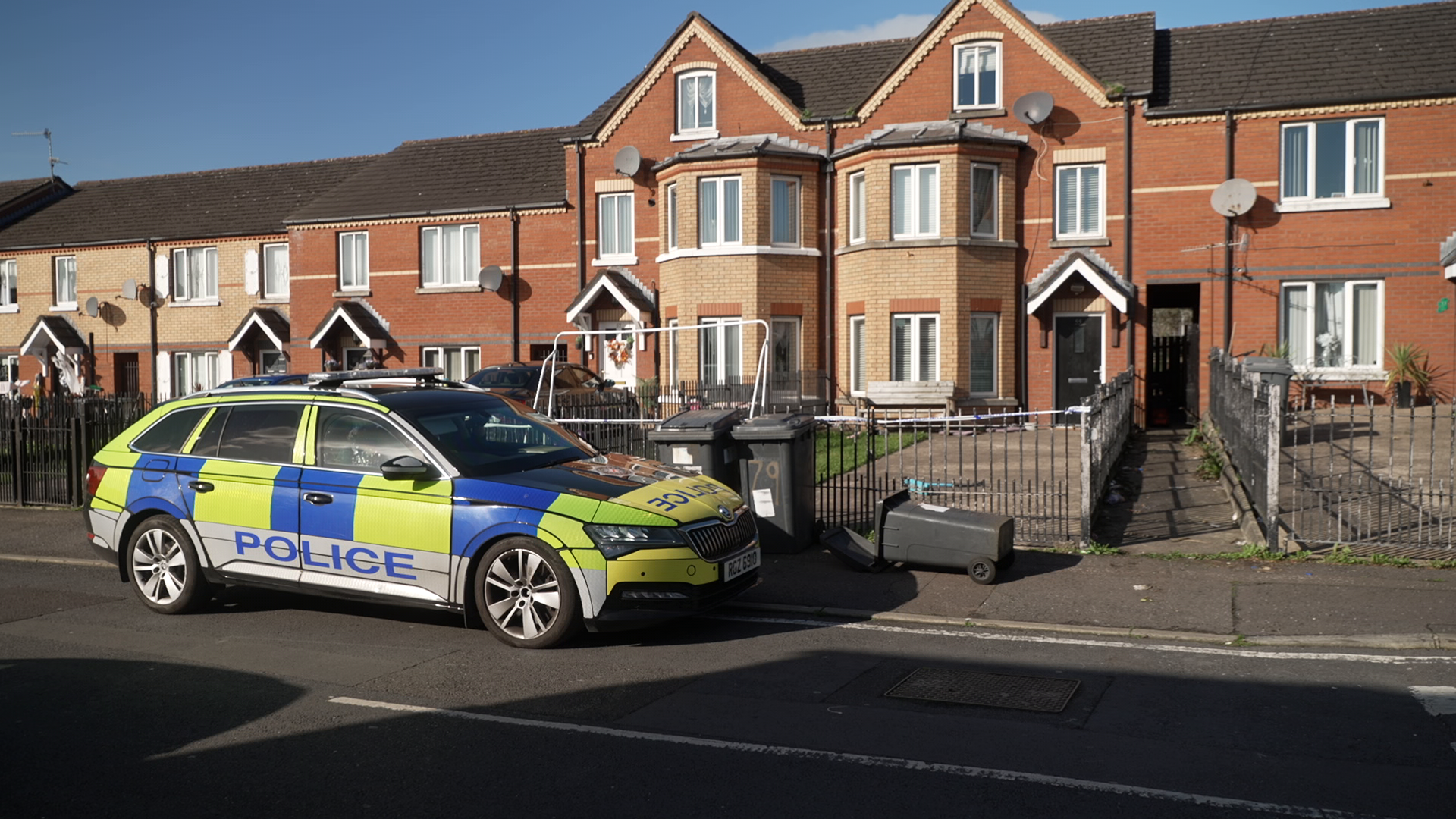
In Belfast, three in the morning is supposed to belong to silence, to damp air rolling in off the water, to the soft, rhythmic breathing of children upstairs who have finally drifted past their night fears. It is not supposed to belong to a letterbox. Yet on October 16, 2026, in the Stanhope Street area of north Belfast, a suspected pipe bomb was pushed through the letterbox of an occupied home and detonated, tearing into the front door and hallway while a mother and her children were inside. Nobody was physically injured. By morning, neighboring homes had been evacuated, police cordons stretched across the street, and a routine city block had been turned into a forensic puzzle.
News reports reduce moments like that to neat, efficient summaries. They give you the hour, the street, the device type, the cordon, and the reassuring line that no one was hurt. If you read quickly, you can almost treat it like a weather alert that passed without rain.
It wasn't weather. It was a breach of threshold.
The Quiet Violence of an Evacuation
Most people outside Belfast—and even plenty of people who have never had to step out of their front door at three in the morning with a sleepy child on one hip—think of an evacuation as a logistical step. Police knock. Neighbors step out. A cordon goes up. Later, people go back in.
That view misses what happens inside the body when the place meant to keep danger out suddenly becomes the place danger enters.
Imagine a hypothetical neighbor—let's call her Claire, living two doors down in a classic terraced house where brick walls share weight and sound like lungs sharing air. (This neighbor and her exact thoughts are a hypothetical illustration meant to show how a security alert feels from the inside out, while the Stanhope Street explosion, the evacuation of nearby residents, and the uninjured mother and children inside the targeted property reflect the reported facts of the October 2026 incident.)
When Claire hears the thud and sees blue lights painting wet pavement outside, her brain doesn't start with geopolitics or criminal classifications. It starts with smaller, sharper questions. Did the lock hold? What if there is a second device in the alleyway? Which coat do I grab if I don't know whether I'll be back in twenty minutes or twenty hours?
An evacuation is not just moving bodies out of a blast radius. It is a sudden eviction from ordinariness. You leave behind half-folded laundry, school shoes by the radiator, the mug with tea still cold at the bottom, and the quiet assumption that the street outside your window belongs to the day rather than the dark.
Think of a home like a boat moored in a harbor. Even when the tide pulls hard, you trust the hull and the lines. A pipe bomb pushed into a hallway doesn't sink the harbor, yet it makes every resident wonder if the planks beneath their feet are still sound. Even when no physical wound is recorded—and thank goodness none was in the Stanhope Street attack—the shock leaves a mark that doesn't show up on a triage sheet.
Why Terraced Streets Carry Heavier Weight
Belfast's architecture tells a story before a single word is spoken. Rows of terraced houses stand shoulder to shoulder, sharing party walls, chimneys, and pavements. That closeness is part of what gives neighborhoods their warmth; you know when a car door slams next door, and you know when someone comes home late.
Yet that same closeness magnifies risk when an improvised explosive device goes off. A blast in a hallway or at a front door doesn't stay neatly inside one frame. Glass rattles down the row. Smoke drifts where it shouldn't. Specialist officers and bomb-disposal teams have to treat the whole block with caution until they are sure no secondary threat sits waiting in a yard or entry.
Consider what happens next: a street that usually hums with school runs, deliveries, and casual greetings goes quiet behind tape. Residents stand watching uniformed officers work under floodlights, waiting for clearance to return to lives put on pause.
A home can survive a damaged door and still take months to recover its sense of quiet.
Why do incidents like this keep resurfacing in Belfast's news cycle even decades after the 1998 Good Friday Agreement reshaped public life? Because peace agreements end formal war between armed campaigns, yet they do not automatically erase every grudge, local feud, or small cell willing to use crude explosives to intimidate or retaliate. Across 2025 and 2026, police in Belfast and wider Northern Ireland have repeatedly responded to pipe bomb attacks and viable devices—from devices placed or thrown at homes to suspicious objects found under cars that forced evacuations and security alerts.
In some cases, local reporting has noted fears or claims of mistaken identity—a chilling thought in any neighborhood, because if an attacker can get the wrong door in the dark, nobody's letterbox feels entirely immune. We should be careful here: unverified beliefs about mistaken targets are not established fact until detectives prove motive, and investigators often keep details close while inquiries run. Still, the human fear behind that question is real enough.
The Gap Between "No Injuries" and "Everything Is Fine"
I am not a Belfast resident waking to blue lights on Stanhope Street, and I won't pretend I know the exact weight of living through decades of political tension or sudden nighttime alerts. What I do know from reporting on post-conflict communities and urban emergencies is how easily outsiders misread relief.
When a headline says a mother and her children escaped injury, readers breathe out. Good. That is the best possible news in a terrible situation.
Sometimes, though, relief turns into dismissal. People hear "no one hurt" and move on in ten seconds. For the family whose front door and hallway took the blast at three in the morning, surviving physically is the starting line, not the finish. Every creak on the stairs at night sounds louder after that. Every knock at the door carries an edge it never had before.
And what about the neighbors asked to leave their houses? Even a short evacuation tests patience, routines, and nerves. Older residents, shift workers, parents trying to keep toddlers calm in a car or community space—they bear the collateral friction of an act they didn't choose.
What Actually Keeps a Neighborhood Standing
It is tempting to look at a pipe bomb attack and feel only cynicism, as if a single night's violence cancels out years of normal life. That reaction is understandable, especially when you see cordons across familiar streets. It is also incomplete.
Real resilience in a place like north Belfast doesn't look dramatic. It looks like neighbors checking on one another once the tape comes down. It looks like detectives following up leads, community representatives turning up at the scene, and ordinary people refusing to let a few reckless actors define their entire street.
Police appeals after these attacks almost always ask for the same thing: anyone who saw suspicious movement near the street around the time of the blast coming forward, whether directly or anonymously. That sounds small—just a pair of eyes noticing someone walking fast in the dark—yet small observations are often how investigations move from guesswork to accountability.
Nothing about a pipe bomb pushed into a family home is minor. Not the blast. Not the evacuation. Not the quiet morning after when neighbors look at a scarred doorway and wonder how a place so ordinary could turn so loud in the dark.
When the cordons finally roll up and the kettle goes back on in those terraced kitchens, the real measure of the street isn't that nothing broke—it's that people still choose to stay, speak up, and keep faith in one another.