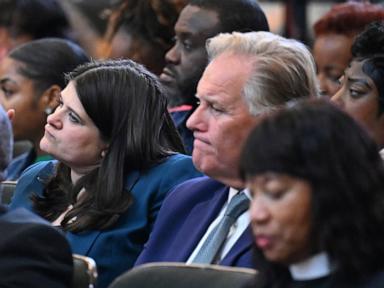
Two days before the 2026 midterm elections, Michigan Democratic Representative Haley Stevens walked into Perfecting Church in Detroit and did something almost unheard of in modern swing-state politics. She stood next to Republican nominee Mike Rogers, swayed to gospel music, and publicly endorsed him over her own party's Senate nominee, Abdul El-Sayed.
It was supposed to be an October—well, November—surprise that fractured the Democratic coalition and handed Republicans a critical Senate seat. Instead, it became a case study in how late-stage political theater fails when voters have already made up their minds. Just 48 hours later, El-Sayed defeated Rogers by roughly seven percentage points (52.5% to 45.5% with 99% of votes counted), becoming the first Muslim American elected to the U.S. Senate.
Most surface-level coverage treated Stevens's defection as a shocking bolt from the blue. If you actually followed the Michigan Senate race from the August primary onward, you saw the fracture lines widening for months. Understanding why Stevens crossed the aisle—and why Michigan voters largely ignored her—tells you everything about where the Democratic Party's internal fault lines sit right now.
The Split Screen in Detroit That Shocked Washington
On Sunday, November 1, 2026, reporters covering Michigan politics experienced whiplash.
At one Detroit church, Greater Emmanuel Institutional Church of God in Christ (and later Northend Church of God in Christ for a Souls to the Polls rally), Abdul El-Sayed campaigned alongside Democratic heavyweights. Rep. Jim Clyburn of South Carolina, Sen. Angela Alsobrooks of Maryland, Rep. Debbie Dingell of Michigan, and state Sen. Mallory McMorrow all showed up to project unity.
Six miles away at Perfecting Church, Stevens appeared alongside her fiancé, Jason Turkish, and stood right next to Mike Rogers and his wife, Kristi.
The immediate trigger was a messy, public uninviting. Debbie Dingell, the dean of Michigan's Democratic House delegation, had spent days trying to broker a joint appearance between El-Sayed and Stevens to calm nervous party leaders. When the behind-the-scenes drama turned into what Dingell called a "distraction," Stevens was disinvited from the Sunday unity event.
Stevens didn't take the snub quietly. In a video posted to X and in remarks to reporters outside the church, she declared that El-Sayed had made clear she wasn't welcome in his campaign. "And he's right," Stevens said, "and that's why I am endorsing Mike Rogers for the United States Senate today."
Washington Democrats lost their minds. Senate Minority Leader Chuck Schumer, who had actually backed Stevens during the primary, didn't mince words on social media, calling her move a "despicable betrayal." Even Lauren French, communications director for the Senate Majority PAC, admitted the optics were "enraging," though she argued the party had the power to turn it into "nothing more than a distraction."
How a 1-Percent Primary Loss Turned Into Total Warfare
You can't understand November 1 without looking back at August.
When retiring Democratic Sen. Gary Peters announced he wouldn't seek reelection, the open Michigan seat instantly became one of the most expensive battlegrounds in the country. The Democratic primary pitted Stevens, a pragmatic establishment congresswoman, against El-Sayed, a progressive former public health official who ran on universal Medicare and getting corporate money out of politics. State Sen. Mallory McMorrow was also in the mix early on before dropping out prior to voting.
It wasn't a polite policy debate. Tens of millions of dollars in outside spending flooded the state, including massive backing for Stevens from the super PAC affiliated with the American Israel Public Affairs Committee (AIPAC).
When the primary ballots were counted in August, El-Sayed edged out Stevens by roughly one percentage point.
In normal political cycles, the runner-up licks their wounds for a week, cuts a unity video, and falls in line. McMorrow did exactly that, actively campaigning for El-Sayed. Stevens never really did. For nearly three months, she kept El-Sayed at arm's length while tensions over U.S. policy toward Israel festered beneath the surface.
The Gaza Divide and Outside Media Firestorms
The ideological chasm between Stevens and El-Sayed wasn't just about healthcare or campaign finance. It was deeply personal and centered on Israel and Gaza.
Stevens has long been a staunch defender of Israel. El-Sayed is a sharp critic of the Israeli government and U.S. military aid to the country. In a state with both a massive Arab American and Muslim population and deeply engaged Jewish communities, that divide kept raw nerves exposed all autumn.
In the final week of October, three separate sparks ignited the powder keg:
- The fiancé's admission: Stevens's fiancé, Jason Turkish, told The Detroit News that he couldn't bring himself to vote for El-Sayed and would be casting his ballot for Rogers instead.
- The rogue attack ad: An outside ad linked to Cenk Uygur of The Young Turks—not El-Sayed's campaign—drew intense backlash from several Democrats who condemned its rhetoric as antisemitic. El-Sayed explicitly distanced himself from the spot, stating his campaign didn't make it and he didn't agree with its contents.
- The Hasan Piker grievance: Stevens repeatedly attacked El-Sayed for appearing with progressive streamer Hasan Piker, telling reporters outside Perfecting Church, "We can't stand with hate. We can't stand with Hasan Piker."
Even after her fiancé's interview hit the press, Stevens went on CNN and assured colleagues like Rep. Jamie Raskin and Rep. Debbie Dingell that she wouldn't rescind her endorsement. Dingell later told NPR she was genuinely shocked when Stevens flipped just days later, adding that Stevens struggled in a Sunday night CNN interview to explain why she reversed course after promising she wouldn't.
Why Republicans Celebrated Too Early
From a purely tactical standpoint, you can see why Republicans thought they had struck gold.
Mike Rogers, a former congressman who had narrowly lost Michigan's other Senate race to Elissa Slotkin in 2024, badly needed a way to peel off moderate suburban voters. Standing next to a sitting Democratic congresswoman gave him an instant talking point.
"When Congresswoman Haley Stevens, who ran against Abdul El-Sayed and knows him better than anyone, stands with Mike Rogers, Michigan should take notice," Rogers told reporters.
President Donald Trump, campaigning at a rally in Iowa, immediately seized on the defection. Trump praised Stevens's "bravery" and urged her to switch parties outright, saying, "I'd love her to join the Republican party. I think that could happen." House Speaker Mike Johnson also chimed in, revealing he sent Stevens a note thanking her for her "courageous" stand.
There was just one huge problem with the GOP's victory lap. At the exact same time Republicans were trying to use Stevens to appeal to moderate, mainstream Michigan voters, Trump was undermining that message with brazenly Islamophobic attacks against El-Sayed. During that same Iowa rally, Trump called El-Sayed a "jihadist lunatic" and claimed Congress would need to "get a special metal detector for Abdul" if he won. Rogers himself had spent late October pushing unsubstantiated claims linking El-Sayed to Hezbollah, Hamas, and the Muslim Brotherhood—claims fact-checkers at Michigan Public noted had zero evidence behind them.
For swing voters in Oakland County or Macomb County, the contrast was jarring. Stevens was trying to frame her endorsement of Rogers as a principled stand against hate, while the head of Rogers's party was deploying explicit anti-Muslim tropes on national television.
Three Reasons the Endorsement Failed to Move Voters
Political insiders obsess over endorsements because endorsements are currency in Washington and Lansing. Regular voters rarely care, especially when an endorsement drops 48 hours before polls close.
1. Early Voting Had Already Locked In Millions of Ballots
Michigan's early in-person voting period opened on October 24—eight full days before Stevens showed up at Perfecting Church. By the Friday before her announcement, more than 1.8 million Michiganders had already cast their ballots. Considering that the entire 2022 midterm election saw 4.5 million total ballots cast in the state, roughly 40% of the electorate had already voted before Stevens ever uttered Mike Rogers's name.
You can't persuade someone whose ballot is already sitting in a clerk's vault.
2. Kitchen-Table Economics Beat Intra-Party Drama
While cable news panels dissected every frame of Stevens and Rogers at church, El-Sayed refused to take the bait.
When reporters pressed him on Sunday afternoon about Stevens's betrayal, he brushed it off entirely. "None of this matters," El-Sayed said, pointing toward surrounding neighborhoods and hammering his core message on the high cost of living, healthcare costs, and corporate influence.
He had the data on his side. Voters across Michigan were frustrated with inflation and economic pressures during Trump's second term. Moderate voters who held their noses and voted for El-Sayed weren't doing it because they loved his foreign policy or his podcast appearances; they were doing it because they didn't want to hand another Senate seat to Trump's agenda. As one Michigan voter bluntly told Bridge Michigan outside a polling place on Election Day, "Considering who the opposition was, I think I'd have voted for a tin can."
3. The "Reverse Impact" on Democratic Turnout
Debbie Dingell, who knows Michigan's political instincts better than almost anyone alive, predicted on Monday that Stevens's stunt would backfire.
"I'm a gut politician, I think it's had a reverse impact," Dingell told NPR.
She was right. Instead of depressing Democratic turnout, the perception that an establishment figure had teamed up with MAGA Republicans to kneecap the party's nominee right before Election Day infuriated base voters. Progressive volunteers, union organizers, and Black church leaders in Detroit rallied harder around El-Sayed in the final 36 hours. Rather than looking like a wounded candidate, El-Sayed looked like a fighter taking on both the GOP machine and entrenched insiders.
What Happens Now for Stevens and the Senate Map
When the Associated Press called the race for Abdul El-Sayed late Tuesday night (11:27 p.m. EST on November 3), the margin wasn't even close. El-Sayed pulled over 2.52 million votes to Rogers's 2.18 million—a decisive seven-point victory that easily outpaced the nail-biter margins Michigan usually produces.
His win helped Democrats hold a vital seat in a midterm cycle where the party surged to 56 Senate seats nationwide, emboldening the progressive wing by proving a populist, anti-corporate message could win statewide in the Rust Belt.
For Haley Stevens, the political fallout is severe and immediate. She had given up her safe House seat to run for the Senate, meaning she leaves Congress in January 2027. If she wants a future in Michigan Democratic politics, she has burned almost every bridge required to build one. Michigan Democratic Party Chair Curtis Hertel Jr. made the party's stance crystal clear on social media the day of her endorsement, writing that Stevens "is not a current member of the Michigan Democratic Party, nor will she be in the future."
Stevens insisted on Sunday that she wasn't abandoning her party, claiming, "I'm not turning my back on Democrats. It is one vote." In polarized American politics, you don't get to stand on stage with a Trump-backed Senate candidate 48 hours before Election Day and expect your former allies to treat it like a minor disagreement.
If you're tracking how swing-state politics works heading into the 2028 cycle, keep three takeaways front and center:
- Watch voter behavior, not elite endorsements: Late-cycle defections from losing primary rivals generate massive cable news coverage, but they rarely move actual ballots once early voting is underway.
- Track the foreign policy fault line: The split over Israel and Gaza isn't going away for Democrats; expect primary battles in 2028 to feature even fiercer clashes between AIPAC-aligned moderates and anti-interventionist progressives.
- Follow economic messaging over cultural noise: El-Sayed won a battleground state by seven points because he stayed glued to healthcare and cost-of-living issues while his opponents chased viral media controversies. Any candidate looking for a Rust Belt blueprint now has one sitting in Detroit.