Silence has a specific weight in southwest Edmonton after eight o’clock on a weeknight.
It is the heavy, predictable quiet of cul-de-sacs built in the last fifteen years, where vinyl siding gleams under LED streetlights and the loudest sound on the block is usually the low hum of a heat pump or the distant rush of traffic along Anthony Henday Drive. Families move to neighborhoods like Windermere, Terwillegar, and Rutherford precisely because they are paying a premium for that predictability. They are buying an invisible perimeter. They are buying the assurance that the chaos of the wider world stops at the exit ramp.
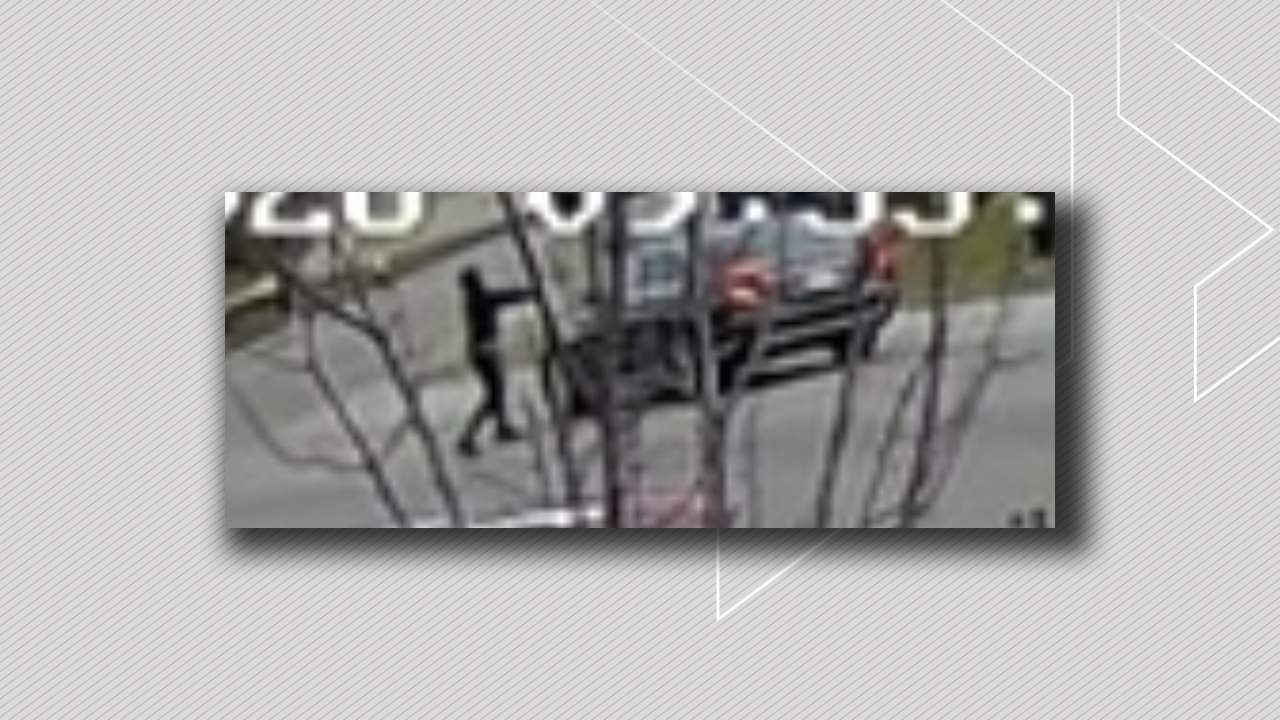
Then, in less than four seconds, a doorbell camera captures the sound of four sharp cracks echoing off garage doors.
A dark sedan idles at the curb. A figure steps out, arm extended, muzzle flashes strobing against the neat rows of cedar shrubs. Tires shriek against cold asphalt. By the time the first resident pulls back a living room curtain, nothing remains on the street except the acrid tang of burnt gunpowder drifting toward a child’s swing set and a high-definition video file automatically uploading to a cloud server.
This is the anatomy of a modern suburban shooting. And when police confirm that a suspected targeted shooting in southwest Edmonton was caught on video, the news reports usually reduce the event to three sterile sentences: time, intersection, no injuries reported, investigation ongoing.
Those three sentences miss almost everything that actually happened.
The Illusion of the Cul-de-Sac
To understand why a targeted shooting in a residential neighborhood feels so deeply disorienting, you have to understand the unspoken social contract of the Canadian suburb.
Consider a hypothetical family—let’s call them the Hendersons—living three doors down from a targeted residence. Mark is an engineer; Sarah teaches middle school. They chose southwest Edmonton because the schools had high ratings, the walking trails wound neatly around stormwater ponds, and the crime maps looked reassuringly pale compared to the downtown core. When Mark installed a smart doorbell two winters ago, he did it to catch porch pirates stealing Amazon boxes, not to record ballistic evidence for the Edmonton Police Service.
When gunfire erupts thirty meters from Mark’s front steps, the physical bullet misses his house entirely. Yet the psychological round punches straight through the drywall.
For weeks afterward, every backfiring muffler on Rabbit Hill Road triggers an involuntary spike of adrenaline. Sarah stops walking the dog after dusk. The street, once experienced as an extension of their own backyard, transforms overnight into a corridor of unknown variables. Who lived in that house? Why were they targeted? Will the shooters come back to finish whatever they started, or worse, misread a house number in the dark?
That last question is the one that keeps neighbors awake at three in the morning. Targeted violence carries a comforting lie inside its very name. Authorities use the word targeted to reassure the public that the attack was not random—that the gunman was not hunting ordinary citizens at a bus stop or a grocery store. Statistically, that distinction is accurate. In practice, bullets do not read addresses. A stray nine-millimeter round fired from a moving vehicle in a densely packed subdivision travels easily through triple-pane windows, standard framing, and interior walls.
The term "targeted" tells you the shooter’s intention. It tells you nothing about their aim.
The Architecture of a Modern Investigation
When a shooting is caught on residential surveillance video, the nature of policing changes immediately. Twenty years ago, an evening shooting in a quiet suburb relied almost entirely on canvassing—detectives knocking on doors, hoping someone happened to be looking out a window, piecing together conflicting memories of vehicle colors and engine sounds from witnesses whose brains were flooded with cortisol.
Human memory under sudden trauma is notoriously unreliable. Under extreme stress, our brains tunnel-vision onto the threat, dropping peripheral details like license plate digits or the exact make of a hatchback.
Digital video does not flinch.
Across southwest Edmonton, neighborhoods built during the post-2010 housing boom feature some of the highest concentrations of private surveillance cameras in the city. Doorbell cameras, garage floodlight sensors, and dashboard cams parked in driveways form an accidental, decentralized surveillance grid. When a shooting occurs on one of these streets, investigators are no longer starting from zero; they are harvesting a multi-angle timeline.
Look closely at how investigators actually read that footage. To the untrained eye watching a grainy clip on the evening news, the video is just a blur of shadows, flashes, and noise. To a forensic video analyst or a firearms investigator, that thirty-second file is dense with behavioral and mechanical data.
The cadence of the shots reveals whether the shooter is using a semi-automatic handgun or something modified. The way the individual holds the weapon—one-handed, leaning back, firing rapidly without acquiring a sight picture—distinguishes an amateur hired for intimidation from someone with formal training. Even the posture of the getaway driver, whether the brake lights stay illuminated or the car is already rolling forward before the passenger door slams shut, speaks volumes about how planned the operation was.
Yet there is a trap hidden inside this technological abundance.
Because the video is so clear, the public assumes an arrest must be imminent. People watch the clip on their phones over morning coffee and wonder why the police haven't already kicked down the suspect’s door. What the camera cannot show is the stolen license plate swapped onto the vehicle an hour earlier in an industrial park across town. It cannot penetrate a pulled-up hoodie, a surgical mask, or tinted windows. Video captures the what and the when with ruthless precision, while leaving the who locked behind layers of deliberate anonymity.
Why Targeted Violence Bleeds Into Quiet Neighborhoods
A persistent myth about urban crime is that it stays neatly compartmentalized inside specific postal codes. People like to imagine criminal networks operating in isolated pockets, far removed from the neighborhoods where teachers, nurses, and accountants raise their children.
Organized crime and mid-level drug trafficking do not respect municipal zoning maps. In fact, the very qualities that make southwest Edmonton attractive to young families make it equally attractive to individuals trying to keep a low profile.
Think about the mechanics of concealment. If you are moving significant quantities of illicit cash or narcotics, renting a high-end infill or a new-build detached home in a quiet suburban subdivision offers built-in camouflage. Neighbors in newer developments often keep to themselves. Attached double garages allow vehicles to enter and exit without anyone on the street seeing who is inside or what is being unloaded from the trunk. There is no foot traffic, no loitering, and very little casual street-level scrutiny.
For months, even years, a house on a pristine crescent can function as a stash house, a safe house, or the primary residence of someone deeply embedded in local turf disputes, and the family next door will notice nothing more unusual than guests arriving late at night in luxury SUVs.
Until the dispute turns hot.
In western Canadian cities—Edmonton, Calgary, Surrey, Abbotsford—law enforcement agencies have documented a recurring pattern over the past decade. As street-level drug markets fracture and rival factions compete for territory, violence frequently migrates outward from commercial corridors into residential neighborhoods. Sometimes the shooting is an assassination attempt. Just as often, it is a message—a violent warning shot fired into a front door or a parked car to force compliance, collect a debt, or retaliate for a perceived slight elsewhere in the city.
To the people firing the gun, the suburban house is simply a coordinate on a map. They arrive from outside the neighborhood, execute the attack in seconds, and vanish back onto the arterial roadways—Henday, Whitemud, Terwillegar Drive—before dispatchers have even finished logging the first 911 call.
The Invisible Aftermath on the Block
In the days immediately following a shooting, a predictable choreography unfolds on the street.
First come the cruisers, red and blue lightbars painting the snow or pavement in rhythmic pulses. Yellow police tape stretches between a boulevard tree and a utility pole. Forensic identification officers in protective suits walk the street with flashlights and metal detectors, dropping small numbered yellow placards beside brass shell casings glinting near the gutter.
Neighbors stand on their front porches in bathrobes and winter coats, holding mugs that have gone cold, trading fragments of information in hushed voices. Did you hear four shots or five? Was it a silver Civic or a dark Accord? Did your camera catch the plate?
For forty-eight hours, the street is united by shared shock. People check in on elderly neighbors. Someone brings coffee to the officers sitting in the unmarked cruiser guarding the scene.
Then the yellow tape comes down. The cruisers leave. The news trucks pack up their tripods and drive off to cover a city council debate or a hockey trade.
And that is when the hardest part begins for the people who actually live there.
I remember speaking with a homeowner in a similar suburban neighborhood in western Canada months after a targeted shooting occurred across the street from his driveway. What struck him most was not the night itself, which felt unreal and cinematic, almost like watching a movie through his front window. What stayed with him was the slow erosion of ease afterward.
Every time his kids played road hockey on the crescent, he found himself watching the entrance to the cul-de-sac. Whenever an unfamiliar car paused at the stop sign for three seconds too long, his stomach tightened. He knew, intellectually, that the odds of a second shooting on the exact same block were vanishingly small. He also knew that statistics offer zero comfort when your daughter’s bedroom window faces the street.
This is the invisible tax of neighborhood gun violence. It does not show up in hospital admission figures or municipal crime severity indexes. It lives in the subtle, exhausting hypervigilance of ordinary people trying to pretend that their street feels the exact same way it did the day before.
What Neighbors Can Actually Do When Violence Visits
When a community is rattled by a video-recorded shooting, the immediate impulse is helplessness. Residents feel like passive bystanders trapped between criminal recklessness and slow-moving legal processes.
Yet neighborhoods are far less powerless than they feel in the first seventy-two hours after gunfire.
The first, most practical reality is how crucial those early digital breadcrumbs are. Police investigations into targeted shootings succeed or fail largely on timeline reconstruction—tracing a suspect vehicle backward and forward from the crime scene block by block. A camera two streets away that didn't capture the shooting itself might have recorded the getaway car turning onto a collector road thirty seconds earlier, before the driver pulled up their mask or while a headlight was noticeably out. Residents who check their footage not just for the moment of the bangs, but for the fifteen minutes before and after, often hand detectives the single missing link that breaks a case open.
Beyond the immediate evidence, there is the quieter work of refusing to let fear isolate the block.
Criminals rely on suburban anonymity. They count on neighbors not knowing each other’s names, not noticing when a rental property suddenly changes hands without a moving truck, and hesitating to report suspicious patterns because nobody wants to seem nosy. When residents actually talk to one another—sharing phone numbers, checking in, paying attention to the rhythm of their street—that protective anonymity evaporates. A street where neighbors recognize each other’s cars and routines is a terrible place for anyone trying to hide in plain sight.
The Frame That Remains
Go back and watch any of the doorbell videos that emerge after these incidents. Stripped of the dramatic news banners and the voiceover narration, they all share an eerie, almost surreal quality.
In the foreground, everything is aggressively domestic. A plastic tricycle tipped on its side near the garage. A welcome mat slightly askew. Porch lights casting a warm, amber glow across clean concrete. It is the visual language of safety, stability, and routine.
Then, at the edge of the frame, headlights sweep across the driveway. The audio track clips as sharp, percussive pops shatter the stillness. Sparks flare briefly against the dark.
Seconds later, the taillights disappear around the bend. The motion sensor on the porch light clicks off. The tricycle sits untouched in the dark, and the street settles back into its familiar, deceptive quiet—except nothing on that block sounds quite the same again.


