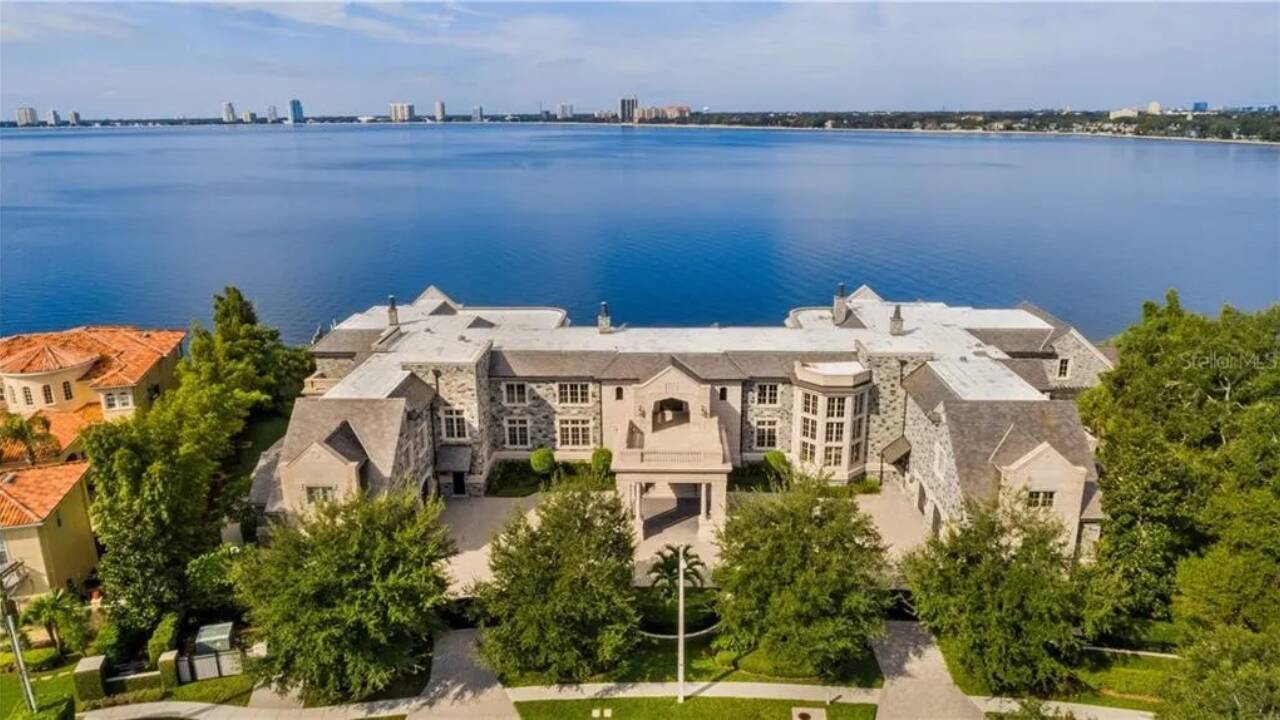
On Davis Islands, the concrete is heavy, silent, and impossibly white against the pewter sheen of Tampa Bay.
For years, locals walked past the six-foot perimeter wall and simply called it what the legend demanded: the Great Wall of Jeter. Behind those masonry barriers stood twenty-two thousand square feet of stone, glass, and ambition. It was a monument built by a baseball captain who defined an era of New York precision, transplanted into the humid, salt-kissed expanse of Florida.
Then the captain left.
Consider what happens when a sanctuary built for absolute privacy is suddenly handed over to the most scrutinized quarterback on earth. In the spring of 2020, Tom Brady needed a home. Derek Jeter was miles away in Miami. A casual phone call bridged the gap, and the fortress traded legends. Brady joked about his new landlord as he settled into the sprawling waterfront compound with Gisele Bündchen, eventually bringing a Super Bowl trophy back to a city that felt like it was living inside a sports documentary.
It felt permanent. Massive architecture always feels permanent when you are standing beneath its shadow.
Houses of that scale do not merely provide shelter; they act as vaults for memory. They hold the echoes of late-night film sessions, the splash of an eighty-foot saltwater lap pool against a midnight tide, and the quiet footsteps of children running down endless stone corridors. But stone is stubborn, and luxury ages faster than the men who buy it.
By 2021, the Jeter era officially closed. The property hit the market, commanding a record-shattering twenty-two and a half million dollars. It was the highest residential price ever paid in Tampa.
And then, the story turned strange.
The buyer was not a local magnate or a returning athlete. The deed vanished behind the cold, quiet machinery of a cryptocurrency trust. A veil of total anonymity dropped over 58 Bahama Circle.
Whispers followed. Then, paperwork. Permits were filed to tear the entire sprawling complex down. Architectural renderings circulated showing an even larger, more open compound—thirty thousand square feet of modern glass, fewer interior walls, a lighter footprint on the earth. The locals nodded, accustomed to the restless cycle of wealth where good homes are routinely erased simply because they no longer match an evolving aesthetic. Plans were laid. Contractors were lined up.
And then, nothing happened.
Permit deadlines came and went. Extensions were filed, dusted off, and left to expire. Years bled into one another.
Today, the mansion still stands.
Drive down the palm-lined streets of Davis Islands and you can still see the rigid lines of the old estate. It looks neither lived in nor abandoned, but suspended. It occupies a peculiar purgatory between what was and what is promised. The anonymous owners remain silent. No heavy iron wrecking balls have swung into the masonry. No new steel skeletal frames pierce the Tampa sky.
There is a profound lesson hidden in the silence of unbuilt futures. We treat real estate as a permanent tattoo on the landscape, believing that monuments outlive their makers. Yet buildings are ultimately just temporary arrangements of rock and intention, vulnerable to the quiet whims of anonymous trusts and shifting tides.
The great estate waits behind its wall. The legends have moved on to other cities, other rings, and other chapters. The bay breeze moves across the pool deck, rippling the water where champions once swam, touching a multi-million-dollar ghost that nobody quite knows how to finish, and nobody has the heart to destroy.