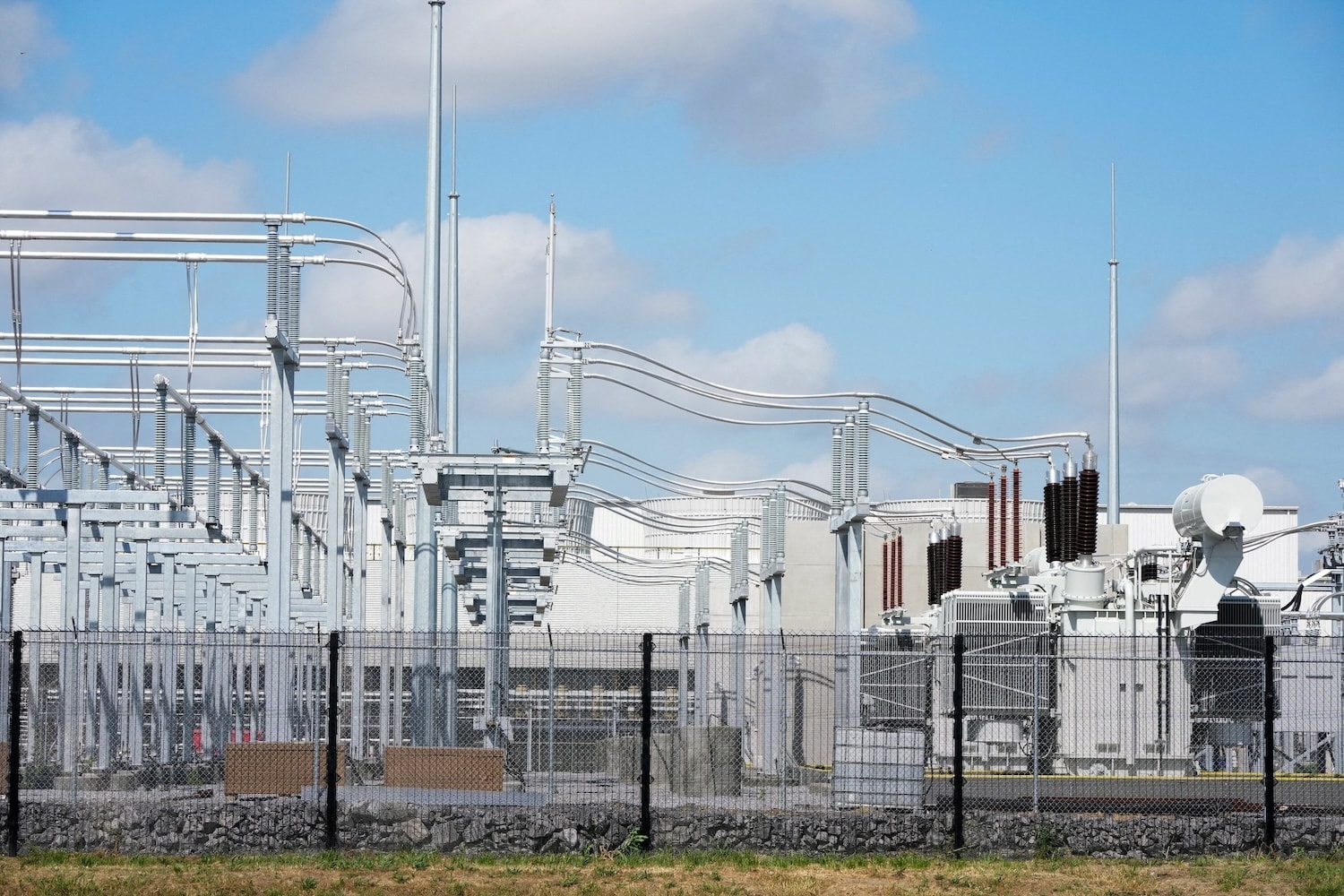
The floor of a modern data center does not feel like the future. It feels like a high-intensity radiator factory. Walk inside one, and the first thing that hits you is not the brilliance of human ingenuity, but the noise. A brutal, deafening roar of thousands of industrial fans fighting a relentless war against physics. The second thing is the heat. Millions of microprocessors, packed tightly into black metal racks, are constantly trying to melt themselves.
We think of the internet as something ethereal. We talk about the cloud as if it floats above our worries, light as a breath. But the cloud is heavy. It is made of concrete, copper, copper wire, and billions of gallons of chilled water. It is anchored deeply, stubbornly, into the dirt of the Earth. Meanwhile, you can read similar events here: The Price of the Premium Life.
Not everyone wants it to stay there.
Elon Musk looked at this sweating, screaming terrestrial infrastructure and saw an elegant escape route. Why not fling the servers into the cold void of space? Up there, in the orbit around our planet, space is vast. It is cold. It is away from the messy politics of land rights, local power grids, and rising sea levels. Musk’s vision of orbital data centers promised a clean break from our earthly constraints, spinning data through the stars at the speed of light. To see the full picture, we recommend the excellent report by ZDNet.
It sounded beautiful. It sounded inevitable.
Then came Masayoshi Son.
The Clash of the Visions
The billionaire founder of SoftBank is no stranger to wild bets. This is the man who looked at a young Jack Ma and handed him twenty million dollars on a whim, the man who poured billions into companies redefining how we move through cities and feed ourselves. Son is a dreamer by trade. But when confronted with the vision of servers orbiting the earth, the legendary investor did something unusual.
He laughed it off.
To understand why Son dismissed Musk’s space-bound data dream, you have to step away from the glossy PowerPoint presentations and look at the brutal realities of engineering. Imagine a server rack as a hyper-active runner. To keep running, that athlete needs to breathe, sweat, and drink water. In the vacuum of space, there is no air to blow across a chip. There is no river to siphon cool water from.
Space is cold, yes, but it is also an insulator. In a vacuum, heat has nowhere to go. It crawls away through radiation, a painfully slow process compared to the liquid cooling loops we use on Earth. A server in space quickly becomes an oven, trapping its own fury until the silicon cracks and dies.
Son pointed to these hard truths with the quiet confidence of someone who has spent decades calculating the literal cost of power. You cannot easily fix a broken hard drive when it is moving at seventeen thousand miles per hour, hundreds of miles above the stratosphere.
The Speed of Light Is Too Slow
We live in an era of instant gratification, but to a financial trading algorithm or an autonomous vehicle, a millisecond is an eternity. This is the problem of latency.
Let us track a single click. A user in Tokyo wants to load a video. In a terrestrial system, that request shoots through fiber-optic cables buried under the asphalt and beneath the ocean floor. It moves at a significant fraction of the speed of light, finding a server perhaps fifty miles away. The response is almost instantaneous.
Now, look at the orbital alternative. The request must travel up, piercing the atmosphere to hit a satellite constellation. The satellite processes it, beams it to another satellite, and eventually sends it back down to a ground station. Even though light travels slightly faster through the vacuum of space than through glass fiber, the sheer distance introduces a lag.
For simple file storage—the digital attics where we keep photos we never look at—this lag does not matter. But for the heartbeat of the modern economy, lag is fatal. Son understands that the future of computing belongs to the immediate. Artificial intelligence does not just need data; it needs it now. Waiting for a satellite to pass overhead to calculate the trajectory of a self-driving car is not just inefficient. It is dangerous.
The True Ground Game
The debate between these two titans reveals a deeper truth about our relationship with technology. We are captivated by the vertical. We love rockets, satellites, and the conquest of the frontier. It feels like progress.
But real progress is often horizontal. It is the unglamorous work of digging trenches, laying thicker cables, and building more efficient cooling plants next to hydroelectric dams. Son’s dismissal was not a rejection of innovation; it was an embrace of reality. He recognizes that the physical world possesses an incredible density of resources that space simply cannot match. Earth has rivers for cooling, gravitational stability, and tech teams who can replace a faulty power supply with a screwdriver and twenty minutes of labor.
The cloud will stay on the ground because the ground is where the humans are.
Every photograph, every medical record, and every line of code we create is a footprint of our existence. We want to believe these things are celestial, free from the dust and friction of our world. But they are bound to us, tied to the same gravity that keeps our feet on the floor.
Musk will continue to build his rockets, reaching for a world where humanity spans the stars. But for the foreseeable future, the digital infrastructure that powers our lives will remain exactly where Masayoshi Son expects it to be: humming quietly in the dark, buried deep in the mud, keeping the lights on.