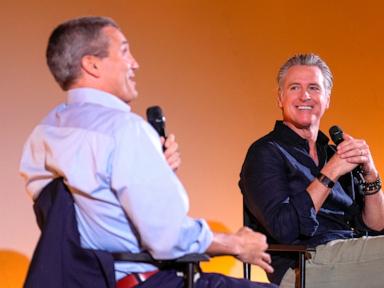
Every single privacy advocate in California is currently hyperventilating. Governor Gavin Newsom just vetoed a bill designed to penalize people who use smart glasses for secret recording, and the digital rights commentariat is treating it like an open invitation to totalitarian dystopia. Headlines scream about the death of public anonymity, corporate surveillance creep, and the end of personal autonomy as we know it.
They are entirely, fundamentally wrong.
Not because privacy is worthless. Not because wearing hidden cameras everywhere is a polite way to behave. They are wrong because the legislation Newsom killed was a monument to technological illiteracy—a piece of security theater engineered to comfort politicians who refuse to understand how modern optics and data flows actually work.
Let us look at the reality of the situation without the hysterical gloss.
For the past fifteen years, every human being walking down a public sidewalk has carried a high-definition video camera, a multi-element microphone array, and an always-on GPS transceiver inside their pocket. Any person can point their smartphone at you, stream your face to a server in Virginia, record your voice, and tag your location without your explicit, written, notarized consent. Nobody screams for a ban on pockets. Nobody drafts emergency legislation to criminalize the iPhone.
Yet, the moment a camera is mounted on the bridge of a pair of frames instead of held in a sweaty palm, lawmakers lose their minds. They treat the form factor as a moral hazard.
This distinction is absurd. It is a panic driven by aesthetics, not mechanics. A lens is a lens, whether it sits inside a chunky plastic rectangle or a sleek acetate frame. Passing a law that specifically targets smart glasses while leaving every other recording device untouched is like banning red sedans to stop highway speeding while letting black SUVs travel at ninety miles per hour. It solves nothing. It protects nobody. It merely signals virtue to an electorate that would rather feel safe than think critically.
Let us dismantle the core misconception driving this entire debate: the myth that we possess a legal or practical expectation of privacy in public spaces.
We do not. For decades, courts have ruled that walking down a public street, sitting in a coffee shop, or riding public transit strips away your reasonable expectation of privacy. You are visible. You are audible. You are being captured by municipal traffic cameras, private security systems, storefront dash cams, and passing vehicles.
The outrage over smart glasses assumes that public spaces used to be sacred zones of anonymity until Meta and Ray-Ban ruined the party. This is historical revisionism of the highest order. Public spaces have always been arenas of mutual observation. The only thing that has changed is the friction of capture. Smart glasses make recording frictionless. And because humans despise frictionless change, they run to the state demanding a ban.
Legislating friction is a fool's errand. You cannot legislate away optics miniaturization any more than you can legislate away the wind. CMOS sensors get smaller, batteries get denser, and processing chips get more efficient every single quarter. Trying to outlaw a specific physical shape of a camera is like trying to outlaw the color blue. It demonstrates a profound misunderstanding of how hardware markets operate. If California banned smart glasses, hardware designers would simply embed lenses into baseball caps, lapel pins, earrings, or wristwatch straps. You cannot play Whac-A-Mole with physics.
Worse, focusing on the capture device reveals a fatal error in how society diagnoses privacy failures.
The danger of modern surveillance is not that someone is recording a video of you walking your dog. The danger is what happens to that video after it is captured.
Capture is cheap, ubiquitous, and completely uncontrollable by state decree. Data processing, storage, facial recognition indexing, and algorithmic profiling are where the actual violation occurs. If a tourist records a video of a street performer using smart glasses, the harm is zero. If a data broker harvests that same video, runs facial recognition against a billion-row biometric database, links it to your browsing history, and sells your movement profile to an insurance company, the harm is catastrophic.
The vetoed bill completely missed this distinction. It criminalized the act of looking and recording while leaving the multi-billion-dollar data exploitation pipeline completely untouched. It targeted the symptom while ignoring the disease.
Governors and lawmakers love this kind of legislation because it costs them nothing to propose and lets them posture as defenders of the citizenry. But passing laws that cannot be enforced and do not address root causes only degrades the rule of law. When laws become arbitrary tools of moral panic, they lose their authority.
Admittedly, wearing smart glasses in private contexts—bathrooms, locker rooms, private homes, medical offices—is already illegal under existing voyeurism, wiretapping, and harassment statutes. We did not need a new, redundant statute specifically for eyewear to prosecute creeps who violate personal spaces. Existing criminal codes cover unauthorized recordings where an expectation of privacy genuinely exists. The push for the smart glasses bill was never about filling a legal vacuum; it was about creating a headline-friendly hammer to swing at big tech companies.
Furthermore, we need to address the social friction argument. Critics argue that smart glasses are insidious because people will not know they are being recorded, robbing them of the chance to alter their behavior.
Let us be entirely honest: people alter their behavior because they know cameras exist everywhere already. We live in a panopticon of our own making. Every street corner has a lens. Every phone has a lens. If you are waiting for a society where you can walk outside without being recorded, you are living two decades too late.
The social anxiety around smart glasses stems from novelty. When cameras first appeared in smartphones, people complained that strangers could take pictures without asking. Over time, society adapted. Social norms evolved. We established unspoken rules about where and when it is acceptable to film. Smart glasses will undergo the exact same cultural digestion.
In fact, smart glasses actually introduce more visibility into recording habits than smartphones do. Most modern smart glasses feature a bright, hard-wired LED indicator light that illuminates whenever the camera or microphone is active. Try finding an LED indicator on a smartphone recording you from inside a handbag or under a restaurant table. You cannot. Smartphones are infinitely more covert recording tools than smart glasses, yet politicians chose to wage war on the glasses because they look futuristic and scary.
Let us look at the economic reality as well. I have watched legacy companies and regulatory bodies blow millions of dollars trying to regulate hardware endpoints while the software layer runs circles around them. Companies building wearable computing are pushing the boundaries of spatial audio, heads-up display integration, and assistive technology for visually impaired users. Crippling this entire category with punitive recording penalties because lawmakers are scared of TikTok clips is economic vandalism.
If we genuinely care about privacy in the age of ambient computing, we must abandon our obsession with hardware form factors. We must redirect our political energy toward the data brokers, the facial recognition aggregators, and the corporate entities hoarding biometric profiles without consent.
Pass strict data sovereignty laws. Prohibit biometric scraping without explicit opt-in. Force companies to delete raw video data within hours unless tied to an active criminal investigation. Tax corporate data hoarding out of existence.
Those solutions require heavy lifting. They require lawmakers to tackle complex economic power structures and lobbyist-heavy industries. Vetoing or passing a symbolic eyewear bill is easy. It requires zero courage and achieves zero results.
Governor Newsom made the correct call, even if his reasoning was buried under political noise. He refused to enshrine a technophobic fantasy into law.
Stop trying to ban the lens. Regulate the ledger.