At 6:45 AM in Marina Bay, before the equatorial humidity turns the air into warm silk, you can hear the quiet hum of Reinvention.
Down on the promenade, joggers in carbon-plated shoes weave past glass towers that catch the first pink light off the Singapore Strait. Inside those towers—on the thirty-eighth floor of One Raffles Quay, or behind the frosted glass of a boutique family office near Tanjong Pagar—another kind of morning ritual is underway. Lawyers are scrubbing cap tables. Compliance officers are tracing beneficial ownership across three jurisdictions. Founders who once spoke Mandarin exclusively in their Shenzhen boardrooms are practicing their pitches in crisp, transatlantic English, carefully omitting the name of the city where their server farms still sit.
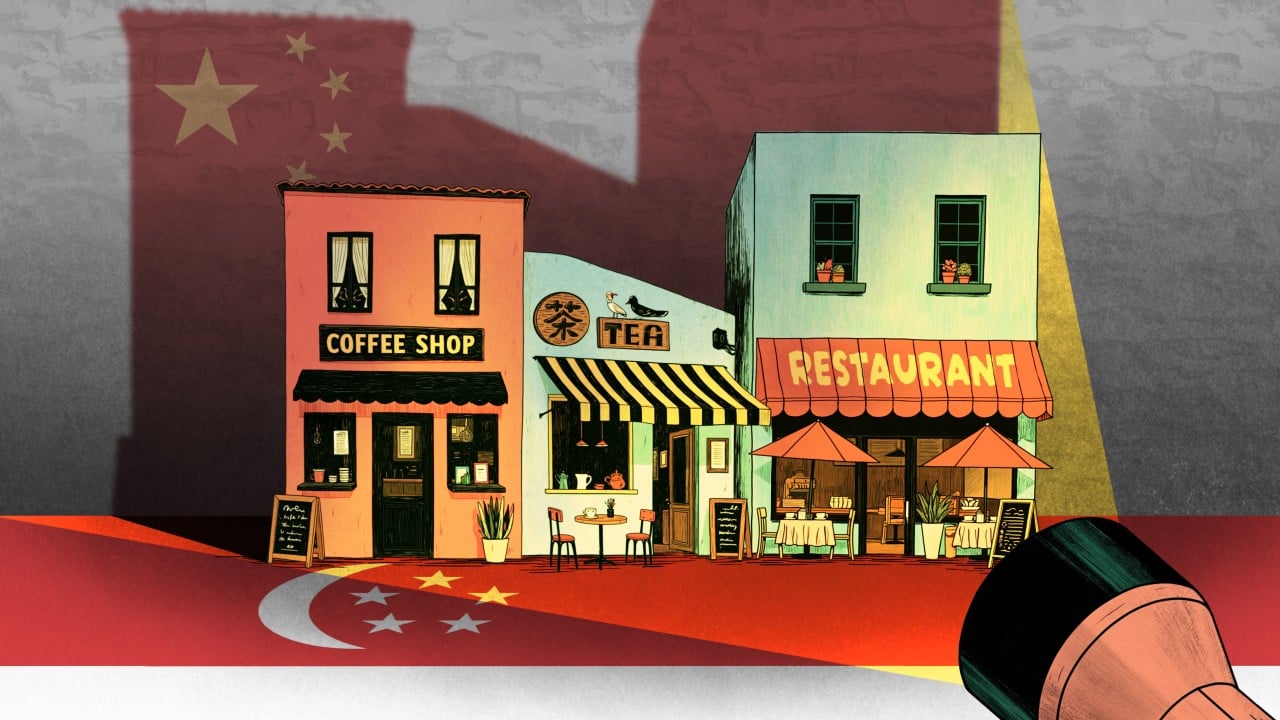
For the better part of five years, this tiny island nation at the tip of the Malay Peninsula functioned as the ultimate magic trick of global capitalism. If you were a Chinese tech founder, a cross-border e-commerce titan, or an AI lab hungry for Western venture capital and Nvidia chips, Singapore was your neutral passport. You incorporated a holding company here. You leased a sleek office with a view of the container ships. You hired a local managing director. Overnight, the geopolitical friction that threatened to crush your valuation in Washington or Brussels seemed to evaporate. Singapore was the Swiss watch of Asian commerce—impartial, efficient, and immaculate.
Then the glass turned into a magnifying glass.
To understand what is happening right now to Chinese companies expanding overseas, forget the dry policy papers coming out of Capitol Hill or the polite diplomatic communiqués from the Monetary Authority of Singapore. Instead, picture a hypothetical founder named Wei. Let us call him Wei because he represents dozens of real executives I have sat across from over lukewarm kopi in Raffles Place over the past two years.
Wei built a logistics software company in Hangzhou. By 2022, his domestic market was suffocating under price wars and regulatory exhaustion. Like thousands of his peers, he looked south. He packed two suitcases, moved his family to a condo near Orchard Road, and registered a new parent entity in Singapore. He called it "Singapore-washing," though never in front of journalists. The premise was simple. By anchoring his headquarters in a trusted Western-aligned financial hub, he could sell to American enterprise clients and raise Series C funding from funds that had quietly blacklisted mainland entities.
For eighteen months, it worked. Then came the afternoon Wei sat across from a compliance officer at a tier-one global bank in Singapore to open a routine corporate credit facility.
The meeting did not last twenty minutes. The banker did not care about Wei’s 140% net dollar retention or his gleaming Singaporean Employment Pass. Instead, the officer slid a sheet of paper across the mahogany table. Where were the core R&D engineers located? Hangzhou. Where did the founding capital originate? A mainland angel fund. Who held the ultimate voting control behind the Cayman Islands trust that owned the Singaporean holding company? Wei, still holding a Chinese passport.
"We cannot onboard this risk," the banker told him, voice practiced and devoid of malice. "Not in this climate."
Wei walked out into the blinding afternoon sun of Raffles Place feeling something he had not felt since his earliest days bootstrapping in a cramped apartment: sheer, paralyzing vulnerability. The bridge he had spent three million dollars building was suddenly swaying over an abyss.
The Anatomy of a Geopolitical Squeeze
To grasp why Singapore’s role as the default launchpad for Chinese global expansion is fracturing, you have to look at the invisible architecture of modern trust.
For decades, global business operated on a convenient fiction. A company’s nationality was determined by where its mailbox sat. If your incorporation papers carried the crest of the Accounting and Corporate Regulatory Authority in Singapore, you were a Singaporean company. End of story. That legal alchemy allowed giants like Shein, TikTok’s parent company ByteDance, and fast-fashion upstarts to build massive global footprints while maintaining deep operational roots in China. Between 2020 and 2023, the number of family offices in Singapore exploded from roughly 400 to over 1,400, driven heavily by an influx of Chinese wealth seeking stability and global access.
Think of Singapore during those years as an international airport terminal during a storm. Flights from Beijing and Shanghai were grounded by geopolitical turbulence, while airports in New York and London had closed their runways to incoming traffic from the East. Singapore kept its lights on, its runways clear, and its duty-free shops open. Everyone landed there.
But an airport terminal is not designed for everyone to move in permanently. And eventually, the air traffic controllers in Washington noticed what was happening on the tarmac.
By 2024 and continuing into the current regulatory landscape, the United States and its allies began closing the loopholes. Export controls on advanced semiconductors stopped looking at where a company was registered and started looking at where its parent company was headquartered and where its engineers sat. Inbound investment screening—the dreaded Committee on Foreign Investment in the United States, or CFIUS—began peering straight through Singaporean corporate veils like X-ray machines. If the code was written in Chengdu and the servers were accessed from Beijing, a Marina Bay postal code no longer offered immunity.
At the same time, Singapore itself hit a wall of domestic reality.
In August 2023, a massive $2.2 billion money-laundering scandal rocked the city-state. Police seized luxury cars, gold bars, and bungalows in Sentosa Cove held by a syndicate of foreign nationals—primarily from Fujian, China—who had used complex webs of shell companies and multiple passports to launder illicit funds through Singaporean banks. The shockwaves were seismic. For a nation whose entire economic survival rests on its reputation for incorruptibility, the scandal was an existential threat.
The backlash was swift and unforgiving. Overnight, opening a corporate bank account in Singapore went from a two-week administrative formality to a six-month forensic interrogation. Background checks intensified. Minimum asset thresholds for family offices jumped. Suddenly, legitimate tech entrepreneurs like our hypothetical founder Wei were caught in the same dragnet designed to catch financial criminals.
The Cost of Staying in the Glass House
Walk through the co-working spaces of the Central Business District today, and you can feel the math changing in real time.
Operating in Singapore was never cheap, even when the geopolitical arbitrage was at its peak. Today, the financial burn rate has become staggering. Residential rents surged by more than 40% between 2021 and 2024 before finally cooling into a plateau that still leaves newcomers gasping. Hiring a mid-level software engineer in Singapore costs three to four times what it costs in Shenzhen or Wuhan—and finding local talent willing to work the grueling "996" hours (9 AM to 9 PM, six days a week) common in Chinese tech culture is nearly impossible.
I remember speaking with an operations director for a Chinese gaming studio who had relocated forty staff members to Singapore in 2023. By the end of his first year, he was spending more on housing allowances, international school tuition, and local compliance lawyers than he was on user acquisition. Worse, his team was fractured. The engineers in Singapore felt isolated from the core product teams back home, while the mainland teams resented the lavish expat packages being paid out in Singapore dollars.
"We didn't become a global company," he admitted to me over dinner, staring glumly at a plate of untouched chili crab. "We just became a much more expensive Chinese company with a longer commute."
This is the unspoken truth behind the glossy press releases announcing new "global headquarters" in Southeast Asia. Relocation is not transformation. When Western regulators ask whether a company is truly independent of Beijing, they are no longer satisfied with a rented office and a local receptionist. They want to see independent boards, segregated data architectures, non-Chinese executive leadership, and genuine operational autonomy.
For most Chinese founders, that level of severance is terrifying. Cutting ties with their mainland R&D base means giving up their greatest competitive advantage—the speed, density, and sheer engineering muscle of China’s domestic supply chain and talent pool. Yet keeping those ties intact means remaining permanently suspect in the eyes of Western banks, cloud providers, and customers.
Caught between two superpowers, Singapore itself cannot afford to take sides. Its survival depends on maintaining credibility with Washington while preserving deep trade ties with Beijing. That tightrope walk means Singaporean regulators will never allow the island to become a rubber-stamp loophole for sanctions evasion or regulatory arbitrage. If forced to choose between protecting its pristine global financial standing and accommodating waves of anxious Chinese capital, Singapore will protect its reputation every single time.
Where the Tide Flows Next
So if the Singapore shortcut is narrowing, where do ambitious Chinese companies go?
The answer is not a single city. The era of the one-stop geopolitical sanctuary is over. Instead, we are witnessing a great fragmentation—a messy, pragmatic scattering of corporate footprints across the globe based on what each company actually needs to survive.
Consider what happens next when a founder realizes Singapore is no longer a silver bullet.
If a company’s primary goal is manufacturing resilience and tariff avoidance rather than high-finance prestige, the compass points elsewhere. Look at northern Mexico—cities like Monterrey and Saltillo—where industrial parks have filled with Chinese auto-parts makers and electronics suppliers rushing to build inside the North American trade bloc. Or look at Vietnam, Malaysia, and Thailand, where factories are humming with relocated assembly lines, even as trade investigators in Washington scrutinize whether those goods are merely being repackaged before crossing the Pacific.
If the goal is capital and Middle Eastern market access, the flight path bends west toward Dubai and Abu Dhabi. Over the past twenty-four months, the United Arab Emirates has aggressively courted Chinese AI firms, crypto ventures, and sovereign wealth partnerships with a fraction of the regulatory friction currently found in East Asia. In Riyadh and Dubai, Chinese tech isn't treated as a national security threat; it is treated as essential infrastructure for a post-oil future.
And what about the companies that genuinely want to win in North America and Europe? They are realizing, slowly and painfully, that there is no geographic bypass left.
The most sophisticated Chinese-founded companies are abandoning the "headquarters in Singapore" halfway house altogether. Instead, they are building true dual-track organizations—completely separating their domestic Chinese operations from international entities headquartered directly in Delaware, London, or Amsterdam, staffed by local executives who hold real decision-making power, and running on completely isolated data centers. It is slower. It is agonizingly expensive. It requires founders to surrender absolute control—perhaps the hardest thing in the world for a first-generation entrepreneur to do.
The View from the Strait
Does this mean Singapore’s golden run is finished? Hardly.
If you stand on the rooftop of the Marina Bay Sands at dusk, looking out over the hundreds of cargo vessels anchored in the Singapore Strait, you are looking at one of the most resilient economic ecosystems ever constructed. Singapore still possesses what almost nowhere else in Asia can match: rule of law that actually works, English-speaking courts, world-class port infrastructure, and proximity to Southeast Asia’s 680 million consumers—a booming digital market in its own right.
For Chinese companies targeting Indonesia, Thailand, the Philippines, and Vietnam, Singapore remains the undisputed command center. You do not come here anymore to trick American regulators into thinking you aren't Chinese. You come here because Southeast Asia is one of the fastest-growing economic regions on earth, and Singapore is its undisputed financial brain.
The scrutiny has not killed the harbor. It has simply cleared out the tourists.
The companies staying in Singapore now are the ones willing to play by the new, unforgiving rules—hiring real local leadership, building genuine regional teams, opening their books to relentless due diligence, and accepting that a Marina Bay address is a starting line, not a shield.
Back in Raffles Place, our hypothetical founder Wei eventually found a path forward, though it looked nothing like the blueprint he packed in his suitcase two years ago. He gave up on raising American venture capital. He restructured his Singapore office from a shell holding company into a lean regional sales hub focused entirely on Southeast Asian logistics clients. He let his expensive Orchard Road lease expire and moved to a smaller apartment in the east of the island, near the sea.
Last month, he finally got his corporate credit line approved. The compliance review took five months and required three hundred pages of audited documentation, down to the birth certificates of his minority shareholders.
When the approval email landed in his inbox at midnight, Wei didn't pop champagne. He walked out onto his balcony, looked toward the distant, blinking lights of the container cranes along the coast, and realized that the hardest part of leaving home wasn't crossing the ocean. It was learning how to stand on solid ground without a disguise.