Exile rarely looks like a cold cell. More often, it smells like salt air, sunscreen, and expensive espresso drifting across a manicured Florida lawn while a smartphone buzzes with news from four thousand miles away.
Wait.
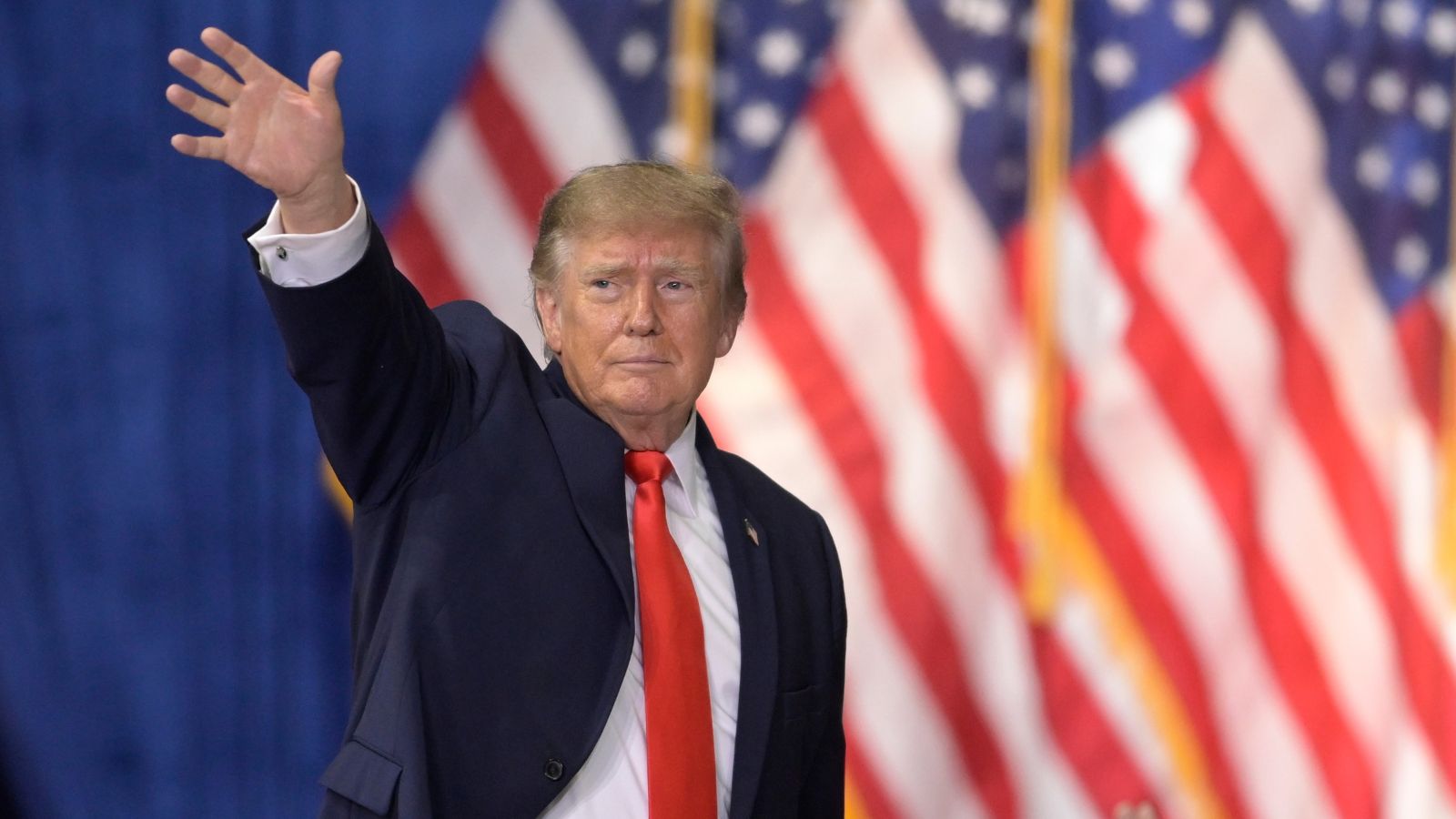
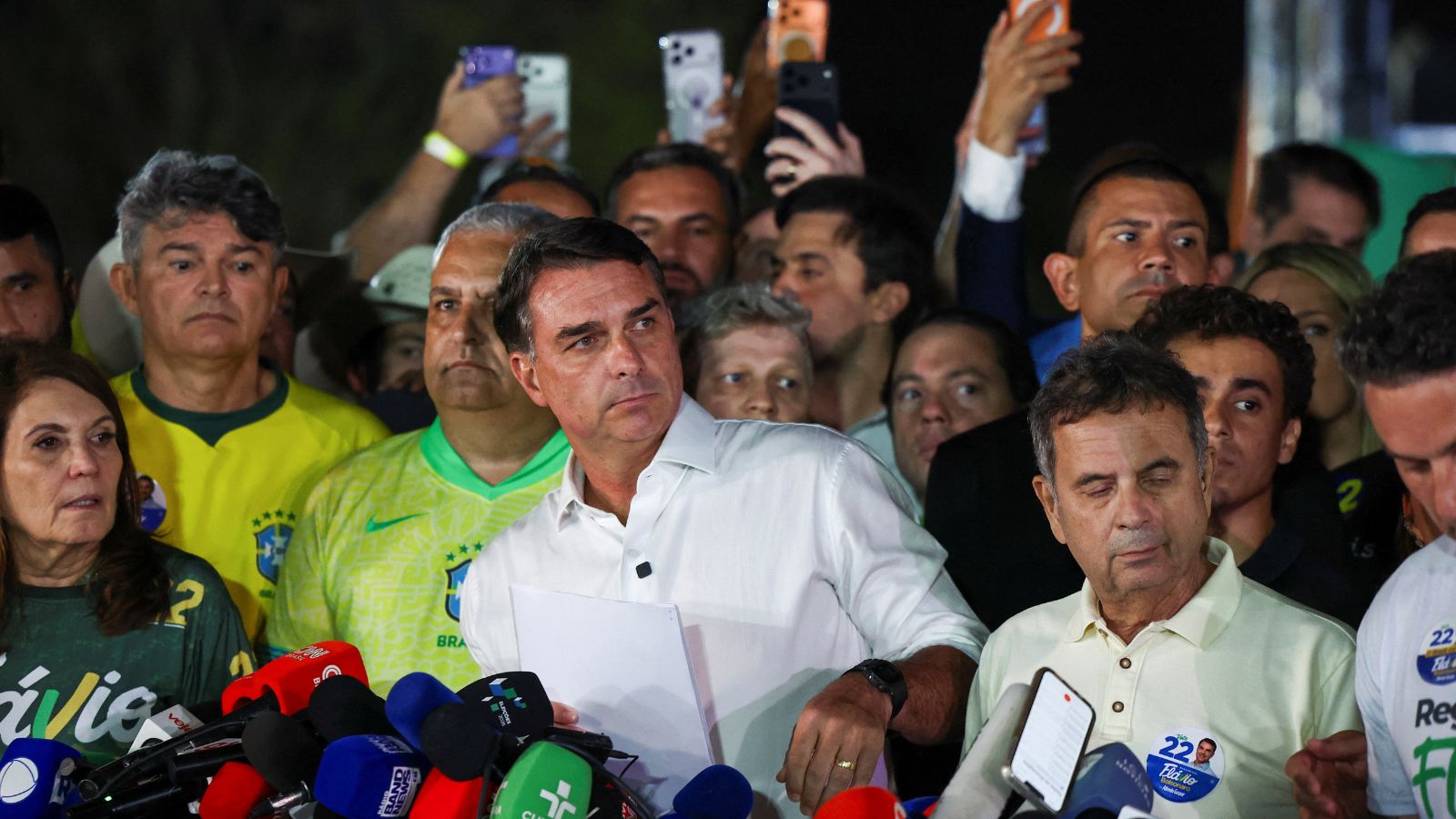
When Donald Trump casually remarked that Flávio Bolsonaro—the eldest son of former Brazilian President Jair Bolsonaro and a sitting senator in Brazil—could stay in the United States for as long as he liked, the headlines treated it like another off-the-cuff soundbite from Palm Beach. A throwaway line. Just political theater between two ideological allies who share a fondness for populist rallies, red caps, and the conviction that the courts are out to get them.
They missed the point entirely.
To understand what happens when an American president offers an open-ended welcome to the embattled scion of a foreign political dynasty, you have to step away from the podium and look at the invisible architecture of modern political refuge. I spent years reporting across Latin America during periods when the line between prosecution and political survival blurred into a thick, suffocating fog, and I still remember the specific weight of watching powerful men pack their bags not for a vacation, but for a strategic pause. You see it in the way they check their watches at international terminals—not anxious about missing a flight, but calculating whether the legal winds back home will shift before their tourist visa expires.
The Architecture of an Open Door
Let us ground ourselves in the facts before we look at the human pulse beneath them. Flávio Bolsonaro is not a private citizen taking a sabbatical; he is a senator representing Rio de Janeiro, a central figure in his father’s political movement, and a man whose name has repeatedly surfaced in Brazilian legal and political battles—from the infamous rachadinha salary-skimming investigations during his time as a state assemblyman to the broader judicial scrutiny surrounding the Bolsonaro family’s inner circle after the turbulent 2022 election and the January 8, 2023 riots in Brasília.
Meanwhile, Jair Bolsonaro himself has faced an escalating wall of legal peril in Brazil, including bans from holding public office, passport seizures, and relentless investigations led by Brazil’s Supreme Federal Court, particularly Justice Alexandre de Moraes. When Jair Bolsonaro flew to Orlando in late December 2022, just days before Luiz Inácio Lula da Silva was sworn back into office, that three-month stay in a suburban gated community became a masterclass in political limbo.
Now, enter Donald Trump’s declaration that Flávio can stay in the U.S. indefinitely.
On paper, U.S. immigration law is a labyrinth of rigid classifications—diplomatic A-visas for official government business, B-1/B-2 visas for temporary visitors, or formal asylum claims that require proving a well-founded fear of persecution. A president cannot simply wave a wand and rewrite the Immigration and Nationality Act during a press availability, though executive discretion over parole, diplomatic courtesy, and enforcement priorities carries immense, quiet weight.
Think of an open-ended presidential invitation not as a stamped passport, but as a psychological umbrella. When the most powerful political figure in the Western Hemisphere says, "Stay as long as you want," he is sending a signal that travels far faster than any diplomatic cable. He is telling the Brazilian judiciary, the electorate in São Paulo and Rio, and the nervous donors funding right-wing movements across the Americas that the Bolsonaro brand still has a heavyweight protector in Washington.
A Tale of Two Living Rooms
To feel why this matters beyond the Beltway and the corridors of Brasília, consider a hypothetical scenario—a composite of real conversations happening right now in living rooms across two hemispheres.
Imagine Mateus, a mid-level civil servant in Brasília whose job involves archiving federal court filings. Every evening, he rides a crowded bus home past the concrete curves of Oscar Niemeyer’s government buildings, watching the sky bruise into purple over the central plateau. For Mateus, the rule of law is not an abstract political talking point; it is the fragile agreement that keeps his pension intact, his streets peaceful, and his country from sliding back into the military rule his parents endured in the 1970s. When Mateus reads that an American leader is offering indefinite sanctuary to a Brazilian senator entangled in domestic controversies, he does not hear a message of friendship. He hears a quiet erasure of accountability. To him, it feels as though the rules only apply to people who cannot afford a first-class ticket to Miami.
Now shift the camera two thousand miles north to Weston, Florida, a quiet, palm-lined suburb just west of Fort Lauderdale that has become the beating heart of the Brazilian diaspora in South Florida. Picture Clara, a hypothetical small-business owner who left Belo Horizonte eight years ago after crime and economic stagnation drained her family’s savings. In her bakery, portraits of Bolsonaro sit near American flags, and customers talk over pão de queijo about their genuine fear that Brazil’s Supreme Court has overstepped its constitutional bounds, turning into an unchecked political censor. When Clara hears Trump tell Flávio Bolsonaro that the door is wide open, her shoulders drop an inch. She feels relief. To her, America is doing what America has always claimed to do: shielding political dissidents from what she views as ideological persecution back home.
Both Mateus and Clara are looking at the exact same sentence uttered by Donald Trump. One sees the subversion of democracy; the other sees its defense.
That emotional split is the real story here. We often talk about geopolitics as if it were a chess match played by cold, rational grandmasters moving plastic pieces across a board. It isn’t. It is a collision of competing fears, where one person’s due process is another person’s political witch hunt.
The History of the Gilded Waiting Room
If this feels strangely familiar, it should. The United States—and South Florida in particular—has served for over a century as the premier waiting room for Latin American leaders caught between power and prosecution.
From deposed Cuban presidents in the 1950s to Nicaraguan Somocistas, Venezuelan opposition figures, and former Peruvian and Panamanian officials, Miami and Palm Beach have long operated as a kind of parallel capital for the Americas. History shows a consistent behavioral pattern: when political polarization reaches a fever pitch at home, the proximity of the United States creates an escape valve.
Consider what happens next when that escape valve is propped wide open by a sitting or returning American leader.
First, it alters the incentives inside the home country. A senator who knows he has an unconditional welcome in Florida faces far less pressure to compromise, testify, or submit to the slow, grinding machinery of domestic institutions. Why weather a political storm in Brasília when you can hold court at Mar-a-Lago, raise money, record podcasts for millions of followers back home, and frame your absence not as a retreat, but as a strategic outpost?
Second, it turns visa status into a diplomatic weapon. Historically, Washington used visa revocations as a stick—barring corrupt foreign officials from shopping in Miami or visiting Disney World as a quiet way to signal displeasure without triggering a full-blown diplomatic crisis. Flipping that script—turning residency and welcome into an ideological reward—transforms the U.S. immigration system from a neutral legal framework into an instrument of partisan solidarity.
I will be honest with you: watching this unfold leaves even seasoned observers uneasy, because the rules of the game are shifting in real time. There is no neat legal precedent that tells us how a democratic alliance survives when one nation’s executive branch casually undermines the judicial authority of another. Normally, Washington guards the sanctity of sovereign courts fiercely—especially when lecturing other countries about institutional stability. Yet here we are, watching a transactional brand of politics override decades of diplomatic orthodoxy.
What Everyone Is Actually Asking
When news like this breaks, the questions people quietly type into search bars late at night aren't really about diplomatic protocol. They are practical, sharp, and rooted in common sense. Can a U.S. president actually let a foreign politician stay forever? Does Flávio Bolsonaro have diplomatic immunity? And what does this do to the relationship between the United States and Brazil?
The answers weave directly into the tension of this moment.
Strictly speaking, diplomatic immunity is not a magic cloak you wear just because you hold a senate seat in your home country. Under the Vienna Convention on Diplomatic Relations, full immunity applies to accredited diplomats—ambassadors and embassy staff formally accepted by the host nation—not to visiting legislators traveling on personal or semi-official business. A Brazilian senator visiting Florida on a standard visa is still subject to U.S. laws, and his legal troubles in Brazil do not evaporate just because he crosses the Atlantic.
However, the executive branch holds sweeping authority over immigration enforcement and diplomatic courtesies. Through mechanisms like humanitarian parole, deferred action, or simply instructing federal agencies not to prioritize overstays, an administration can make a person’s stay effectively indefinite without ever passing a single law through Congress. If Brazil were ever to issue an extradition request—a dramatic step that has not happened in Flávio’s case, though critics frequently speculate about the family’s broader legal exposure—the U.S. Secretary of State holds the final say on whether to surrender someone, even after a federal judge certifies the request.
In other words, while a president cannot rewrite the statute books with a single remark, he controls the levers that determine whether those statutes ever touch a favored guest.
And what does that do to U.S.-Brazil relations? Imagine two neighbors who share a fence, a water line, and a massive backyard business—trade between the two countries tops $100 billion annually, spanning everything from aerospace and agriculture to critical minerals and climate agreements. Now imagine one neighbor publicly inviting the other’s fiercest political rival to camp out on his porch indefinitely, loudly hinting that the local sheriff down the street is crooked. They can still shake hands over the fence when it rains, and they will still split the cost of the water bill, because neither can afford not to. But trust? Trust vanishes overnight. Every diplomatic meeting in Washington or Brasília suddenly carries an unspoken footnote, a quiet chill that lingers long after the cameras leave the room.
The Invisible Cost of Selective Sanctuary
There is a quieter, sharper irony humming beneath this entire spectacle, and you do not need a law degree to feel its sting.
For millions of ordinary people—nurses from Manila, engineers from São Paulo, mothers walking north through the Darién Gap with everything they own stuffed into a single backpack—the American border is an immovable wall of forms, background checks, waiting lists, and sudden, unforgiving rejections. A single missed deadline or an imprecise answer at a consular window in Rio de Janeiro can lock an ordinary person out of the United States for ten years.
Yet at the altitude of political celebrity, borders become porous. Welcome becomes elastic.
That contrast is not lost on anyone paying attention. When sanctuary is extended casually to the powerful while remaining agonizingly out of reach for the vulnerable, it corrodes something vital in the public imagination. It reinforces the cynical suspicion that laws are like spiderwebs: strong enough to catch the small flies, easily torn through by the big ones.
And for Flávio Bolsonaro himself, an open-ended invitation is a gilded double-edged sword. History is unkind to politicians who stay away from their own soil for too long. Political movements are living, breathing organisms that require daily friction—shaking hands in dusty municipal squares, arguing in committee rooms, absorbing the heat of local anger and local hope. A leader who governs or campaigns from the manicured safety of South Florida risks slowly turning into a hologram: visible on every phone screen, loud on every social media feed, yet increasingly detached from the lived reality of the people whose votes he needs.
The View From the Tarmac
Think back to those two living rooms—Mateus watching the dusk settle over Brasília’s ministry buildings, and Clara wiping down the counter of her bakery in Weston as the Florida afternoon cools.
Neither of them gets to decide who boards a private jet or who gets a nod from Palm Beach. Both of them, however, will live inside the world that this kind of politics builds—a world where national borders bend around personal loyalty, where courts are treated like partisan clubs, and where exile has been upgraded to a five-star strategic retreat.
Late at night at Miami International Airport, long after the domestic commuter flights have gone quiet, the long-haul departures to South America begin to board. Businessmen in wrinkled linen suits, families hauling oversized suitcases taped shut with clear plastic, and occasionally a recognizable political face slipping quietly through the priority lane—all of them suspended for a few hours in that pressurized metal tube between two different sets of rules, waiting to see which ground will feel solid beneath their feet when they land.