Silence.
That is the sound of a billion-dollar franchise holding its breath in a darkened screening room in London, waiting to see if a man who once sparkled in the Pacific Northwest sunlight can bleed convincingly in a Savile Row suit.
For years, the internet has treated the casting of the next James Bond like a fantasy football draft, obsessing over jawline symmetry, deadlift numbers, and who looks best holding a Walther PPK against a backdrop of exploding helicopters. We debated Henry Cavill’s shoulders, Aaron Taylor-Johnson’s smirk, and Idris Elba’s effortless cool as if 007 were a mannequin waiting to be dressed rather than a human psyche waiting to be inhabited. Then, the whispers around Robert Pattinson hardened into serious industry conversation, and the collective reaction split right down the middle—half visceral confusion, half sudden, electric realization.
To understand why this matters, you have to forget the martinis for a second and remember what happened to the character the last time we saw him.
In 2021, Daniel Craig’s James Bond stood on a concrete island in the middle of a poisoned sea, looked up at a sky full of incoming missiles, and chose not to run. He didn't die because he was outgunned; he died because he had finally become too human to survive his own profession. That ending didn't just close a chapter for one actor—it burned down the entire blueprint that Eon Productions had relied on since Sean Connery first lit a cigarette at a baccarat table in 1962. You cannot simply reboot a ghost by putting a prettier face in an Aston Martin and pretending the emotional wreckage never happened.
The Myth of the Invincible Man
I still remember sitting in the back row of a sticky-floored cinema in 2006, watching Casino Royale for the first time, feeling that rare, electric jolt when a familiar myth suddenly grows teeth. Before that night, Bond had drifted into self-parody—a cartoon gentleman surfing invisible cars across CGI glaciers, untouched by consequence, unbothered by the bodies left in his wake. Daniel Craig changed the temperature of the room by bleeding in a black-and-white bathroom sink during the opening credits, turning a bulletproof fantasy into a bruised, desperate animal.
Now, consider what happens next when a studio tries to follow an act that literally ended in ashes.
If you hire a traditional leading man—someone built like a marble statue, radiating the kind of polished, gym-sculpted confidence that looks great on a cologne billboard—you immediately retreat into nostalgia. You tell the audience that the pain was just a phase, and now we are back to business as usual. Audiences today, battered by geopolitical anxiety, algorithmic surveillance, and a deep skepticism toward institutional power, can smell that kind of artificial bravado from three rows back. We no longer believe in the guy who walks away from an explosion without mussing his hair, because we know what real pressure actually does to a person.
Think of the Bond franchise right now as an aging, priceless mechanical watch whose mainspring has finally snapped. A novice watchmaker will polish the gold casing, replace the leather strap, and hope nobody notices the hands aren't moving. A master watchmaker opens the back, strips out the gears, and puts in an engine that ticks at a completely different, slightly unsettling rhythm.
That unsettling rhythm has been Robert Pattinson’s entire career for the past decade.
From Teen Idol to Cinematic Alchemist
To appreciate the sheer audacity of this casting, you have to look at the trajectory Pattinson deliberately engineered after Twilight made him one of the most recognizable—and most mocked—men on the planet. Most actors who survive that kind of suffocating fame spend the next twenty years begging for validation in prestige biopics or cashing safe checks in big-budget ensembles. Pattinson did the exact opposite, disappearing into the grimiest, most uncomfortable corners of independent cinema as if he were trying to scrub the glitter off his skin with steel wool.
Watch him in the Safdie brothers’ Good Time, where he plays Connie Nikas, a small-time Queens criminal vibrating with frantic, toxic desperation across a single neon-lit night. There is no vanity in that performance—his skin looks greasy, his eyes are darting like a trapped animal, and yet you cannot look away because every micro-expression feels dangerously unscripted. Then watch him in Robert Eggers’ The Lighthouse, screaming at seagulls in black-and-white 35mm while losing his mind on a rock in the North Atlantic, or slipping through the shadows of Christopher Nolan’s Tenet as Neil, a temporal operative who already knows how the story ends and carries that quiet grief behind a wry, aristocratic smile.
Notice that last detail.
In Tenet, Pattinson essentially auditioned for James Bond without anyone calling it an audition, wearing tailored linen suits, ordering drinks with effortless charm, and projecting the exact blend of Oxford-educated poise and lethal competence that Ian Fleming originally wrote on the page. Yet beneath that smooth exterior, there was a profound, haunting sadness—the look of a man who understands that espionage isn't glamorous, it's lonely.
Let’s step into a hypothetical scenario for a moment to see how this plays out on screen. Imagine the pre-title sequence of the next Bond film, not as a loud chase across a European plaza, but in the cramped, rain-streaked interior of a safe house in Riga. The camera holds on Pattinson’s face in the half-light—pale, angular, slightly hollowed out by sleeplessness, looking less like a poster boy and more like a man who has spent three years reading encrypted files in windowless rooms. When the door breaches, he doesn't move with the choreographed grace of a martial arts master; he moves with the ugly, pragmatic efficiency of someone who refuses to die on a Tuesday, using a heavy glass ashtray and a length of telephone cord before reaching for a weapon.
That is the difference between an action hero and a spy.
Why Vulnerability Is the Ultimate Weapon
When Matt Reeves cast Pattinson as Bruce Wayne in The Batman in 2022, the internet went through the exact same cycle of outrage, skepticism, and eventual surrender. Critics claimed he was too thin, too brooding, too associated with a teenage vampire romance from 2008 to carry the cowl. What Reeves understood—and what the loudest voices online missed—is that trauma doesn't always look like a bodybuilder; sometimes it looks like insomnia. Pattinson played Batman not as a billionaire playboy performing heroism, but as a nocturnal, slightly broken obsessive who hadn't taken off his boots in three days.
James Bond, if you actually read Ian Fleming’s original 1950s novels rather than just watching the 1970s Roger Moore matinees, was never meant to be a jovial wisecracker. Fleming’s Bond was a cold, melancholic instrument of the British state—a man who drank heavily to numb the memories of the people he had killed, smoked seventy custom-made Morland cigarettes a day, and viewed his own survival as a temporary statistical anomaly. He was cruel, observant, slightly detached from normal human warmth, and deeply aware that his government viewed him as disposable ammunition.
For decades, the films smoothed down those jagged edges to sell tickets to families on holiday weekends. Daniel Craig brought the edges back, and in doing so, proved that audiences crave psychological weight alongside their Aston Martin chases. Now, with the franchise moving forward under Amazon MGM’s stewardship alongside longtime producers Barbara Broccoli and Michael G. Wilson, the stakes have never been higher. With theatrical windows shrinking and streaming platforms flooding our living rooms with generic spy thrillers every Friday night, a traditional, by-the-numbers Bond movie risks feeling like an expensive museum piece.
The Invisible Stakes Behind the Curtain
Let’s be honest about the uncertainty hovering over this entire transition. Rebooting a sixty-year-old cultural institution after killing off its protagonist is territory nobody has successfully navigated before, and there is no guarantee that even the boldest casting choice will save a weak script. Fans have every right to feel nervous when a character woven into their childhood memories gets handed to someone who thrives on subverting expectations rather than fulfilling them.
Will Pattinson deliver the classic one-liners with a wink, or will he strip the humor down to something dry, British, and slightly unsettling? The truth is, nobody outside the inner circle of Pinewood Studios knows the exact tonal direction of the next script yet, and anyone claiming to have all the answers is guessing. What we do know, based on fifteen years of documented creative choices, is that Pattinson never takes a role unless he sees a fracture inside the character that nobody else has explored.
Consider what happens to the supporting cast—M, Q, Moneypenny—when you place an actor like Pattinson at the center of MI6. Suddenly, the dynamic shifts from a dutiful employee taking orders from his boss to a volatile, unpredictable intelligence asset who makes his handlers nervous every time he walks into the room. You get friction. You get silence where there used to be exposition. You get the sense that 007 isn't just fighting shadowy syndicates abroad, he's quietly questioning the empire he's supposed to be protecting.
A Different Kind of Danger
Look at the landscape of modern leading men in Hollywood right now, and you notice a strange divide. On one side, you have the hyper-optimized franchise stars, sculpted by personal trainers and media-trained within an inch of their lives, delivering lines engineered to play cleanly in every global market without offending a single algorithm. On the other side, you have the rare, slightly eccentric shapeshifters—actors like Pattinson—who treat fame like a disguise and disappear completely into the skin of the character.
One gives you comfort. The other gives you electricity.
When the gunbarrel sequence finally opens on the next chapter of James Bond, the silhouette walking across the white screen won't just be carrying a pistol. He will be carrying the weight of sixty years of cinema, the ghost of a predecessor who died on a poisoned island, and the quiet, unmistakable tension of an actor who has spent his whole adult life proving that the most dangerous man in the room is never the loudest one.
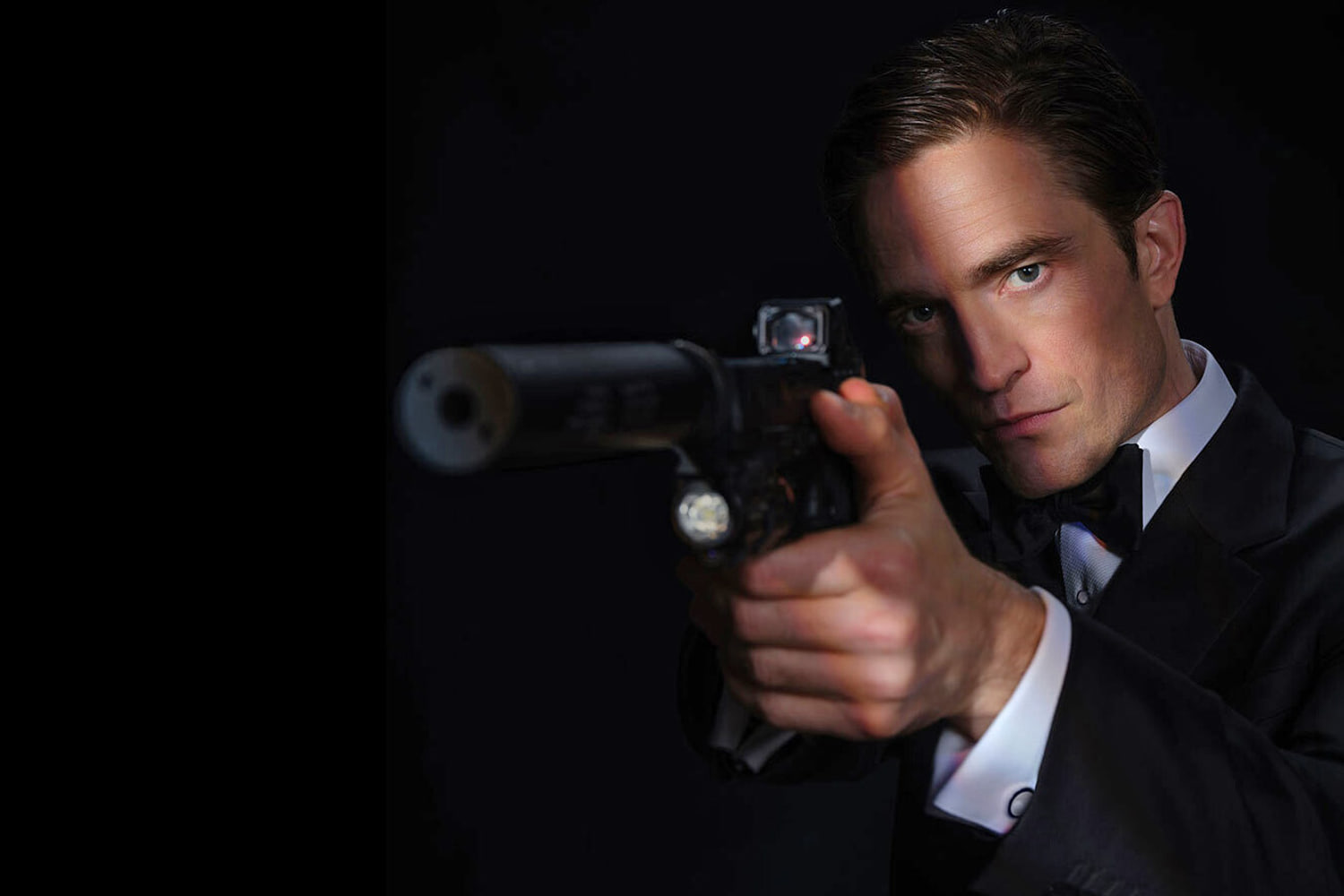
The tuxedo fits. It just hangs a little differently in the dark.