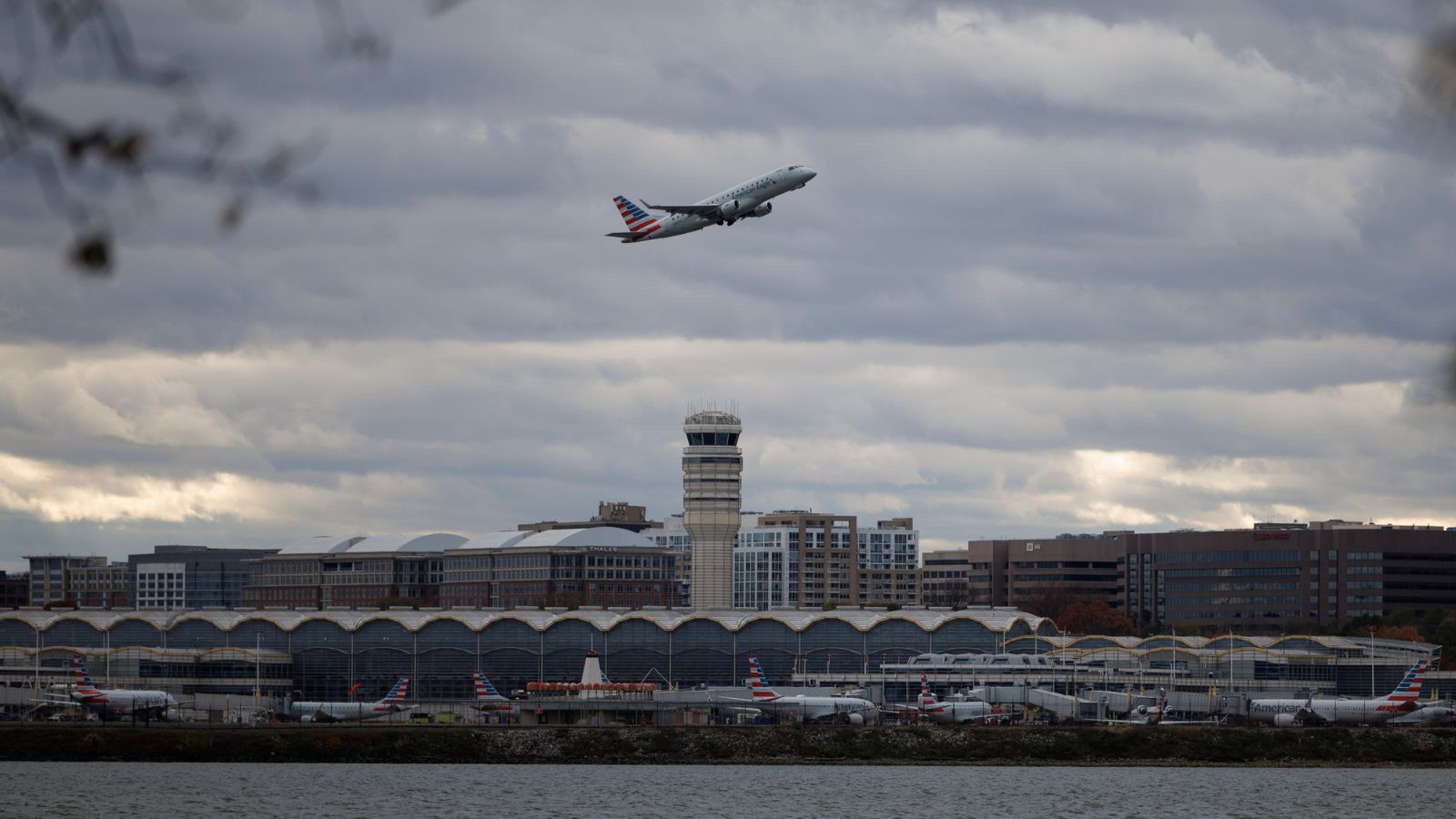
At 4:15 in the morning, Terminal B smells like burnt espresso, floor wax, and low-grade panic.
You know that smell if you have ever watched a departure board flip from green to amber, then to a flat, uncompromising red. Picture a traveler—let’s call her Elena, a hypothetical composite of the millions of flyers who have stood at a gate before dawn—clutching a boarding pass for a flight that is supposed to carry her to her father’s surgery three states away. The aircraft is sitting right outside the glass. The fuel truck has already pulled back. The pilots are in the cockpit, running their pre-flight checks. Everything looks ready.
Then comes the chime over the public address system. Not a weather delay. Not a mechanical issue with the engines. A nationwide ground stop.
Silence.
Across the concourse, hundreds of thumbs begin scrolling furiously through airline apps, searching for a storm front on the radar, a strike, a cyberattack, anything that makes intuitive sense in an age of satellite navigation and carbon-fiber wings. What almost nobody looks at is the ground beneath their feet, or the dark, unglamorous utility vaults buried miles away from the runway, where a single compromised strand of metal just brought modern aviation to its knees.
When the United States Transportation Secretary stepped before the microphones to explain a sweeping suspension of domestic flights, the explanation sounded almost absurdly analog. It wasn't a rogue algorithm or a solar flare. It was a copper wire upgrade.
The Architecture of Invisible Things
We like to think of flight as a triumph over gravity and the earth—a sleek, wireless ballet orchestrated by satellites and glowing radar screens. That illusion is comforting, and it is completely wrong.
In reality, the American airspace system is tethered to the dirt by an astonishingly fragile web of aging telecommunications infrastructure. For decades, the Federal Aviation Administration has relied on leased copper telephone lines—yes, the same basic twisted-pair technology that carried rotary phone calls in the twentieth century—to transmit critical flight data, radar feeds, and air-to-ground voice communications between air traffic control facilities.
Think of it like trying to stream high-definition video through a garden hose that was laid down during the Eisenhower administration. For years, technicians have patched leaks, spliced corroded joints, and coaxed every last bit of bandwidth out of copper lines that telecommunications companies themselves are actively trying to retire.
I remember standing inside an air route traffic control center years ago, watching controllers guide dozens of glowing blips across dark green scopes. What struck me wasn't the futuristic gleam of the monitors; it was the hum of the cooling fans and the realization that behind those sleek consoles sat racks of legacy wiring, humming quietly in windowless rooms. You don't notice the plumbing until a pipe bursts behind the drywall. And when the pipe belongs to the National Airspace System, the water doesn't just ruin the carpet—it strands half a million people before lunch.
When an Upgrade Becomes an Outage
So how does an upgrade—a word meant to promise speed, safety, and modernity—end up triggering a massive US flight suspension?
To understand the paradox, consider a hypothetical scenario that mirrors the exact engineering tightrope telecom crews walk every night. Imagine a team of technicians working in a subterranean junction vault outside a major regional hub. Their job is straightforward on paper: migrate critical FAA data circuits off deteriorating copper cables and onto high-capacity fiber-optic lines.
This is not a matter of unplugging one cord and snapping in another. Legacy aviation systems speak an older electrical language—protocols like Time-Division Multiplexing—that modern fiber networks don't naturally understand without specialized translation hardware. During a cutover, engineers have to bridge the old world and the new while live traffic is still moving through the skies, or during a narrow overnight maintenance window when air traffic dips to its lowest ebb.
One misrouted circuit. One corrupted data packet during a switchover. One severed copper bundle that was supposed to be redundant, only for crews to discover that the backup line was running through the exact same physical conduit.
Suddenly, an air traffic control center loses its primary feed of flight plans, or its automated warning system goes blind. In aviation, there is no "refresh" button you hit while two hundred people are hurtling through the stratosphere at five hundred miles an hour. When visibility drops—even digital visibility—protocol demands one response: stop everything on the ground until the picture is clear.
The Human Toll of a Broken Circuit
It is easy for officials in Washington to talk about "telecommunications transitions" and "legacy infrastructure modernization." Those phrases glide right past the human nervous system without leaving a mark.
Down at the gate, the math feels very different.
Every nationwide ground stop creates a cascading domino effect that takes days to unwind. Aircraft end up in the wrong cities. Flight crews "time out" under strict federal rest mandates, meaning even after the copper wire is fixed and the digital switches flip back to green, there is no one legally allowed to fly the plane.
Take our hypothetical traveler, Elena, still sitting on the carpeted floor near Gate 14. By 8:00 AM, her connecting flight has vanished. By noon, every seat on every rival carrier is booked solid for forty-eight hours. Somewhere in a hospital pre-op room, her father is asking the nurse if his daughter has landed yet. Multiply Elena by tens of thousands of travelers—a surgeon missing an organ transplant window, a small business owner losing a make-or-break pitch, a soldier burning precious days of leave on a terminal bench—and the abstract phrase "copper wire upgrade" suddenly carries the weight of real lives stalled in mid-motion.
I have been stuck in those terminals when the grid goes dark, listening to the collective sigh of three hundred strangers realizing they are going nowhere. There is a specific kind of helplessness that sets in when you realize no amount of money, status, or refresh-clicking can move a single jet until a technician you will never meet fixes a wire you will never see.
Why America Still Flies on Copper
If fiber optics have been the gold standard of global communications for decades, why on earth is the world’s busiest, most sophisticated aviation network still untangling itself from copper?
The answer is a familiar American story of deferred maintenance, bureaucratic inertia, and the sheer terror of touching a system that cannot afford to fail for even sixty seconds.
For years, the FAA’s modernization effort—broadly known as NextGen—focused heavily on satellite-based tracking and cockpit displays, while the unglamorous telecom backbone quietly aged in place. Meanwhile, major telecom carriers began decommissioning their copper networks nationwide because maintaining wet, corroded, century-old underground cables costs billions of dollars. The FAA found itself paying exorbitant rates to keep antiquated circuits alive simply because replacing them required rewriting the software and hardware interfaces of thousands of radar sites, control towers, and radio transmitters across the country.
Upgrading while operating is like performing open-heart surgery on a marathon runner mid-race. You cannot shut down the US airspace for six months to rewire the basement. Every single switch from copper to fiber has to happen piecemeal, node by node, in the dead of night, under intense time pressure.
And honestly? Knowing that makes the Transportation Secretary’s admission both reassuring and deeply unsettling. Reassuring, because a botched telecom upgrade is an engineering problem with a clear physical cause—not a malicious foreign breach or a catastrophic flaw in aircraft design. Unsettling, because it exposes just how thin the margin of error has become while we modernize a system that was pushed past its expiration date years ago.
The Long Road Out of the Trench
The transition away from copper is not optional, nor can it be paused just because the growing pains hurt. Keeping the old wires in the ground guarantees worse failures down the road—failures caused not by planned upgrades, but by sudden, unannounced decay when rain floods an old manhole or a corroded splice finally gives up the ghost during peak holiday travel.
True resilience requires finishing the messy, invisible work of ripping out the nineteenth-century metal and replacing it with redundant, physically separated fiber-optic rings—so that if one backhoe slices a cable in New Jersey, traffic in Chicago never even flickers. It requires funding that doesn't stall in congressional committees until a headline forces everyone to pay attention, and rigorous testing environments that catch configuration errors in a lab rather than on a departure board at dawn.
But progress in infrastructure rarely looks like a ribbon-cutting ceremony. Mostly, it looks like muddy boots in an underground vault at 3:00 AM, a multimeter held up to a bundle of tagged wires, and an engineer double-checking a circuit diagram before throwing a switch.
Back at Terminal B, the overhead lights hum. Somewhere beneath a nondescript stretch of asphalt miles from the runway, a vault door finally clangs shut, a green status light blinks steadily on a fiber transceiver, and three hundred miles above the tarmac, the invisible thread holding up the sky catches the weight once more.