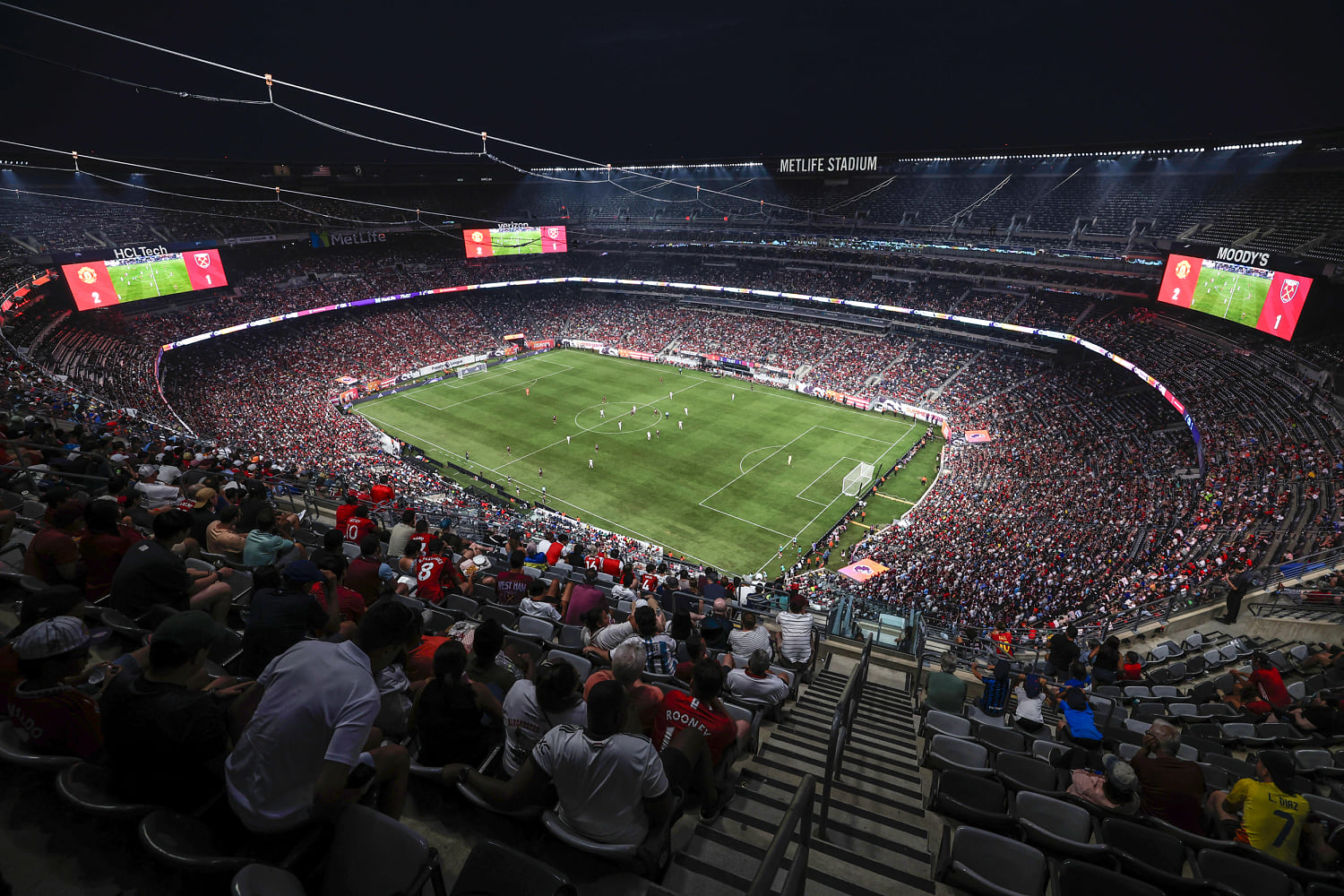
The roar of eighty thousand voices hitting a single, synchronized note is a physical force. If you have ever stood in the concourse of a mega-stadium during a World Cup match, you know the feeling. The concrete vibrates under your boots. The air smells of spilled beer, roasted nuts, and adrenaline. You are packed shoulder-to-shoulder with strangers from Tokyo, Rio, and Munich, all breathing the same air, all screaming for the same ball.
It is a beautiful expression of human unity. It is also a pathogen’s absolute dream.
When public health officials look at a global sporting event, they do not see the trophies or the corporate sponsorships. They see a giant, swirling petri dish. For months leading up to the tournament, headline writers love to play on our deepest, most primal fears. They warn of exotic, bleeding-eye horrors. They whisper about Ebola. They speculate about rare, tropical viruses mutating in the jungle and hitching a ride to the tournament on a charter flight.
But if you talk to the epidemiologists who actually pull the night shifts at the World Health Organization, they will tell you we are looking the wrong way.
The real threat is not exotic. It does not bleed from the eyes. It does not cause a dramatic, cinematic panic. Instead, it sits quietly in the seat next to you, coughing into a flag-colored scarf.
The Hollywood Delusion
We are conditioned to fear the monster we can see. Ebola is terrifying because it is gruesome. It kills up to 90% of its victims in the worst outbreaks. It belongs in a blockbuster movie starring scientists in pressurized biohazard suits. Because of that terror, airport screeners know exactly how to look for it. Border controls lock down. Isolation wards spin up.
But Ebola is actually a terrible traveler.
A person infected with Ebola becomes violently, unmistakably ill. They are not walking through an airport terminal buying duty-free cologne. They are not standing in line for stadium nachos. They are incapacitated. Furthermore, the virus requires direct contact with bodily fluids to spread. It is incredibly lethal, yes, but it is clumsy at navigating a crowded subway system in a foreign host city.
Now, meet the real villain of the World Cup. It is small, highly unstable, and brutally efficient. It is the measles virus.
To understand the difference in scale, you have to look at how these entities move through a room. If one person has Ebola in a crowded pub, the chances of them passing it to a random stranger three tables over are virtually zero. If one person with measles walks through that same pub, leaves, and boards a train, the air they breathed remains infectious for up to two hours.
Ninety percent of unvaccinated people who walk into that empty room later will catch it.
It is one of the most contagious diseases known to science. It does not wait for a handshake. It floats. It lingers. It bides its time in the air currents, waiting for the next pair of lungs.
A Tale of Two Fans
Consider a hypothetical scenario, a quiet sequence of events playing out across two different continents three weeks before the opening whistle.
In a bustling suburb of a European city where vaccination rates have quietly slipped over the last decade, a twenty-four-year-old graphic designer named Lukas packs his bags. He is a lifelong football fanatic. He skipped paying his rent on time to afford a ticket to the semi-finals. A week before his flight, he develops what he thinks is a mild cold. A scratchy throat. A nagging cough. Red, watery eyes that he blames on too many late nights staring at a screen.
Lukas does not have a rash yet. He feels well enough to travel. He boards a transcontinental flight.
Meanwhile, in a vibrant neighborhood in the host city, a local shopkeeper named Mateo is preparing for the economic windfall of his life. His shop sits right on the main pedestrian artery leading to the fan zone. Mateo is healthy, but he has an eleven-month-old daughter at home, Sofia. She is too young to receive her first full dose of the MMR vaccine. She relies entirely on the invisible shield of the people around her to stay safe.
Lukas arrives. He checks into his accommodation, drops his bags, and heads straight for the central plaza to drink in the atmosphere. He is coughing into the crowd. The virus drops from his respiratory tract, hitches a ride on the indoor air currents of a crowded tapas bar, and finds its way into the path of dozens of passersby.
Three days later, Lukas wakes up with a raging fever and the classic, dusky red spots painting his skin. He stays in his hotel room, missing the match he spent his life savings to see. He is miserable, but he will survive.
The virus, however, has already left the building.
It has found new hosts among the thousands of international travelers who skipped their boosters or grew up in regions with broken healthcare infrastructure. Even worse, it has crossed paths with Mateo, who carries it home to Sofia.
While the cameras are flashing at the stadium, a completely different clock starts ticking in a pediatric intensive care unit miles away.
The Influenza Illusion
If measles is the stealth assassin of global travel, influenza is the relentless infantry.
We treat the flu as a punchline. We use the phrase "I have a touch of the flu" to describe a bad hangover or a mild case of the sniffles. This is a massive, culturally dangerous mistake. True influenza is a systemic assault on the human body. It reshapes itself every single year, mutating just enough to slip past the defenses our immune systems built during the previous winter.
When tens of thousands of people from the Southern Hemisphere—where flu season peaks in July and August—mix intimately with tens of thousands from the Northern Hemisphere, they create a global crossroads for viral strain exchange.
You are taking a virus that thrived in a winter environment in Santiago and dropping it into a packed, air-conditioned stadium in a completely different climate, surrounded by people whose immune systems have never encountered that specific variant.
The math is relentless.
During a standard winter, the average flu sufferer might infect one or two others. Put that same person in a stadium corridor during a rain delay, where thousands of shivering fans are packed together chest-to-back, and that number changes completely. The droplets from a single sneeze can travel at a rate of a hundred miles per hour, clouding the immediate air with thousands of infectious particles.
By the time the tournament ends and the trophy is lifted, those fans will board hundreds of planes back to their home countries. They are carrying a souvenir they never asked for. They will seed new, out-of-season outbreaks in communities that are completely unprepared for them.
The Broken Shield of Coverage
The true tragedy of this reality is that it is entirely preventable. We solved the measles problem decades ago. The vaccine is cheap, incredibly effective, and provides lifelong protection.
But public health is built on trust, and trust is a fragile resource.
In recent years, vaccination rates have fallen below the critical threshold required to maintain herd immunity. For measles, that number is incredibly high: 95%. If the vaccination rate drops even slightly below that line—say, to 92% or 90%—the invisible shield crumbles. The virus finds the gaps. It jumps from pocket to pocket of vulnerable populations like a spark flying across dry tinder.
Many young adults traveling to global sporting events today belong to a generation that missed their childhood shots due to localized supply disruptions, political instability, or the quiet spread of online misinformation. They aren’t anti-science activists; they simply don't think about it. They assume that because they haven't seen a child with measles in their lifetime, the danger has ceased to exist.
They do not realize that the absence of the disease was the result of a monumental, collective human effort—one that requires constant maintenance.
What Happens in the Concourses
Imagine the logistics of a modern tournament. A single stadium host city will see its population swell by hundreds of thousands over the course of a few weeks. The local transit systems run at triple capacity. Subway cars are so packed that commuters can feel the breath of the person standing opposite them.
Public restrooms become high-traffic transit hubs for microbes. The handles on the doors, the rails on the escalators, the touchscreens at the ticket kiosks—every single surface is touched by thousands of hands an hour from every corner of the globe.
It is an environment built for speed and volume, not hygiene.
If an outbreak of a highly contagious respiratory illness begins during the group stage, tracking it is almost impossible. A fan might contract the virus on a Monday in a sports bar, watch three games in three different cities over the weekend, and feel perfectly healthy until they are back in their office in Chicago or Nairobi the following week.
The contact tracing maps look like a global spiderweb spinning out from a single point on the pitch.
Re-writing the Playbook
So, what do the people who guard our health actually do about this? They don't build quarantine walls or deploy soldiers with thermal cameras. That is the theatre of biosecurity, not the reality.
Instead, the real work happens in the mundane details.
It looks like local clinics setting up pop-up vaccination booths outside fan festivals. It looks like text message alerts sent to every incoming roaming phone, reminding travelers of the symptoms of respiratory illness and pointing them toward free, anonymous healthcare centers. It looks like upgrading the ventilation and filtration systems in indoor arenas to scrub the air clean before it can recirculate through the luxury boxes and the cheap seats alike.
Most importantly, it requires a shift in how we, the travelers, view our role in the spectacle.
We spend months planning our itineraries. We buy the jerseys. We book the hotels. We argue over tactical formations and starting lineups. But the most vital piece of preparation we can make has nothing to do with the sport itself. It is a quick trip to a local pharmacy for a booster shot two weeks before we leave.
It is an act of quiet, unglamorous heroism. You will never get a medal for it. You will never hear eighty thousand people chanting your name because you kept your measles immunity up to date. You will never know the names of the people you didn't infect on that six-hour flight or in that crowded stadium restroom.
But you might save a life anyway.
The next time you watch a global tournament, look past the bright lights and the green grass of the pitch. Look at the crowd. Look at the sea of different faces, different colors, and different flags blending together in the stands. It is a testament to what makes our world incredible.
But remember the invisible threads that bind us all together in that space. We share the excitement, we share the agony, and whether we like it or not, we share the very air we breathe.