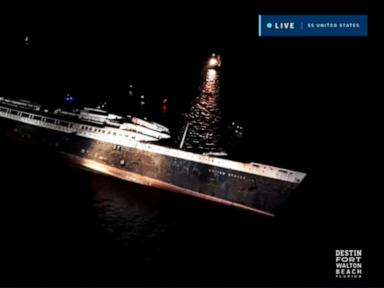
Steel screams when it bends against its will.
I know this because I stood on the rusted deck of a decommissioned ferry in a shipyard outside Mobile, Alabama, three summers ago, listening to the hull groan under the midday heat. The air smelled like oxidized iron, stale grease, and the ghost of ten thousand summer vacations. Most people look at a retired ocean liner and see scrap metal—a floating liability waiting to be sliced into razor blades and rebar on a muddy beach in South Asia.
They are wrong.
When an iconic ocean liner is intentionally scuttled to become an artificial reef, the headlines usually treat it like a funeral with fireworks. A few charges blow, a plume of black smoke rises, and ninety seconds later, a piece of maritime history vanishes beneath the waves. Roll credits. Move on to the next news cycle.
That version of the story misses the entire point. The sinking isn't the end of the ship's life. It is the violent, necessary birth of an underwater metropolis.
The Slow Death of Floating Giants
To understand why anyone would spend millions of dollars to sink a masterpiece of naval engineering, you have to understand what happens when a great ship stops moving.
Consider a hypothetical veteran mariner—let’s call him Arthur—who spent thirty years maintaining the turbine engines of a mid-century transatlantic liner. For Arthur, that hull wasn't just riveted steel; it was a living organism that carried diplomats, immigrants, and honeymooners across the Atlantic. When jet travel killed the ocean liner industry, ships like Arthur’s were left rotting at quiet docks, accumulating rust and bureaucratic debt.
Left alone, an aging ship becomes a toxic time bomb. Its hull thins. Its bilges fill with rainwater and residual fuel. Eventually, owners face a grim choice: pay a fortune to keep it afloat as a floating museum that barely breaks even, or sell it to overseas shipbreakers where underpaid workers dismantle asbestos-laced corridors by hand.
Sinking a ship on purpose sounds like vandalism. In reality, it is an act of radical preservation.
Before a single explosive charge is wired to the hull, environmental engineers spend months, sometimes years, stripping the vessel down to its sterile skeleton. Every drop of oil is vacuumed from the fuel tanks. Miles of copper wiring, toxic lead paint, PCBs, and asbestos insulation are painstakingly removed. Doors are welded open or taken off their hinges entirely so future scuba divers won't get trapped inside dark staterooms. Large holes are cut into the bulkheads to let sunlight pierce the interior decks and allow ocean currents to sweep freely through the grand ballroom.
By the time the demolition crew boards the ship, it is no longer a vessel. It is an apartment building waiting for tenants.
Ninety Seconds of Controlled Chaos
I once watched a reefing detonation from a charter boat bobbing half a mile away in the Gulf of Mexico. The anticipation is agonizing. You stare at this massive silhouette—hundreds of feet of white and black steel sitting stubbornly on the horizon—and your brain refuses to accept that something so immense can simply disappear.
Then comes the thud. You don't hear it first; you feel it in your ribs, a dull, subterranean punch that travels faster through water than air.
Geysers of white foam erupt along the waterline where shaped charges have blown precise holes in the hull. For a minute, nothing seems to happen. The giant sits there, stubbornly buoyant. Then, slowly, the bow dips. Air trapped inside the lower decks escapes through the upper vents with a sound like a whale exhaling—a long, haunting whistle that echoes across the flat water.
Gravity wins.
The stern rises into the air, propellers gleaming wetly in the sun for the last time, before the entire structure slides beneath the surface in a swirling vortex of bubbles and churning green water. Within two minutes, the horizon is empty. Nothing remains except a widening circle of foam and a cluster of charter boats gently rocking in the wake.
It feels like a loss. Standing on the deck of that charter boat, watching the bubbles fade, I felt a sudden, unexpected wave of grief. We had just erased a physical monument from the surface of the earth.
What Happens When the Lights Go Out
That grief lasts until you put on a tank and drop down into the blue six months later.
Natural coral reefs are collapsing worldwide, bleached by warming oceans, battered by violent storms, and choked by coastal runoff. In many coastal regions, the seabed is a vast, featureless desert of sand and mud. Fish need structure to survive. Without nooks, crannies, and vertical walls to hide from predators, marine life simply passes through.
An ocean liner dropped onto a barren sandbar changes the local ecology overnight.
Within days of hitting the seafloor, a microscopic slime layer—a biofilm of bacteria and algae—coats the bare steel. Within weeks, barnacles, sponges, and hydroids anchor themselves to the railings of the promenade deck. Think of the sunken hull as the foundation of a skyscraper in an empty desert; once the steel frame goes up, an entire economy of residents moves in to fill every floor.
By the end of the first year, the transformation is staggering. Clouds of baitfish—menhaden, sardines, and cigar minnows—swirl around the radar mast like living smoke. Larger predators follow the buffet. Barracuda hover motionless beneath the bridge wings, watching the currents. Goliath groupers, some weighing four hundred pounds, claim the dark, cavernous engine room as their permanent territory. Sea turtles wedge themselves under the collapsed steel plates of the lido deck to sleep safely away from sharks.
Corals take longer, growing millimeters a year, slowly encrusting the sharp edges of the hull until the ship's straight, industrial lines soften into organic, blooming gardens of color. The ship doesn't rust away into nothing; it calcifies into limestone, becoming indistinguishable from a natural reef system over decades.
The Invisible Economy Beneath the Waves
There is a practical, human side to this underwater resurrection that rarely makes the evening news. Coastal towns live and die by the health of their waters. When natural reefs degrade, commercial fishermen have to burn more fuel traveling farther offshore, and dive shops go out of business.
A famous ocean liner resting upright at a recreational diving depth—usually between eighty and one hundred and thirty feet—becomes an immediate magnetic draw for global tourism.
Divers don't just travel to see fish; they travel to touch history. Swimming through the sunken dining saloon of a historic liner, past grand staircases now draped in vibrant orange cup corals, offers a surreal collision of human memory and wild nature. Every diver who books a trip to explore that wreck buys plane tickets, rents hotel rooms, eats at local seafood shacks, and pays local boat captains. Over a twenty-year lifespan, a single sunken ship can generate tens of millions of dollars for a coastal community—far more than it would ever fetch as scrap metal.
Better yet, it relieves pressure on fragile natural reefs nearby. By giving thousands of divers and anglers a thrilling, durable destination to explore, artificial reefs act as ecological decoys, allowing overworked natural coral systems time to heal.
The Weight of Letting Go
Still, sinking a historic ship isn't a magic trick without risks or compromises. Not every vessel makes a good reef. If the hull isn't cleaned thoroughly, lingering pollutants can poison the very ecosystem it was meant to build. If it is dropped in water too shallow, a major hurricane can tear the wreck apart and scatter twisted steel across nearby beaches. Maritime historians often protest these projects, arguing—with good reason—that once a ship goes under, its human artifacts are lost to corrosion and souvenir hunters forever.
I understand that hesitation. When I visited that decommissioned ferry in Alabama, I walked through the wheelhouse and ran my fingers over the brass engine-order telegraph. It felt wrong to imagine that gleaming instrument buried in silt, covered in barnacles. We are wired to hold onto our past, to keep it dry, polished, and behind velvet ropes.
But velvet ropes don't feed fish. Museums don't shelter sea turtles from tiger sharks.
Eventually, everything built by human hands returns to the earth or the sea. We can let our greatest maritime achievements rot quietly at a forgotten pier until they are cut into pieces and melted down in a furnace. Or we can strip away their toxins, open their doors, and let them sink into the dark—where the ocean takes over, and the steel finally learns how to breathe.