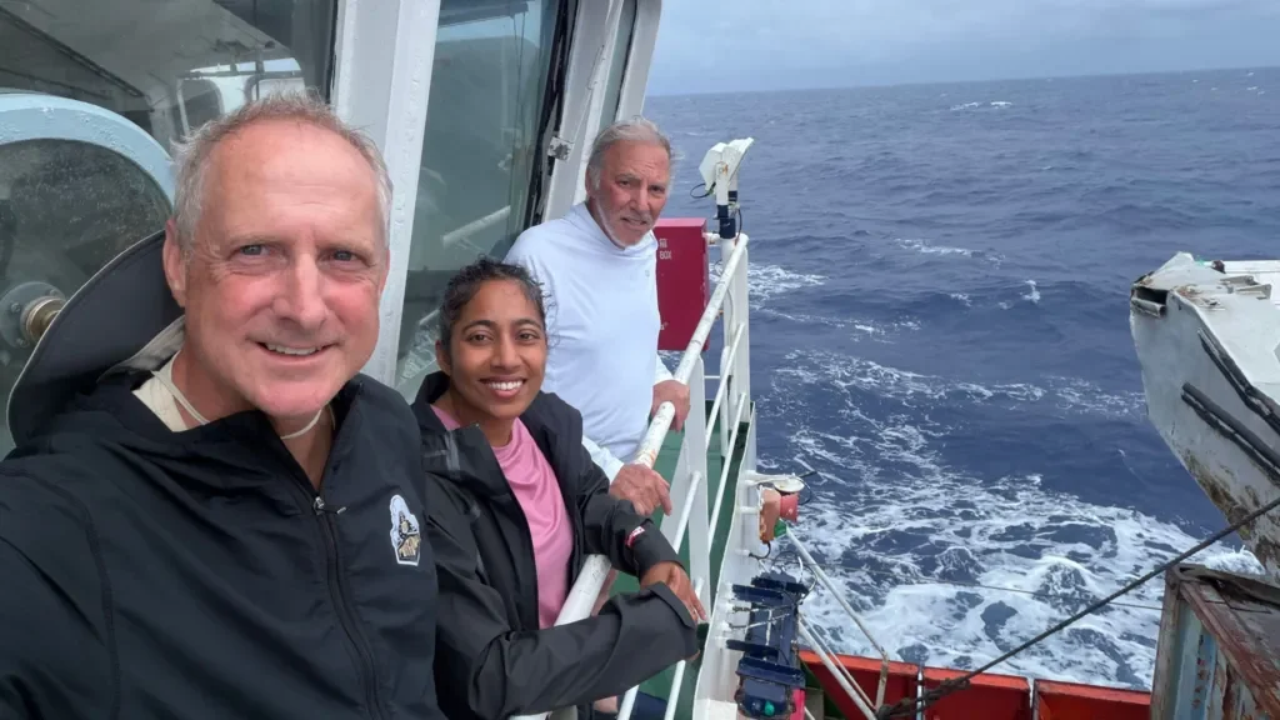
The ocean does not keep scrapbooks. It swallows aluminum, rots fabric, silts over engines, and grinds everything down until a twin-engine Lockheed Electra 10E is indistinguishable from a jagged piece of basalt. Yet every few years, human stubbornness drags a new fleet of boats back onto the open water, chasing a ghost that vanished eighty-nine years ago.
Consider the silence. On July 2, 1937, Amelia Earhart and her navigator, Fred Noonan, flew out of Lae, New Guinea, heading toward a microscopic scrap of land called Howland Island. They never landed. Their fuel tanks, stuffed into every spare inch of the cabin, ran bone dry. Somewhere beneath the blinding blue expanse of the central Pacific, a silver plane dropped out of the sky and became a legend.
The human mind abhors an unclosed loop. We cannot bear the thought of a loose thread dangling off the edge of history.
That psychological itch explains why researchers, funded by universities and driven by private obsession, keep packing themselves onto vessels bound for remote atolls like Nikumaroro. The latest expeditions follow a peculiar geometry of hope. Satellite photos, sonar anomalies, decades-old archival hints, and fuzzy aerial anomalies spark the same old cycle: feverish excitement, a long, rolling voyage across dead water, and the quiet sobering truth of the deep sea.
Sometimes, the anomaly turns out to be a cluster of trees. Sometimes, it is a volcanic rock carved by ancient currents.
To understand why people mortgage their lives to hunt for a missing plane, you have to look at the anatomy of modern myth. Earhart was not merely an aviator. She was a proof of concept for a world that was shrinking too fast for comfort. When she crossed the Atlantic, she carried the collective aspirations of an era crawling out of a depression and staring down the barrel of a global war. Her disappearance felt personal. If a person could simply vanish from the sky, leaving behind only crackling radio static about cloudy weather and a line of position, then maybe the world was still wild, dangerous, and fundamentally unknowable.
That is why the searches continue. They are not just archaeological digs. They are rituals of closure.
Navigation in 1937 was a brutal, analog art. Noonan worked with a sextant, squinting through a bubble window at stars that moved too fast, calculating drift against unpredictable high-altitude winds. When Earhart radioed the Coast Guard cutter Itasca that they were running low on gas and could not see the island, she was flying blind into a meteorological trap. Howland Island is a speck measuring barely a mile and a half long. Missing it by five miles meant missing it entirely.
Decades later, modern search teams drop autonomous underwater drones thousands of feet down into pitch-black trenches, scanning the silt with side-scan sonar. They find shipwrecks, coral formations, and garbage tossed from modern cargo vessels. They rarely find history. Each false alarm is a small heartbreak, a reminder that the ocean guards its secrets with ruthless efficiency.
Yet the searchers return. They follow blurry leads because the alternative is accepting that some questions are designed to remain open forever.
The tragedy of Amelia Earhart is not that she died in the ocean. The tragedy, if you can call it that, is that her absence became more powerful than her life. She haunts our maps. Every time a ship sails past the Phoenix Islands or a plane drone overhead, the ghosts of the Electra ride the wind alongside it.
We search for the wreckage because we want the story to have an end. We want the coordinates. We want to point a camera at a crumpled wing and say, Here is where the flight stopped.
Until then, the Pacific remains what it has always been: a vast, unreadable archive holding its breath beneath the waves.



