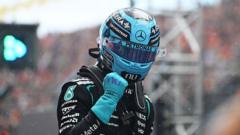
George Russell didn't just win the Dutch Grand Prix sprint race; he completely controlled the narrative from the moment the lights went out. Securing pole position at Zandvoort is half the battle on a tight, unforgiving seaside track where overtaking feels practically illegal, but converting that grid spot into a flawless victory takes cold-blooded execution.
If you watched the Saturday session, you saw a driver managing rubber, traffic, and late-race weather shifts with absolute precision. Let’s break down how Russell bagged his third Saturday victory of the 2026 campaign and why the rest of the field had no answers.
Qualifying Chaos and the Grid Setup
The foundation for Russell's dominant run was laid during Friday's qualifying. Snagging pole wasn't entirely handed to him, but he capitalized when it mattered. His Mercedes teammate, championship leader Andrea Kimi Antonelli, suffered floor damage after an off at the penultimate corner in SQ1, losing roughly 25 points of crucial downforce.
That mishap dropped Antonelli down the order, leaving Lando Norris to line up right alongside Russell on the front row. Ferrari's Charles Leclerc and McLaren's Oscar Piastri lurked right behind them, setting up a high-stakes tactical chess match.
Surviving the Lights Out
When the sprint got underway, getting a clean start was non-negotiable. Russell nailed his getaway, covering the inside line and keeping Norris safely in check through Turn 1.
Behind them, the grid scrambled. Antonelli fought back valiantly from his grid disadvantage, carving around the outside of Piastri at the opening corner to chase down the front runners. Leclerc opted for soft tyres while the rest of the front-runners chose medium rubber, throwing an immediate variable into the strategy mix.
Managing the Gap and the Pressure
For the first ten laps, the race looked deceptively quiet. Drivers maintained gaps, saving their tyres through Zandvoort's sweeping banked corners. Norris radioed in complaining about a lack of rear grip, constantly glancing into his mirrors at Leclerc's Ferrari.
Russell, meanwhile, was told he could push harder around lap ten. He immediately dropped the hammer, stretching his lead to a comfortable two seconds over Norris. That cushion proved vital. It kept him clear of the DRS train and dirty air, letting him dictate his own pace while everyone else chewed up their tyres fighting for scraps.
Late Drama and the Chequered Flag
As the race bled into its final stages, the tension spiked. Leclerc finally managed a decisive move down the inside of Norris at Turn 1 on lap 18, securing second place.
Behind the podium spots, sprinkle warnings turned into reality as late-race rain threatened the circuit just as the leaders crossed the line. Russell admitted afterward that if the race had lasted even one lap longer, the changing weather could have completely flipped the podium. He took the chequered flag 1.360 seconds ahead of Leclerc, with Norris taking third and Antonelli salvaging fourth to extend his driver championship lead over Lewis Hamilton to 53 points.
Performances like this prove why Russell remains a massive threat whenever he starts at the sharp end of the grid. If Mercedes can translate this kind of Saturday pace into Sunday's Grand Prix, the battle for the win is going to be brutal.