Military escalation in the Persian Gulf does not merely cancel flights to Tehran or Tel Aviv; it systematically breaks the global aviation hub-and-spoke model that connects Europe to the Southern Hemisphere and Asia-Pacific. When military conflict compromises Middle Eastern airspace, European outbound leisure demand undergoes an immediate, quantifiable substitution effect. Rather than absorbing severe flight detours, inflated aviation insurance premiums, and elevated security risks across the Eastern Mediterranean and Arabian Peninsula, European tour operators and independent travelers reallocate capital toward South America. This shift is governed by three structural mechanisms: airspace corridor viability, comparative risk-adjusted utility, and bilateral seat capacity elasticity.
The Structural Breakdown of the Gulf Super-Connector Model
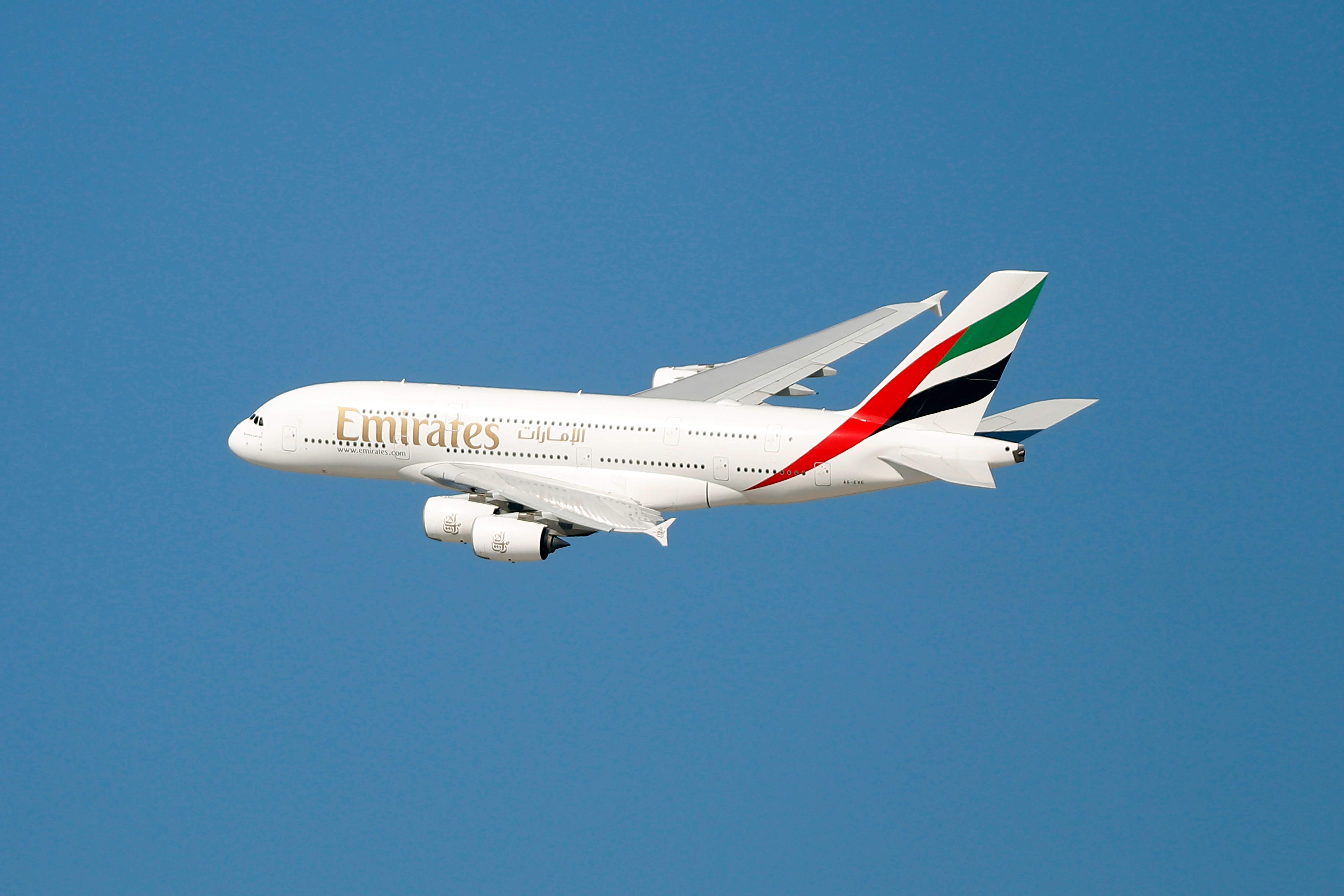
Over the past two decades, long-haul aviation between Europe and the broader Eastern Hemisphere relied heavily on the Sixth Freedom traffic rights exploited by Gulf carriers—specifically Emirates, Qatar Airways, and Etihad. These airlines built massive operational scale by funneling European passengers through hubs in Dubai, Doha, and Abu Dhabi before distributing them onward to Southeast Asia, the Indian Ocean, and Australasia.
Active conflict involving Iran fundamentally disrupts this geographic bottleneck. Commercial aviation operates on narrow safety margins dictated by international regulatory bodies, including the European Union Aviation Safety Agency (EASA) and the Federal Aviation Administration (FAA). When Conflict Zone Information Bulletins (CZIBs) restrict transit through Iranian, Iraqi, or adjacent Persian Gulf Flight Information Regions (FIRs), airlines face an immediate operational trilemma:
- Route Circumnavigation: Rerouting wide-body aircraft around closed airspace—typically pushing flight paths north over the Caucasus and Central Asia or south over Egypt and Saudi Arabia—adds between 45 and 120 minutes of block time per leg. On ultra-long-haul sectors, this extra burn of Jet-A1 fuel erodes payload capacity, forcing carriers to cap passenger loads or leave high-yield belly cargo behind to meet maximum takeoff weight (MTOW) limits.
- War-Risk Insurance Surcharges: Aviation hull and liability underwriters reprice policies dynamically based on missile and drone proliferation within active theater boundaries. Premium spikes for carriers operating near the Strait of Hormuz are passed directly to consumers through carrier-imposed surcharges (YQ/YR taxes), eroding the price competitiveness that originally drew European leisure travelers to Gulf-connecting itineraries.
- Hub Contagion and Connection Risk: A hub-and-spoke network relies on tight bank structures—waves of arriving flights feeding waves of departing flights within 60-to-90-minute windows. Airspace closures induce cascading delays that break these banks. For a European family booking a two-week holiday, the probability of a misconnection in Doha or Dubai transforms a routine transit into an unacceptable operational liability.
As the cost and friction of transiting the Middle East rise, European demand does not vanish; it seeks an alternative vector with comparable seasonal weather, cultural novelty, and long-haul prestige.
The Substitution Mechanics Favoring South America
In microeconomic terms, long-haul leisure destinations act as imperfect substitutes. When the generalized cost—comprising ticket price, transit time, and perceived physical risk—of traveling east increases sharply, the cross-price elasticity of demand pushes European consumers west and south across the South Atlantic.
South America captures this displaced volume due to four distinct structural advantages:
- Uncontested Airspace Corridors: Flight paths from Madrid, Lisbon, Paris, London, and Frankfurt to São Paulo, Buenos Aires, Bogotá, and Santiago traverse the North and South Atlantic oceans. These routes are entirely insulated from Eurasian geopolitical friction, surface-to-air missile threats, and GPS spoofing incidents prevalent in the Levant and Persian Gulf.
- Point-to-Point Direct Connectivity: Unlike routes to Southeast Asia or Oceania that frequently require a Gulf stopover, South American gateways are served directly by European legacy carriers (Iberia, Air France-KLM, Lufthansa Group, British Airways, TAP Air Portugal) and Latin American flag carriers (LATAM, Avianca). Eliminating the intermediate hub removes connection failure risk entirely.
- Counter-Seasonal Alignment: European peak outbound booking windows—specifically the winter holiday escape from November through March—align directly with the austral summer in the Southern Cone. Travelers abandoning the Red Sea, Oman, or onward connections to the Maldives and Thailand find immediate climatic equivalence in Brazil, Argentina, Chile, and Uruguay.
- Currency Arbitrage and On-the-Ground Purchasing Power: While transatlantic airfares remain structurally elevated due to constrained global wide-body aircraft deliveries, local currency valuations across several South American markets—most notably the Brazilian Real and Colombian Peso—provide European Euro and Pound Sterling holders with high purchasing power for luxury hospitality, domestic flights, and culinary experiences. This favorable ground-cost equation offsets higher upfront airfare expenditures.
Supply-Side Constraints and Fleet Reallocation Limits
Analyzing this demand shift requires separating theoretical traveler intent from actual aviation seat capacity. Airlines cannot instantaneously pivot wide-body fleets—such as the Airbus A350, Boeing 777, or Boeing 787—from eastern routes to South Atlantic corridors without encountering rigid operational friction.
First, bilateral Air Services Agreements (ASAs) govern the exact frequency of flights permitted between specific nations. While Open Skies agreements exist between the European Union and certain Latin American states like Chile and Brazil, expanding frequencies into secondary or slot-constrained airports requires diplomatic renegotiation and ground-handling infrastructure at the destination.
Second, aircraft utilization cycles differ drastically between Middle Eastern and South American operations. A flight from Frankfurt to Dubai takes roughly six hours, allowing an airline to turn the aircraft around and achieve high daily utilization. A flight from Frankfurt to Buenos Aires exceeds thirteen hours, locking a single wide-body airframe into a 24-to-30-hour rotation cycle. Reallocating capacity to South America reduces an airline's overall available seat kilometers (ASKs) generated per airframe per day unless yields on the South Atlantic route outperform the degraded yields on Middle Eastern sectors.
Third, maintenance, repair, and overhaul (MRO) supply chains remain strained globally. Engine durability issues on next-generation wide-bodies mean carriers hold virtually zero spare aircraft on the tarmac. Consequently, European airlines respond to the Iran conflict not by launching dozens of brand-new South American routes overnight, but by up-gauging existing South Atlantic frequencies—swapping smaller A330-200s for higher-density A350-900s or Boeing 777-300ERs—and adjusting revenue management algorithms to capture higher-yielding leisure fare classes previously destined for the Indian Ocean.
Risk Assessment and The Fragility of the South Atlantic Pivot
Treating South America as a permanent, frictionless sink for displaced European tourism ignores severe structural vulnerabilities within the region itself. Tour operators and aviation planners betting exclusively on this geographic pivot must account for three systemic risks:
- Domestic Security Perceptions: While South America is free from interstate warfare and airspace closures, elevated rates of urban crime and localized civil unrest in countries like Ecuador, Peru, and parts of Brazil create distinct friction for risk-averse European demographics, particularly older travelers and families. Replacing geopolitical war risk with street-level security anxiety requires targeted itinerary engineering—favoring controlled eco-lodges, private transfers, and established resort corridors over independent urban exploration.
- Infrastructure Bottlenecks at Gateway Hubs: Major Latin American airports, including São Paulo-Guarulhos (GRU) and Bogotá-El Dorado (BOG), operate near peak terminal and runway capacity during bank hours. A sudden influx of European connecting passengers strains immigration processing, customs clearance, and domestic feeder networks, degrading the end-to-end customer experience.
- The Reversibility of Geopolitical Risk: Leisure demand exhibits short memory once airspace restrictions lift. Because Gulf carriers possess structural cost advantages—lower labor expenses, subsidized airport infrastructure, and state-backed fleet financing—any durable ceasefire or de-escalation in the Middle East will trigger aggressive fare discounting by Emirates, Qatar Airways, and Etihad to reclaim lost market share. South American tourism boards and European carriers that fail to lock in repeat visitation or multi-year tour operator allotments risk losing this windfall volume as rapidly as they acquired it.
Operational Execution for Travel Enterprises and Investors
To capitalize on this structural realignment before yields normalize or capacity saturates, European tour operators, destination management companies (DMCs), and hospitality investors must execute specific operational adjustments rather than relying on passive organic spillover.
Tour operators should immediately restructure winter and spring dynamic packaging algorithms to weight South Atlantic inventory over Indian Ocean and Arabian Peninsula packages, locking in block-space agreements (BSAs) on Iberia, TAP, and LATAM flights out of secondary European origins via Madrid and Lisbon to bypass congested Northern European hubs. Simultaneously, marketing expenditure must pivot from generic destination awareness to explicit risk-contrast positioning—emphasizing direct non-stop flight paths, zero-transit-hub reliability, and favorable Euro-to-local-currency exchange rates. Finally, local South American hospitality operators must secure multi-season contracts with European wholesalers now, utilizing current geopolitical tailwinds to fund infrastructure upgrades and lock in baseline occupancy before Gulf carriers inevitably re-enter the market with predatory pricing once Middle Eastern airspace stabilizes.