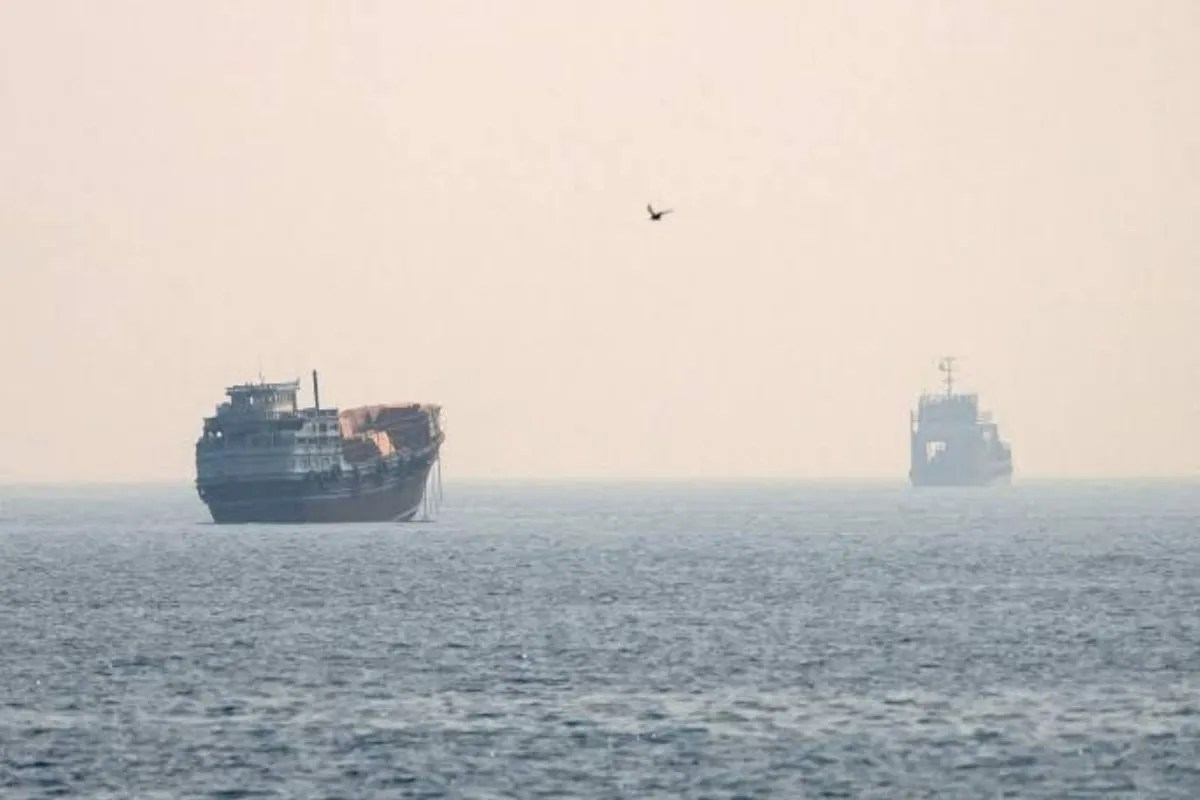
The strategic calculus governing maritime sovereignty disputes in the South China Sea has shifted from kinetic posturing to continuous administrative attrition. The deployment of paramilitary, coast guard, and commercial assets into contested zones represents a systematic methodology designed to alter administrative realities without crossing the threshold of conventional warfare. Recent incidents involving the expulsion of Chinese fishing vessels and coast guard elements from the restricted and prohibited waters surrounding the Pratas Islands (Dongsha Islands) by Taiwan's Coast Guard Administration (CGA) offer a clear diagnostic window into this operational environment.
To understand these developments, one must analyze the structural mechanics of grey-zone pressure, the legal frameworks governing maritime jurisdictions, and the escalatory cost functions facing both Taipei and Beijing.
The Jurisdictional Architecture and Legal Mechanics
Maritime space around isolated features is governed by specific thresholds under international maritime law, though political recognition of these baselines remains contested. Taiwan enforces a dual-tier security architecture around the Pratas archipelago, mirroring its domestic coastline protocols:
- Prohibited Waters: Defined typically as territorial seas extending twelve nautical miles from baseline coordinates, within which unauthorized entry constitutes a direct violation of territorial sovereignty.
- Restricted Waters: Functioning as a contiguous zone extending up to twenty-four nautical miles, designed to provide maritime law enforcement agencies the legal latitude to execute anti-smuggling, customs, and security checks.
The Pratas Islands present a unique strategic vulnerability. Located approximately 450 kilometers southwest of Kaohsiung, the atoll possesses an airstrip and garrisoned coast guard personnel but lacks a permanent civilian population. This structural isolation creates an asymmetrical logistical burden. While Taiwan must supply and defend a remote outpost far from its main logistical hubs, external actors can project civilian and paramilitary presence continuously, testing response intervals and resource allocation.
The Anatomy of Grey-Zone Coercion
The utilization of civilian maritime fleets—including fishing vessels, maritime militia, and official coast guard cutters—serves a specific strategic objective: administrative erosion. This methodology operates on three distinct levels:
- Normalization of Presence: By maintaining a constant rotational presence inside or adjacent to restricted zones, external actors seek to transform illegal incursions into an accepted status quo. Each unhindered transit incrementally shifts the baseline of perceived administrative control.
- Friction Generation: Forcing the defending coast guard to continuously deploy high-endurance cutters (such as the 4,000-tonne Yunlin or 2,000-tonne Tainan) creates a steady drain on operational readiness, fuel reserves, and hull life.
- Proportionality Traps: Responding to non-military incursions with military assets risks escalation dominance and gives opponents a pretext to portray defensive actions as aggressive overreach. Conversely, utilizing low-lethality enforcement tools, such as warning maneuvers or water cannons, requires careful calibration to avoid operational failure or unintended casualties.
In the recent Pratas encounters, the operational sequence followed a strict legal and tactical protocol: detection via radar and optical tracking, maritime interdiction warning, proportional escalation using water cannons when vessels refused to depart, followed by towing or escorting offending hulls beyond restricted boundaries. Crucially, even humanitarian actions—such as providing hot meals to detained or stranded crews before handover—demonstrate adherence to standard law enforcement frameworks rather than kinetic engagement.
Strategic Implications and Response Functions
The recurring intrusions into Pratas waters cannot be evaluated as isolated maritime infractions; they are components of a broader campaign of multi-directional pressure designed to strain command-and-control infrastructure.
When simultaneous operations occur across multiple sectors—stretching from the eastern seaboard of Taiwan proper down to the southern approaches and the Pratas corridor—the defending state faces a resource dispersion problem. The objective of the challenging power is to induce strategic fatigue, compelling the defender to choose between over-allocating assets to remote features or accepting degraded coverage.
Managing this challenge requires a shift from reactive interdiction to proactive resource optimization:
- Investment in Unmanned Surveillance: Expanding radar, acoustic, and aerial drone coverage around isolated reefs reduces reliance on large patrol vessels for initial detection, preserving hull hours for active enforcement.
- Institutionalized Inter-Agency Coordination: Ensuring seamless communication between coast guard units, intelligence nodes, and naval reserves to preempt coordinated multi-vector pressure campaigns.
- Transparent Legal Documentation: Systematically publishing high-resolution evidence, vessel telemetry, and legal justifications to reinforce international recognition of administrative boundaries and counter jurisdictional lawfare.
The persistence of these grey-zone friction points dictates that maritime security will increasingly be measured not by decisive engagements, but by administrative endurance, legal precision, and the sustainability of logistical supply chains in contested waters.