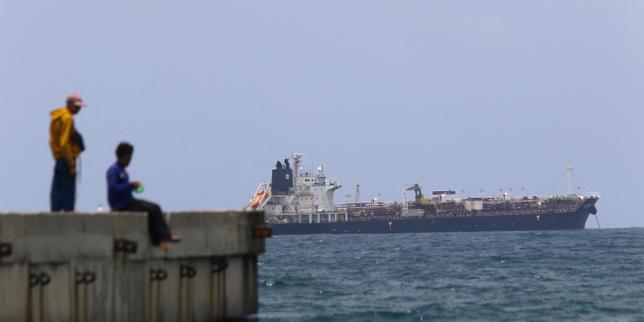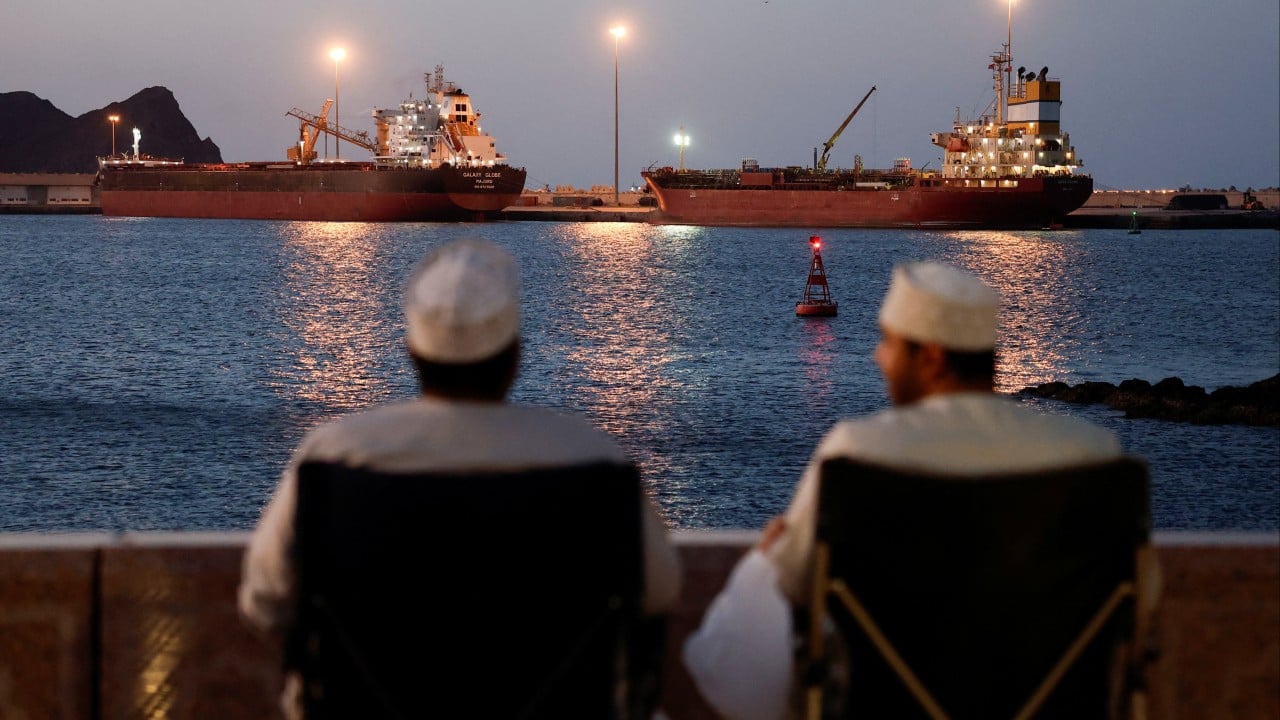
The Strait of Hormuz functions as the singular carotid artery of the global energy trade, facilitating the passage of approximately 21 million barrels of oil per day, or roughly 21% of global petroleum liquid consumption. Any systemic disruption to this transit corridor does not merely increase the price of a barrel; it triggers a recursive feedback loop of inflationary pressure and industrial stagnation. To understand the current anxiety regarding 1970s-style stagflation, one must look past the surface-level volatility of Brent Crude and analyze the structural vulnerabilities in the global supply chain, the shift in monetary policy efficacy, and the "security premium" now permanently embedded in energy futures.
The Triple-Axis Vulnerability of Global Energy Transit
The threat of a Hormuz-induced shock is defined by three distinct mechanical failures that traditional market hedging struggles to mitigate.
- Physical Throughput Compression: Unlike pipeline disruptions, a maritime blockade in the Strait lacks an immediate redundant route. The East-West Pipeline in Saudi Arabia and the Abu Dhabi Crude Oil Pipeline provide limited bypass capacity, but combined, they can only handle approximately 6.5 million barrels per day. This leaves over 14 million barrels—greater than the entire daily production of the United States—stranded.
- The Insurance and Freight Escalator: Actual kinetic conflict is not required to spike prices. The mere reclassification of the Persian Gulf as a "Listed Area" by the Joint War Committee (JWC) triggers exponential increases in Additional Premium (AP) for hull and machinery insurance. When shipping companies pass these costs to the consumer, the "landed cost" of energy rises independently of the "wellhead cost."
- Refining Asymmetry: The crude flowing through Hormuz is primarily medium and heavy sour grades. Global refineries, particularly in Asia, are configured for these specific chemical profiles. A sudden shift to lighter brent or WTI (West Texas Intermediate) creates "refining friction," where yields of middle distillates like diesel and jet fuel drop, causing localized shortages even if total global oil volume remains constant.
The Stagflationary Transmission Mechanism
Stagflation—the simultaneous occurrence of stagnant economic growth and high inflation—is a rare anomaly in standard Phillips Curve economics. In a typical downturn, demand falls and prices stabilize. A Hormuz shock breaks this relationship by creating a "supply-side squeeze" that forces prices up while simultaneously destroying industrial output.
Cost-Push Inflationary Spirals
Energy is a foundational input for almost every sector of the Consumer Price Index (CPI). When the cost of transport and power generation spikes, it creates a "cascading price adjustment." Manufacturing firms, facing higher electricity and logistics costs, must either compress margins (stunting growth) or raise prices (fueling inflation). Because energy demand is relatively inelastic in the short term—meaning people and businesses cannot instantly switch to alternatives—consumers are forced to divert discretionary spending toward fuel, which reduces aggregate demand for other goods and services.
The Breakdown of Monetary Policy
Central banks face a "Policy Paradox" during energy shocks. If the Federal Reserve raises interest rates to combat the inflation caused by $150 oil, they further starve the economy of the credit needed for growth, deepening the recession. If they lower rates to stimulate the economy, they risk devaluing the currency and further inflaming the cost of dollar-denominated energy imports. This is the exact trap that paralyzed global economies in 1973 and 1979.
Comparing 1973 to the Modern Era: Structural Differences
While the "1970s ghost" haunts current market sentiment, the underlying economic architecture has shifted in ways that both mitigate and exacerbate the risk.
- Energy Intensity of GDP: The amount of energy required to produce one dollar of GDP has decreased significantly since the 1970s due to the growth of the service economy and improved industrial efficiency. This suggests that a price spike today, while painful, may not have the same "one-to-one" destructive power it once did.
- The Rise of Non-OPEC Supply: In 1973, the OPEC cartel held near-total leverage. Today, the United States is the world's largest producer of oil and gas. However, this "shale cushion" is deceptive. While the U.S. produces more, it remains part of a globalized market. If the price of oil hits $180 in London, it will hit $180 in Texas, regardless of local production volumes, because producers will sell to the highest bidder.
- Just-in-Time Inventory Fragility: Modern supply chains operate with far lower buffer stocks than those of the 1970s. A three-week closure of the Strait of Hormuz today would cause an immediate "inventory exhaustion" in the global petrochemical industry, leading to factory shutdowns in sectors ranging from plastics to pharmaceuticals.
The Strategic Premium and Market Distortions
The primary differentiator in the current era is the "Security Premium." This is an invisible cost added to energy prices based on the perceived probability of a supply disruption. Analysts quantify this by looking at the "spread" between current spot prices and long-term futures.
The Risk of Miscalculation
The danger in the Strait of Hormuz is rarely an intentional, long-term blockade, as such an act would be an economic suicide pact for the region. Instead, the risk is "incremental escalation." A seized tanker or a localized skirmish increases the "Risk-Adjusted Cost of Capital" for energy projects in the Middle East. This leads to underinvestment in long-term capacity, ensuring that supply remain tight and prices remain sensitive to even minor geopolitical tremors.
Quantifying the Threshold of Recession
Historical data suggests a specific mathematical threshold where energy prices reliably trigger global recessions. Specifically, when energy expenditures exceed 8% of global GDP, a contraction typically follows within two to three quarters.
At current global GDP levels, an oil price sustained above $130 per barrel would likely push the energy-to-GDP ratio into this "danger zone." Unlike the 1970s, modern economies are also burdened by record levels of sovereign debt. A stagflationary shock today would not just be an economic challenge; it would be a fiscal one, as the cost of servicing that debt would skyrocket just as tax revenues plummeted.
Operational Strategy for the Current Volatility
The strategic priority for any industrial or financial actor is to decouple from "Spot Price Vulnerability."
- Diversification of Feedstock: Shift procurement toward Atlantic Basin crudes (WTI, Brent, Nigerian) to mitigate the physical risk of a Hormuz closure, even if these grades carry a slight price premium in the short term.
- Energy-to-Opex Hedging: Instead of traditional price hedging, firms must move toward "volume-guarantee" contracts. In a true Hormuz crisis, the problem will not just be the price of the oil, but the physical availability of the molecule.
- The "Buffer Stock" Mandate: Transitioning from "Just-in-Time" to "Just-in-Case" inventory management for petroleum-based components. This requires a fundamental recalculation of carrying costs against the existential risk of a 30-day supply chain breakage.
The risk in the Strait of Hormuz is not a "black swan" event—it is a "grey rhino," a highly probable, high-impact threat that is often ignored until it is in motion. The global economy is currently priced for "perfect flow," meaning any friction in the Strait will result in a violent repricing of risk across all asset classes.