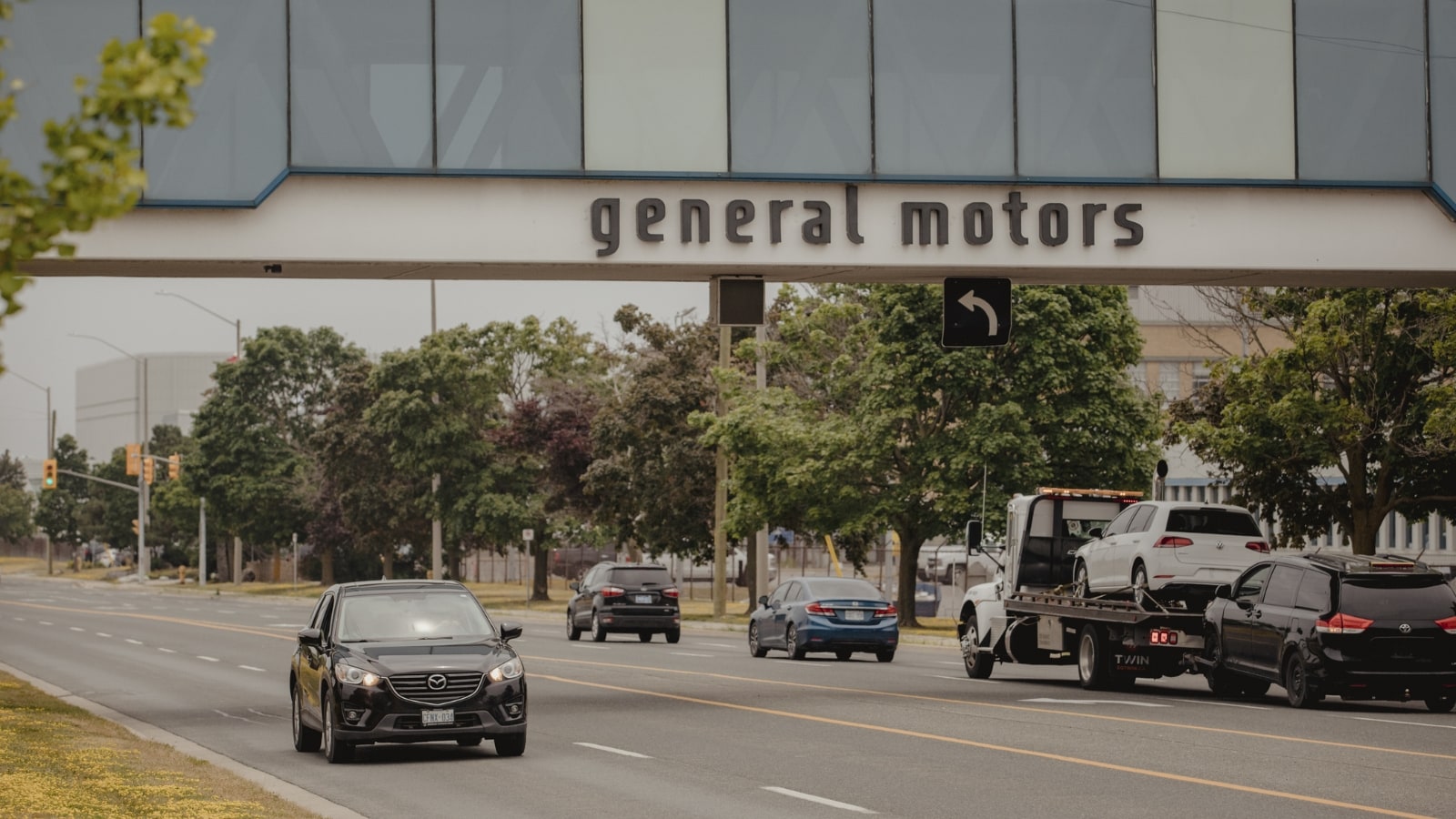
Two hundred and twenty million dollars sounds like a massive check until you divide it by the number of cars General Motors puts on the road every single year.
When news broke that GM agreed to pay $220 million to settle allegations that it quietly harvested and sold granular driving data to data brokers and insurance companies, the mainstream tech press did what it always does. They declared victory. They framed it as a watershed moment for consumer protection, a stern warning to Silicon Valley and Detroit alike, and proof that regulators finally have teeth.
That narrative is dangerously naive.
If you believe this settlement fixes connected-car surveillance, you are looking at the receipt while missing the entire business model. A nine-figure fine is not a deterrent for a legacy automaker generating over $170 billion in annual revenue. It is a rounding error. Worse, celebrating this settlement distracts drivers from a much harsher reality: the automotive industry has spent the last decade quietly transforming vehicles from mechanical transportation into rolling data-collection terminals, and no single lawsuit is going to reverse the hardware already sitting in your driveway.
The Math Behind the Illusion of Accountability
Let us strip away the press-release theatrics and look at the cold economics of corporate compliance.
In enterprise risk management, fines are rarely viewed as moral rebukes. They are treated as operating expenses—specifically, the cost of customer acquisition or product development amortized over several fiscal years. When General Motors rolled out OnStar Smart Driver, the goal was never just to help motorists become safer behind the wheel. The goal was recurring, high-margin software revenue. Wall Street has spent years punishing traditional automakers with low price-to-earnings multiples because building metal boxes is capital-intensive and low-margin. To get valued like Tesla or Apple, Detroit needed software-as-a-service (SaaS) cash flow.
Selling telemetry data to brokers like LexisNexis Risk Solutions and Verisk was the fastest shortcut to that recurring revenue. Every hard brake, every late-night highway run, and every rapid acceleration event became a monetizable asset.
Now look at the $220 million settlement through the eyes of a corporate CFO.
- Revenue scale: GM brings in roughly $40 billion to $45 billion every single quarter. A $220 million payout represents less than two days of gross revenue.
- Precedent value: By settling without admitting systemic structural guilt—and simply shuttering the specific Smart Driver program—GM avoids a protracted courtroom discovery process that could have exposed the internal communications of every major automaker doing the exact same thing.
- Consumer payout dilution: Once attorneys' fees, administrative costs, and class-action overhead are stripped out, the individual driver whose insurance premiums spiked by 30% because their Chevy Bolt snitched on them will be lucky to receive enough money to cover a single tank of gas.
I have sat in boardrooms where executives openly calculated regulatory penalties against projected revenue before launching gray-area data initiatives. When the fine is smaller than the capital expenditure required to build true privacy-by-design architecture, the fine loses every time. Regulators did not break GM's business model. They just taxed it.
Why Your Car Is Worse Than Your Smartphone
Most consumers think they understand digital tracking because they have spent ten years hearing about browser cookies, Apple's App Tracking Transparency, and Meta's ad network. That mental model makes you completely blind to automotive telemetry.
Your smartphone is an open ecosystem where you hold leverage. You can install a VPN, block third-party trackers, turn off location services, or leave the phone on your kitchen counter. Your modern vehicle is a closed, proprietary, multi-ton computer running millions of lines of locked-down code that you are legally prohibited from modifying under the Digital Millennium Copyright Act (DMCA).
To understand why vehicle tracking is fundamentally different, we have to define telematics precisely. Telematics is not merely GPS location tracking. It is the continuous, real-time fusion of inertial measurement units (accelerometers and gyroscopes), Controller Area Network (CAN bus) diagnostics, infotainment interactions, and cellular modems.
Your car does not just know where you went. It knows:
- Biometric weight and posture: Seat occupancy sensors measure the exact weight of the driver and every passenger, differentiating between a child seat, a small adult, and a heavy adult.
- Behavioral micro-patterns: Steering wheel torque sensors and brake pressure transducers record your exact reaction times, aggressive tendencies, and fatigue levels.
- Digital exhaust: When you plug your phone into Apple CarPlay or Android Auto, the vehicle's infotainment system frequently logs your device identifiers, contact lists, and call metadata directly into the head unit's flash memory.
- Environmental context: External cameras and radar arrays map the physical surroundings of your neighborhood, capturing license plates and pedestrian movements.
Mozilla Foundation researchers famously investigated 25 major car brands and concluded that modern vehicles are the worst product category they have ever reviewed for privacy. Every single brand failed their basic security and data-minimization standards. Nissan and Kia even admitted in their privacy policies that they reserved the right to collect information about drivers' "sexual activity" and "genetic information."
GM just happened to get caught with its hand deepest in the insurance cookie jar.
Dismantling the Consent Myth
Whenever a scandal like this erupts, the standard defense from industry lobbyists—and the lazy question asked by reporters—is always the same: Did consumers actually consent to this?
Asking whether drivers consented to data harvesting misses the entire point of how modern software interfaces are engineered. Consent in the automotive world is an illusion manufactured through dark patterns.
Consider the onboarding flow when you buy a new vehicle at a dealership. You have already spent three hours negotiating financing, signing stacks of paperwork, and listening to pitches for extended warranties. You are exhausted and ready to drive off the lot. The salesperson sits in the passenger seat, pairs your phone to the dashboard screen, and tells you to tap "Accept" on three consecutive prompts to activate your free trial of roadside assistance and remote start.
Buried beneath forty pages of dense legalese—hosted on a separate URL you cannot comfortably read on a dashboard touchscreen—is a clause granting the manufacturer and its "strategic partners" a perpetual, royalty-free license to analyze and share your driving behavior.
Even if you say no, the system is rigged against you:
- Feature hostage-taking: Declining data sharing often disables basic safety and convenience features you already paid for in the sticker price, such as over-the-air (OTA) firmware updates, remote lock/unlock, or cabin pre-conditioning.
- The second-owner trap: Buying a used car is a privacy nightmare. Previous owners rarely perform a factory reset on the infotainment system, and automakers rarely verify ownership transfers promptly. You can drive a used car for six months while the manufacturer continues to pipe telemetry tied to the vehicle identification number (VIN) directly to data brokers.
- Phantom opt-outs: As the GM investigation revealed, many drivers were enrolled in telemetry programs without realizing it, or found that toggling off data sharing in the mobile app did not actually sever the cellular modem's connection to the automaker's cloud servers.
True consent requires unbundled choice and zero penalty for refusal. Until a driver can buy a car, refuse all non-essential telemetry, and still use their heating, navigation, and remote key fob without restriction, "consent" is a legal fiction.
The Shadow Underwriting Economy
The reason the GM settlement struck such a raw nerve has nothing to do with abstract worries about corporate surveillance. It hit home because it directly attacked people's wallets through their auto insurance rates.
For over a century, auto insurance underwriting relied on broad actuarial proxies: your age, zip code, credit score, driving record, and vehicle type. It was an imperfect system, which is why insurers spent decades trying to convince drivers to plug little dongles into their OBD-II ports—like Progressive's Snapshot—in exchange for promised discounts. Most consumers wisely refused, recognizing that handing an insurer a live feed of their daily commute was a terrible asymmetric bet.
Automakers solved the insurers' adoption problem by eliminating the dongle and hiding the data pipe inside the vehicle's factory electronics.
Imagine a scenario where you are a flawless driver with zero tickets and zero accidents over twenty years. One Tuesday evening, a reckless driver cuts across three lanes on the highway, forcing you to slam on your brakes to avoid a collision. Your defensive driving saves lives. Meanwhile, your car's accelerometer logs a "hard braking event" at 7:45 PM. Two weeks later, you drop off a friend at a bar in a high-crime zip code at 1:00 AM. Your car logs a "late-night trip" in a high-risk zone.
Neither of those events involved breaking a single traffic law. Yet, when your car transmits those raw telemetry logs to a data broker like LexisNexis, an opaque algorithmic scoring model converts your defensive driving and designated-driver favors into a "risk score." Six months later, your insurance carrier quietly raises your annual premium by $600, and you have no idea why because the algorithm never triggered a police report or a DMV point.
This is asymmetric surveillance. Insurers get granular visibility into your behavior, while you get zero transparency into how your driving events are weighted, contextualized, or contested.
What Everyone Gets Wrong About Fixing Connected Car Privacy
If you read standard consumer advice on how to protect your privacy in a modern car, you will encounter a parade of useless suggestions: Read the privacy policy carefully. Opt out in the app. Clear your Bluetooth history.
None of that works against a factory-installed 4G/5G cellular modem wired directly into the vehicle's central gateway module. If you actually want to stop your vehicle from monetizing your daily life, you have to understand the trade-offs and take real, structural steps.
1. Stop Treating Opt-Outs as Security
Opting out via a software toggle is a polite request, not a physical barrier. Software updates routinely reset privacy preferences back to default settings without warning. Furthermore, internal vehicle diagnostic logs are still stored locally on the Event Data Recorder (EDR) and transmitted whenever you take the car to a franchised dealership for routine maintenance. When a technician plugs a diagnostic scanner into your car for an oil change, the dealership's software frequently uploads the entire vehicle health and driving history directly to the manufacturer's mothership.
2. Pull the Fuse—And Accept the Consequences
The only foolproof way to stop a connected car from transmitting telemetry in real time is to physically sever its cellular connection. On many vehicles, the telematics control unit (TCU) runs on a dedicated circuit. Pulling the specific fuse for the telematics module—or disconnecting the cellular antenna harness behind the head unit—immediately cuts the cord.
Here is the catch, and I will not sugarcoat it: breaking the cellular link comes with real downsides.
- You will lose automated emergency crash notification (eCall/OnStar), which can genuinely save your life if you are unconscious in a ditch.
- You will lose over-the-air software updates, meaning security patches for your vehicle's electronics will require manual trips to a dealership.
- On certain modern EVs and luxury vehicles, disconnecting the telematics module triggers permanent dashboard warning lights or disables the built-in microphone used for hands-free calls because the audio routes through the telematics unit.
You have to decide whether convenience and automated crash response outweigh continuous corporate surveillance.
3. Audit Your Data Broker File Manually
Under federal laws like the Fair Credit Reporting Act (FCRA), consumer reporting agencies are legally required to disclose the files they hold on you upon request. Most drivers have no idea they can request their LexisNexis Consumer Disclosure Report and their Verisk A-PLUS Loss History Report for free.
Do it this week. When you open those PDFs, you may find dozens of pages detailing every single trip you took, the exact start and end timestamps, distance driven, and counts of rapid accelerations and hard brakes—all supplied by your automaker. Once you see the raw data, you can formally dispute inaccuracies and place a security freeze on your LexisNexis file so insurers cannot pull your behavioral telemetry without explicit authorization.
4. Demand Legislative Structural Separation
If policymakers actually want to end this abuse, fines are the wrong weapon. The only regulatory fix that works is structural separation: passing federal legislation that strictly prohibits automakers from sharing, selling, or licensing vehicle telemetry data to third-party data brokers or insurance underwriters, regardless of what is buried in a terms-of-service agreement.
Europe's EU Data Act is already moving toward giving users direct ownership and control over the data generated by their connected devices. Meanwhile, in the United States, we are still cheering when a mega-corporation pays a $220 million wrist-slap after quietly profiling millions of citizens for years.
The Uncomfortable Truth About the Future of Driving
The automotive industry is not going to abandon data monetization just because one program got shut down. Hardware margins are shrinking, electric vehicle price wars are brutal, and every automaker on earth is desperate to turn your dashboard into a tollbooth.
The $220 million settlement was not the end of vehicle surveillance. It was just the beta test getting audited. Until drivers stop treating their cars like appliances and start treating them like rolling surveillance nodes—and until regulators outlaw the brokerage of driving telemetry outright—every mile you drive is still for sale.
Go pull your LexisNexis report today and see what your car has already said about you behind your back.