Ford’s pivot toward a compact, affordable electric pickup scheduled for 2027 represents a fundamental admission: the initial strategy of electrifying existing heavy platforms—the F-150 Lightning—cannot scale to the mass market under current battery cost structures. The success of this initiative depends not on incremental engineering, but on a total overhaul of the electric vehicle (EV) value chain, specifically targeting the "green premium" that has restricted EV adoption to the luxury and early-adopter segments. To deliver a truck at a $30,000 to $40,000 price point while maintaining corporate margins, Ford must solve for the intersection of aerodynamic drag, battery chemistry density, and manufacturing complexity.
The Structural Failure of the Full Size EV Platform
The F-150 Lightning serves as a case study in the limitations of platform conversion. By utilizing a modified version of the internal combustion engine (ICE) frame, Ford inherited structural inefficiencies that demand massive battery packs to overcome weight and wind resistance. This creates a negative feedback loop: larger batteries increase vehicle weight, which requires reinforced suspension and braking systems, which further increases weight and necessitates even larger batteries.
The upcoming affordable pickup, developed by the Alan Clarke-led "skunkworks" team in California, abandons this legacy architecture. The primary objective is a reduction in the Total Cost of Goods Sold (COGS) by focusing on three distinct levers:
- Mass De-compounding: Every kilogram removed from the chassis or interior allows for a proportional reduction in battery capacity for the same range.
- Aerodynamic Optimization: Pickup trucks are inherently inefficient due to high frontal area and turbulent wake behind the cab. A smaller, more aerodynamic profile is the only way to achieve usable range with a smaller, cheaper battery.
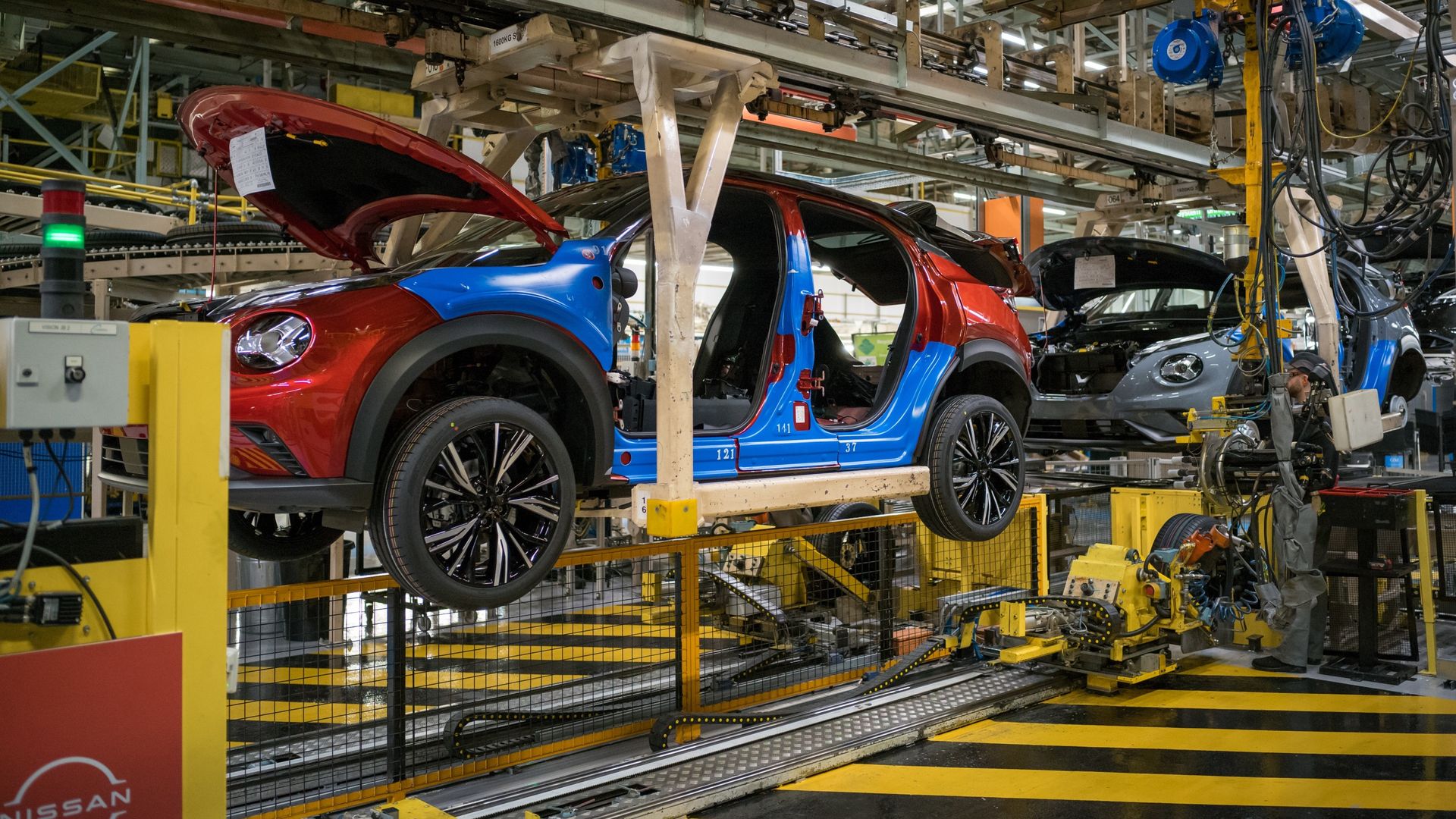
- Simplified Assembly: Reducing the part count in the body-in-white (BIW) structure through large-scale castings, similar to the "megacasting" techniques pioneered by competitors, reduces both capital expenditure and line labor.
The LFP Transition and the Battery Cost Floor
The most significant variable in the affordable EV equation is the cathode chemistry. High-nickel chemistries (NCM/NCA) offer superior energy density but are subject to the volatile pricing of nickel and cobalt. For a truck aimed at the sub-$40,000 market, Ford is tethered to Lithium Iron Phosphate (LFP) technology.
LFP batteries provide several strategic advantages for a work-oriented vehicle:
- Cycle Life: LFP cells can withstand significantly more charge/discharge cycles than NCM cells, often exceeding 3,000 cycles before reaching 80% capacity.
- Safety: The thermal runaway threshold is higher, reducing the complexity and weight of the thermal management system.
- Cost: LFP eliminates cobalt and nickel, removing the two most expensive raw materials from the bill of materials.
The trade-off is energy density. An LFP-powered pickup will be heavier or have a shorter range than an NCM equivalent. Ford's challenge is to find the "utility equilibrium"—a range that satisfies 90% of daily use cases (likely 230-250 miles) without bloating the vehicle’s weight to a point that degrades payload and towing capacity.
The Skunkworks Methodology vs Traditional OEM Bureaucracy
The decision to house this project in a standalone "skunkworks" unit in California, away from the Dearborn headquarters, is a tactical move to bypass the "innovator's dilemma." Traditional OEM product development cycles are optimized for incremental improvements on existing platforms. A clean-sheet EV requires a different software-first mindset.
The skunkworks team is reportedly focused on a software-defined vehicle (SDV) architecture. In a traditional truck, dozens of Electronic Control Units (ECUs) from various Tier 1 suppliers manage separate functions like braking, infotainment, and climate control. This "distributed architecture" leads to massive wiring harnesses and difficulty in pushing over-the-air (OTA) updates. By consolidating these into a few high-performance zonal controllers, Ford can reduce wiring weight by dozens of pounds and lower the cost of electronics, while simultaneously creating a platform that can be monetized via post-purchase software services.
Competitive Pressure and the Chinese Manufacturing Benchmark
Ford’s 2027 timeline puts it in direct competition with a looming influx of low-cost Chinese EVs. Manufacturers like BYD have achieved vertical integration that allows them to produce capable electric trucks at price points significantly below $30,000 in domestic markets.
Ford's defense rests on the "Chicken Tax"—the 25% tariff on imported light trucks in the U.S.—and the requirements of the Inflation Reduction Act (IRA). To qualify for federal tax credits, Ford must ensure that a high percentage of battery minerals and components are sourced from the U.S. or Free Trade Agreement partners. This creates a manufacturing paradox: Ford must build a truck that is as cheap as a Chinese import but uses a more expensive North American labor and supply chain.
Defining the Affordable Utility Segment
To succeed, Ford must resist the urge to "de-content" the truck to the point of uselessness. An affordable pickup must still function as a tool. The skunkworks team is likely evaluating:
- Bi-directional Charging: Utilizing the battery as a mobile power source for job sites or camping (Pro Power Onboard). This feature provides a high-margin upsell that doesn't significantly increase manufacturing costs.
- Modular Bed Systems: Using standardized mounting points to allow third-party accessories, reducing the need for Ford to develop and stock hundreds of low-volume parts.
- The "Workhorse" Interior: Replacing expensive soft-touch plastics and leathers with durable, high-quality polymers and textiles that are easier to manufacture and more appropriate for a utility vehicle.
The Capital Allocation Shift
Ford’s delay of its three-row electric SUV in favor of this affordable truck indicates a shift in capital allocation. The SUV market is saturated with premium EV offerings, whereas the compact electric pickup market is virtually non-existent. By targeting this gap, Ford aims to capture the "fleet" market—municipalities, delivery services, and tradespeople—who prioritize Total Cost of Ownership (TCO) over brand prestige.
A fleet manager calculates value based on:
$$TCO = (Purchase Price - Incentives) + (Energy Cost \times Miles) + (Maintenance) - Resale Value$$
Electric trucks have a clear advantage in maintenance (fewer moving parts) and energy cost per mile. If Ford can bring the purchase price parity within 10-15% of an ICE Maverick or Ranger, the TCO will favor the EV, triggering a massive wave of commercial adoption.
Execution Risks and the 2027 Threshold
The primary risk to this strategy is the "valley of death" between now and 2027. Ford’s Model e division is currently losing billions as it scales. To bridge this gap, the company is relying on its "Ford Blue" (ICE) and "Ford Pro" (Commercial) divisions to subsidize EV development.
The second risk is infrastructure. A compact truck used for work needs reliable, high-speed charging. While Ford’s adoption of the NACS (Tesla) charging standard mitigates this, the physical footprint of charging stations—often designed for passenger cars—remains a bottleneck for vehicles with trailers or those used in rural environments.
Ford must execute on a "design-to-cost" philosophy that is historically difficult for legacy automakers. This requires a ruthless prioritization of efficiency over luxury. If the skunkworks team can deliver a platform that achieves 4 miles per kilowatt-hour, they will have fundamentally rewritten the economics of the electric truck. Failure to meet that efficiency target will result in a vehicle that is either too expensive to sell or too unprofitable to build.
Strategic implementation requires Ford to lock in LFP supply chains immediately while finalizing a high-voltage architecture (likely 800V) that allows for rapid charging without the thermal mass of heavy cooling systems. The 2027 pickup is not just a new model; it is the test case for whether Ford can survive as a volume manufacturer in a post-combustion economy.