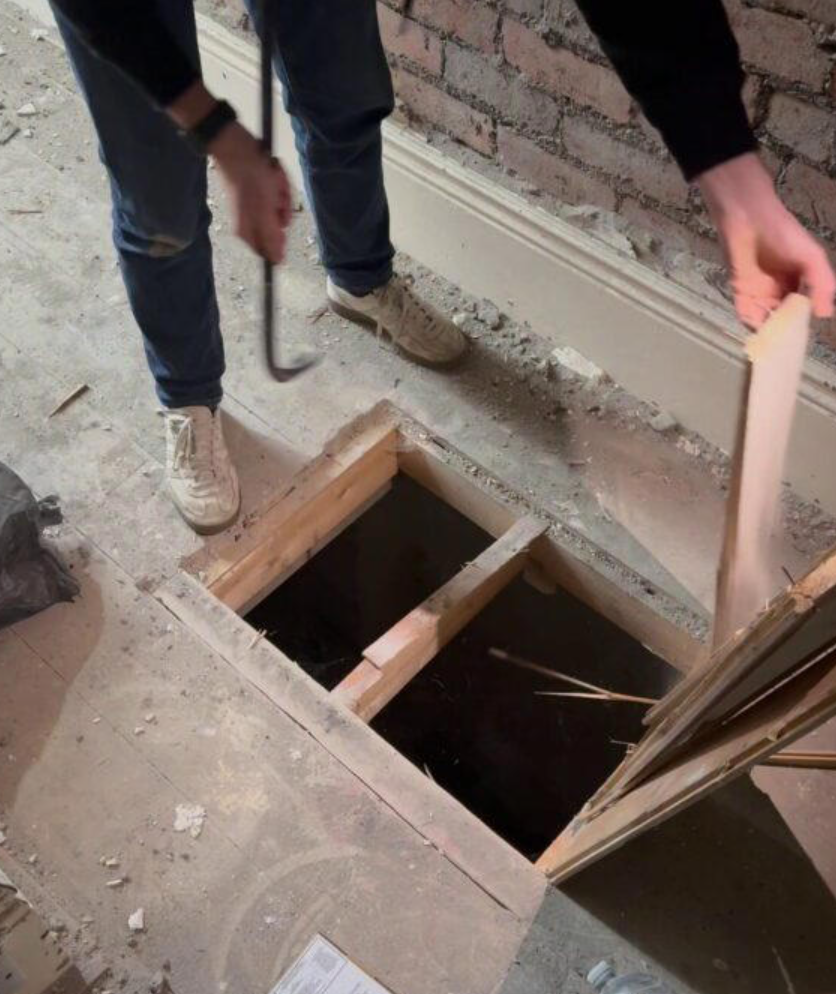
The internet loves a Cinderella story involving a crowbar and a dusty jar of gold coins. You’ve seen the headlines. A couple rips up some rotting oak in a fixer-upper and finds $130,000 in Depression-era currency or pristine Pre-1933 Double Eagles. The comments section explodes with envy. The "experts" talk about luck.
They are all wrong.
Finding six figures under your floorboards isn't a winning lottery ticket. It is a high-stakes litigation trap and a tax liability that most people are too financially illiterate to handle. If you find a treasure cache in your home, the worst thing you can do is celebrate. The second worst thing is calling the media.
The Finders Keepers Fallacy
Most people operate on a playground understanding of property law. They assume that if they bought the house, they bought everything inside the walls.
Wrong.
In the legal world, we distinguish between abandoned property, lost property, and treasure trove. Most "hidden wealth" stories fall into the category of mislaid property. If a previous owner tucked that money away for safekeeping and then died or forgot it, they didn't "abandon" it. Their estate—meaning their greedy great-grandchildren you’ve never met—still has a superior claim to those assets.
I have seen families torn apart by "found" money because they didn't realize that the deed to the house does not automatically transfer ownership of personal property left behind by a previous occupant. You aren't a lucky homeowner; you are a constructive bailee. You are holding someone else’s money, and if you spend it, you’re technically committing conversion. That is a fancy legal term for theft.
The IRS Does Not Believe In Miracles
Let’s say you dodge the previous owner’s heirs. You still have to face the most efficient collection machine in human history.
The IRS treats found treasure as ordinary income in the year it is reduced to "undisputed possession." This isn't capital gains. You don't get the favorable $15%$ or $20%$ rates. You get hit at your top marginal bracket. If you find $130,000$, and you’re already a mid-career professional, you might be handing $37%$ of that find directly to the government.
Look at the landmark case of Cesarini v. United States. A couple found $4,467$ in a piano they bought for $15$. They thought it was a gift from the universe. The court told them it was taxable income.
When you find "old" money, you are also fighting inflation in reverse. $130,000$ in 1930s cash has massive numismatic value today, but the IRS wants their cut based on the current market value, not the face value. If those coins are worth $130,000$ to a collector, you owe taxes on $130,000$, even if the denomination on the coin says "Twenty Dollars."
The Collector’s Trap
You think you’ll just head to a coin shop and cash out? Think again.
The moment you walk into a reputable dealer with a massive hoard of "found" gold or cash, you trigger a series of AML (Anti-Money Laundering) protocols. Banks and high-end dealers are required to file Suspicious Activity Reports (SARs) for large, unexplained transactions.
If you try to sell it off piecemeal to avoid detection, you’re "structuring." That’s a federal felony. I’ve watched people go from "lucky finders" to "subjects of a federal investigation" because they tried to be clever with the liquidations.
The market for rare finds is also incredibly thin. The moment the story hits the news—which is usually how these stories go viral—the value of the find often drops. Why? Because rarity is the primary driver of value. If you suddenly inject 500 mint-condition Morgan Dollars into the market, you’ve just increased supply and nuked your own leverage.
The "Quiet" Strategy
If you find a hoard, the "lazy consensus" says to call a local news station and get your fifteen minutes of fame. That is an ego-driven mistake that invites lawsuits, IRS audits, and burglars to your front door.
The professional move is boring, expensive, and quiet.
- Silence. Do not post a photo on Reddit. Do not tell your brother-in-law.
- The Quiet Title. You need a lawyer to file for a declaratory judgment to establish clear ownership before you touch a single cent.
- Professional Appraisal. Not a "pawn shop" guy. A certified numismatic professional who understands the difference between a "cleaned" coin and "original skin."
- Tax Set-Aside. Assume half of it is gone immediately. If you keep more, it’s a bonus.
The Burden of History
There is a psychological weight to found money that the viral articles ignore. It creates a "windfall effect" that leads to catastrophic financial decisions. People who find $130,000$ don't invest it in low-cost index funds. They buy a depreciating luxury SUV or start a "dream business" that fails within eighteen months.
I’ve consulted for "windfall winners" who ended up poorer two years after their find than they were before they picked up the crowbar. They lost their privacy, they lost their friends to "loans" that were never repaid, and they lost their peace of mind.
The floorboard fortune isn't a gift. It’s a job. It’s a complex, multi-year project involving forensic accounting, property law, and high-level tax strategy. If you aren't prepared to treat it like a corporate merger, leave the floorboards nailed down.
Stop looking for shortcuts in the crawlspace. The most expensive money you will ever earn is the money you find for "free."
Grab your hammer if you want, but don't complain when the bill arrives.