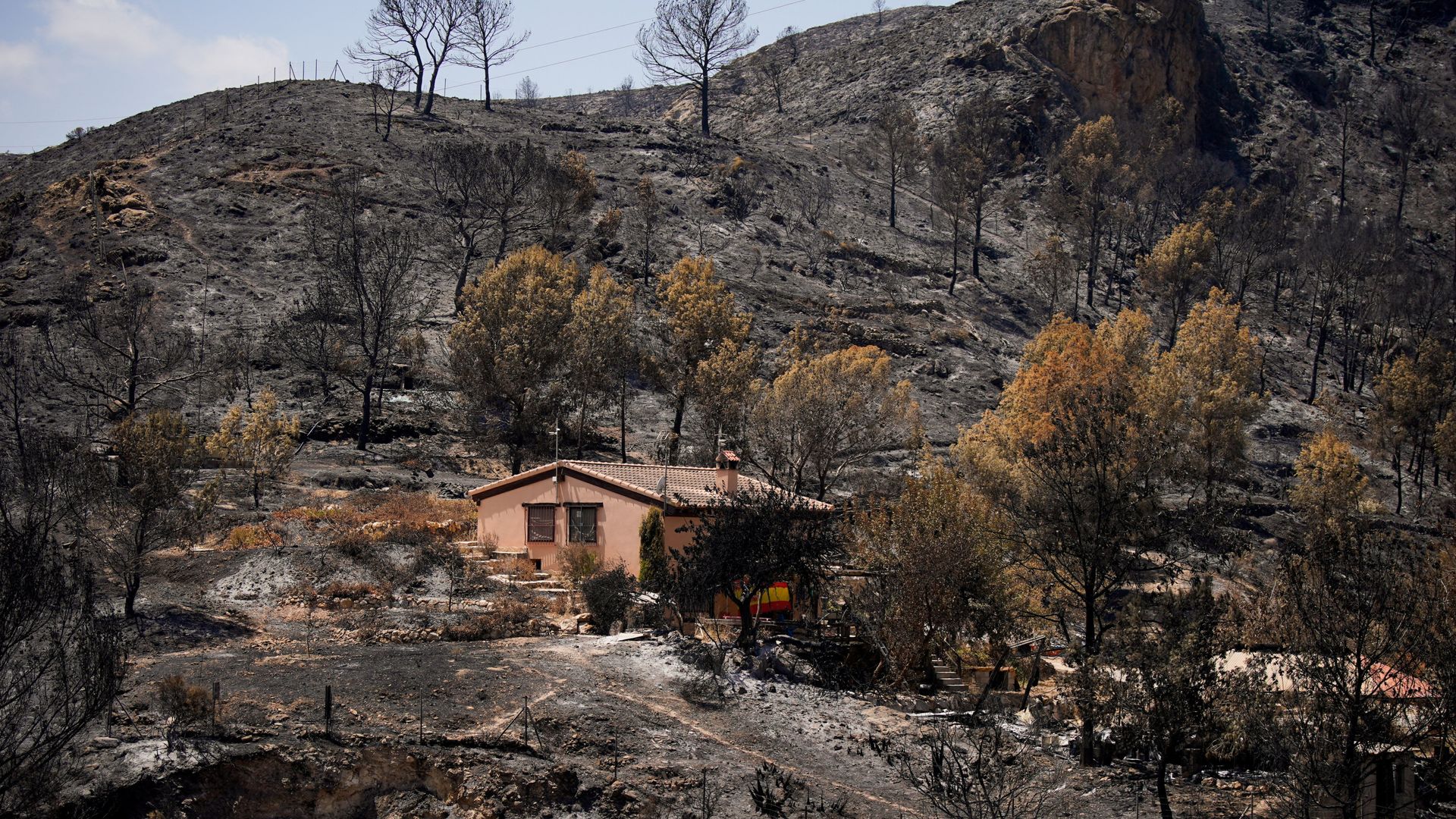
Seven British tourists are dead in Spain, and the media is already running the same tired script.
They call it an "unpredictable tragedy." They blame "unprecedented extreme weather." They write tear-jerking profiles of the victims while treating the fire itself like some sentient, unstoppable monster that dropped from the sky.
It is a comforting narrative. It is also a dangerous lie.
These deaths are rarely unpredictable, and they are almost never unavoidable. The brutal truth that no tourism board or travel editor wants to admit is that these lives were cut short by a toxic mix of systemic ignorance, architectural complacency, and a fatal survival instinct that does exactly the opposite of what it is supposed to do.
When a wildfire encroaches on a Mediterranean holiday destination, the collective instinct is to run. We pack our suitcases, pile into underpowered rental hatchbacks, and head for the nearest road.
That single decision is what kills people.
I have spent nearly two decades analyzing civilian casualties in wildland-urban interface zones across Southern Europe. I have walked through the charred remains of vehicles stuck on single-track mountain roads in Malaga, Greece, and Portugal. The story is always the same. People do not die because their villas burn down around them. They die because they panicked, got into their cars, and drove straight into a thermal trap.
It is time to dismantle the lazy consensus surrounding holiday fire safety.
The Car is a Metal Coffin
Standard news coverage of Mediterranean fires always features dramatic footage of traffic jams on smoke-choked coastal highways. The underlying message is clear: Look at these lucky people escaping.
In reality, those people are playing Russian roulette with a five-chamber cylinder.
A modern vehicle is an exceptionally poor shield against extreme heat. The radiant heat from a high-intensity crown fire can easily reach temperatures exceeding 800 degrees Celsius. Under this level of thermal radiation, the structural elements of a car fail long before the flames actually touch the metal.
- Tires pop and melt, leaving you stranded on bare rims.
- Plastic bumpers and trim ignite, sending toxic smoke directly into the cabin.
- The engine air intake sucks in superheated air and ash, suffocating the motor and killing your power steering and brakes instantly.
- Tempered glass windows shatter under thermal shock, exposing the occupants directly to lethal gases and radiant heat.
When you flee in a vehicle on a narrow, unfamiliar mountain road, you are entering a bottleneck. All it takes is one panicked driver clipping a rock wall, one fallen pine tree, or a shift in wind direction to block the route. Once the road is blocked, your car becomes an oven.
In almost every major European wildfire disaster of the past decade—from the 2017 Pedrógão Grande tragedy in Portugal to the 2018 Mati fire in Greece—the vast majority of victims were found dead in or next to their vehicles. They fled perfectly defensible brick and concrete structures to die on the asphalt.
The Illusion of the Idyllic Pine Villa
The real estate and holiday rental markets in Southern Spain have spent forty years selling a fantasy: the whitewashed villa nestled deep in the fragrant pine woods of the Andalusian hills.
From a fire dynamics perspective, these properties are the equivalent of building a bedroom inside a fireplace.
We call this the Wildland-Urban Interface, or WUI. In Northern Europe, "forest" and "town" are distinct entities. In the Mediterranean, they are dangerously intertwined. British tourists, accustomed to the damp, deciduous forests of the UK where wood rarely burns without a gallon of accelerant, do not understand the volatile chemistry of the Mediterranean flora.
The trees surrounding these villas are not just wood; they are chemical weapons. Species like Pinus halepensis (Aleppo pine) and various eucalyptus cultivars are packed with volatile organic compounds, terpenes, and resins. When heated, these chemicals vaporize, creating a highly flammable gas cloud ahead of the actual flame front.
When a wildfire hits these pine-choked valleys, it does not crawl along the ground. It explodes through the canopy in what is known as a crown fire.
The typical British holidaymaker has zero understanding of this environment. They do not know how to read the fuel load around their property. They do not look at a dry, overgrown steep slope below their terrace and see a natural chimney that will funnel fire directly to their bedroom window at sixty miles per hour. They just see a lovely view of the valley.
The Spanish Alert System and the Language Barrier
A common thread in these tragedies is the complete breakdown of emergency communication—not because the Spanish authorities fail to broadcast warnings, but because the victims reside in an insulated linguistic bubble.
Spain operates a highly sophisticated emergency alert network, including the ES-Alert system which sends loud, vibrating hazard warnings directly to mobile phones within a targeted geographic area.
But these alerts are primarily broadcast in Spanish.
Furthermore, the average tourist does not follow local Spanish news agencies, the regional emergency services on social media, or the local mayor's office. They rely on British tabloid news sites or expat Facebook groups. By the time a translated, panicked post makes its way onto a community forum, the escape routes have already been compromised.
If you cannot understand the difference between prealerta (pre-alert), evacuación (evacuation), and confinamiento (shelter-in-place), your chances of survival drop exponentially. In Spain, confinamiento is often ordered when roads are compromised. It means you must lock yourself inside, seal the doors, and wait.
Yet, when English-speaking tourists see emergency vehicles with flashing lights, they assume they must run. They ignore the direct orders of local police officers because they simply do not comprehend the instructions.
Dismantling the "Run for Your Life" Premise
Let us address the questions that routinely flood search engines during the European summer. The premises of these questions are fundamentally broken, and answering them with standard travel advice is a disservice to human life.
Should I immediately evacuate my rental villa if I see smoke?
No. This is the most dangerous assumption you can make. Your immediate action must depend on the distance of the fire, the wind direction, and your exit topography. If you are in a valley with a single, narrow road out, and the smoke is thick, leaving your villa is often far more dangerous than staying. A typical Spanish villa constructed of brick, concrete, and terracotta tiles is highly resistant to radiant heat. If you clear the immediate vegetation around the house, shut all windows, close the shutters, and fill baths and sinks with water, the house can act as a shield while the active fire front passes over. This front usually passes in less than fifteen minutes. You can survive fifteen minutes of heat inside a concrete box. You cannot survive fifteen seconds of it on foot or in a car on a burning road.
How do I find the safest evacuation route on my phone?
You don't. Do not rely on commercial GPS mapping apps like Google Maps or Apple Maps during a wildfire. These algorithms are designed to find the fastest route based on traffic flow, not fire dynamics. They do not know which roads are closed by police, which valleys are filled with toxic carbon monoxide, or which direction the wind is blowing the fire front. If you must evacuate, follow the physical directions of the Bomberos or Guardia Civil, not a screen. If no authorities are present, and you cannot see a clear, smoke-free path to a major highway, do not guess. Shelter in place.
How to Actually Survive a Mediterranean Wildfire
If you are going to vacation or live in high-risk zones like Southern Spain, Greece, or Southern France, you need to throw out your northern European safety assumptions. Here is the contrarian, hard-nosed protocol for surviving a wildfire threat.
1. Conduct a "Hard Defense" Audit Before You Unpack
Do not trust the rental platform's safety rating. They do not audit fire risk. The moment you arrive at a property, assess it using these three metrics:
- The Defensible Space: Is there a clear, bare gap of at least ten meters between the villa walls and any dense pine trees or dry brush? If the pine branches are touching the roof, you are sleeping in a bonfire.
- The Exit Bottlenecks: Does the property rely on a single-lane dirt track with overhanging vegetation? If yes, you cannot safely evacuate once a fire is active. Your only option will be sheltering in place.
- The Shutters: Are the windows protected by heavy external aluminum or wooden shutters? These are critical. They block the radiant heat that would otherwise shatter the glass and ignite the curtains inside.
2. The Shelter-in-Place Protocol (The 15-Minute Shield)
If a fire is close and you have not received an official, early evacuation order while roads were completely clear, prepare to fight for your life inside the structure.
- Bring all outdoor furniture inside. Plastic loungers and cushions on the terrace are fuel sources that will break your windows.
- Close all doors, windows, and shutters. Turn off the air conditioning to prevent drawing smoke and embers into the house.
- Fill every vessel. Fill the bathtub, sinks, and buckets with water. Wet down towels and place them at the base of external doors to seal out toxic gas.
- Dress for survival. Put on long pants, long-sleeved shirts, and closed-toe shoes made of 100% cotton or wool. Synthetic fabrics like polyester and nylon will melt onto your skin under moderate heat.
- Stay low and move to the center of the structure. Wait out the pass. The air will get incredibly hot, the noise will sound like a freight train, and smoke will seep in. Stay calm. The main fire front will pass quickly. Once it passes, step outside to extinguish any small spot fires on the structure.
The Tourism Industry's Complicity
The ultimate tragedy is that these seven deaths will change nothing.
The travel agencies will continue to market secluded villas in high-risk zone forest canopies. Booking platforms will continue to list properties with zero fire-mitigation landscaping. Governments will continue to release vague, toothless travel advisories telling people to "follow local advice" without explaining how to access or understand that advice.
We do not need more thoughts and prayers. We do not need more hand-wringing about climate change as an abstract concept while ignoring the immediate, physical reality of fire behavior.
We need tourists to understand that dry Mediterranean pine forests are a beautiful, volatile ecosystem designed by nature to burn. If you choose to enter that ecosystem, you must accept the responsibility of understanding its rules. If you do not, you are not a victim of an unpredictable act of God. You are a casualty of your own refusal to face reality.


