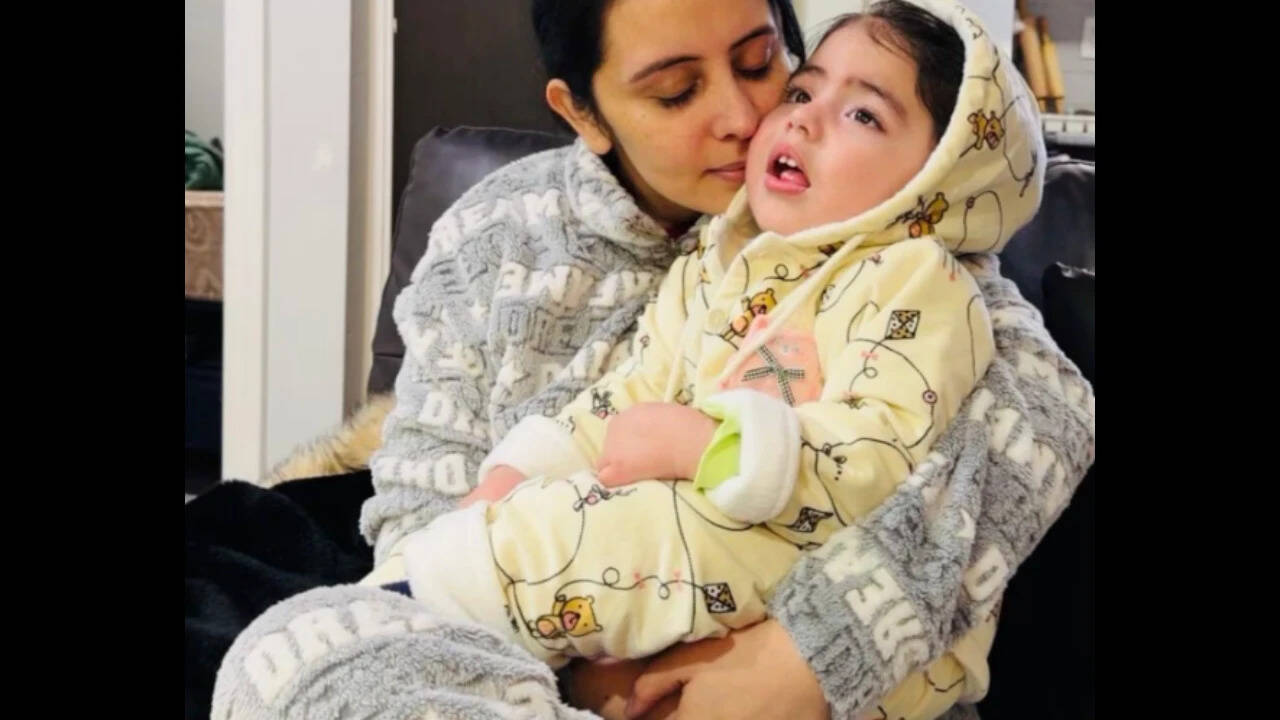
Silence.
When you hold a toddler who cannot sit up on their own, the quiet inside a suburban living room takes on a physical weight, pressing against your ribs until breathing feels like an administrative task you forgot to file. In a quiet Canadian home, an Indian-origin family wakes up every morning to this exact gravity, watching their young child fight a genetic clock that ticks louder with every passing week. They are staring down a staggering figure—five point five million dollars—to cross a border and buy a single dose of a medicine that exists, works, and sits agonizingly out of reach. Don't miss our earlier coverage on this related article.
Most people read a headline like that and feel a brief, sharp pang of sympathy before scrolling toward the weather forecast or sports scores. We treat a five-million-dollar medical bill like an asteroid strike: tragic, astronomical, and entirely detached from the ordinary machinery of our daily lives.
We get the math completely backward. If you want more about the context here, Healthline offers an excellent breakdown.
The real story here is not about charity, nor is it merely about one family’s desperate crowdfunding campaign to fund an experimental gene therapy in the United States. The real story is about what happens when human biology collides with modern pharmaceutical economics, leaving parents to act as venture capitalists for their own children’s survival.
The Architecture of a Missing Instruction
To understand why a single vial of liquid can cost more than a sprawling estate, you first have to shrink yourself down to the microscopic machinery inside a human cell. Think of your DNA not as a mystical code, but as a massive, three-billion-letter construction manual stored inside every single cell of your body. Every protein that builds your muscles, fires your neurons, and keeps your heart beating is assembled by workers reading specific pages from that manual.
Now, imagine what happens when a single page in that manual is smudged, torn out, or printed backward at conception.
In the case of ultra-rare pediatric genetic disorders—conditions like Spinal Muscular Atrophy, Duchenne muscular dystrophy, or devastating metabolic syndromes—the body’s construction crew keeps showing up for work every morning, ready to build, only to find the blueprint missing. Without that specific protein, motor neurons wither, muscles lose their connection to the brain, or toxic byproducts accumulate inside vital organs like sludge clogging a pristine engine. For a toddler, this does not look like a sudden, dramatic collapse; it looks like the quiet, heartbreaking theft of ordinary milestones. A child who should be learning to balance on chubby legs instead struggles to hold up their own head. A swallow becomes a hazard. A common cold turns into an intensive care emergency.
For decades, a diagnosis like this meant only one thing: palliative care. Doctors could offer braces, feeding tubes, and ventilators, essentially sandbagging a river that was guaranteed to overflow.
Then, molecular biology cracked the door open.
Gene therapy does not treat symptoms; it rewrites the broken instruction manual. Scientists take a harmless virus—stripped of its ability to cause illness, hollowed out like a microscopic armored truck—and load it with a healthy, working copy of the missing human gene. When infused into a toddler’s bloodstream, billions of these engineered viral vectors travel directly to the affected cells, slip past the outer membrane, and deliver the corrected blueprint straight to the nucleus. Suddenly, the cellular workers have their instructions back. They start producing the missing protein on their own.
It is one of the greatest intellectual triumphs in the history of medicine. It is also the most expensive medicine ever created by human hands.
Crossing the Forty-Ninth Parallel with Empty Pockets
If you have never sat across from a pediatric neurologist while they explain a fatal prognosis, it is hard to grasp how quickly your entire worldview collapses into a single metric: time. In neurodevelopmental disorders, neurons that die today do not grow back tomorrow. Every month spent waiting for paperwork, regulatory approvals, or hospital board reviews is a month where irreversible biological damage occurs.
For this Indian-origin family living in Canada, the geography of their tragedy adds a cruel layer of friction.
Canada’s publicly funded healthcare system is built on a noble, egalitarian promise: no citizen should go bankrupt because they got sick. Under provincial health plans, routine doctor visits, emergency surgeries, and standard hospital stays arrive without an itemized bill. Yet that very system, designed to protect millions from everyday medical ruin, struggles violently when confronted with hyper-specialized, multi-million-dollar therapies developed across the border in the United States.
Consider what happens when a cutting-edge treatment receives accelerated approval from the U.S. Food and Drug Administration before Health Canada finishes its own exhaustive review, or before provincial drug agencies negotiate reimbursement pricing. Technically, the medicine exists. Clinically, a hospital in Boston, Philadelphia, or Ohio can administer it next Tuesday. Practically, for a family in Toronto, Vancouver, or Calgary, that border might as well be an ocean of fire.
Provincial health plans rarely pay out-of-pocket rates for unapproved foreign treatments, and private Canadian insurance policies are designed to cover dental cleanings and prescription antibiotics, not seven-figure genetic infusions. So the parents do the only thing left to them. They turn their private grief into a public spectacle. They set up a fundraising page, share vulnerable photographs of their toddler hooked up to monitors, and ask strangers on the internet to help them assemble five point five million dollars, ten or twenty dollars at a time.
It is an exhausting, humiliating way to fight for a child’s life. Instead of spending every precious hour holding their toddler, reading bedtime stories, and memorizing the sound of their laugh, parents become full-time publicists, media coordinators, and nonprofit accountants. They refresh donation pages at three in the morning, calculating how many thousands of shares it takes to buy another milliliter of hope.
Why Does One Dose Cost Five Million Dollars?
Whenever a crowdfunding campaign hits the news with a multi-million-dollar price tag, a predictable chorus of outrage rises in the comment sections. People accuse pharmaceutical executives of pure cartoon villainy, picturing boardrooms filled with people cackling over pricing spreadsheets.
The truth is far more complicated, and honestly, much harder to fix.
To see why, let us walk through a hypothetical financial model of how an ultra-rare gene therapy reaches the market. Imagine you are leading a biotech team trying to cure a genetic disorder that affects only four hundred children born worldwide each year. Before you ever treat a single human patient, you spend ten to fifteen years in laboratories, burning through hundreds of millions of dollars in venture capital. Nine out of ten experimental gene therapies fail during animal testing or early human safety trials, meaning investors lose everything on the failures and demand massive returns on the rare successes to stay in the business at all.
Now add manufacturing. Unlike traditional pills—which can be stamped out by the millions in chemical vats for pennies per tablet—gene therapy is a living biological product. Growing custom viral vectors inside specialized cleanrooms requires months of meticulous cellular cultivation, ultra-cold storage, and batch-by-batch purity testing. One single batch can cost hundreds of thousands of dollars just to produce.
Finally, look at the business math of a one-time cure. If a pharmaceutical company invents a blood pressure pill, a patient takes it every day for forty years, generating steady, predictable revenue across millions of customers. If a biotech firm invents a single-dose gene therapy for an ultra-rare pediatric disease, the patient takes it once—
The Price Tag on a Toddler’s Tomorrow (And the Border Standing in the Way)
health, news
Five million five hundred thousand dollars.
Say it out loud in an empty room and watch how the air changes. It is the cost of a small coastal island, a fleet of exotic supercars, or the lifetime earnings of two hardworking surgeons combined. In a quiet suburban living room in Canada, however, that impossible sum is not an abstract financial milestone or a lottery fantasy. It is the exact, non-negotiable ransom required to buy a toddler the ability to swallow his food, lift his head, and keep breathing.
You probably scrolled past the headline in three seconds flat. An Indian-origin family in Canada is raising millions for a rare genetic disorder treatment across the border in the United States. Another crowdfunding link. Another tragic medical plea lost in the endless scroll of morning news. We read the numbers, feel a brief, sharp pang of sympathy, and move on to our coffee.
Stop. Look closer at what that headline actually means.
When a child is born with an ultra-rare, fatal genetic condition, the clock does not tick in hours or days. It ticks in lost neurons. Every single morning that a parent wakes up to check the baby monitor, invisible biological erosion is quietly stealing skills the child will never get back. And when the only medicine capable of halting that collapse sits inside an American research hospital with a multi-million-dollar invoice attached, universal healthcare suddenly hits a brick wall.
The Anatomy of an Invisible Thief
To understand why a single medical vial costs more than a mansion, you have to understand how fragile human biology really is.
Consider a hypothetical scenario to picture what happens inside the cells of a child diagnosed with a severe monogenic neuromuscular or neurodegenerative disorder—conditions like Spinal Muscular Atrophy (SMA) or Aromatic L-amino acid decarboxylase (AADC) deficiency, where a single broken gene brings the body’s entire communication network to a standstill. Imagine a sprawling, hyper-modern city where every single streetlight, traffic signal, and subway line depends on one master power switch at the central station. If that switch is defective from the moment the city is built, nothing moves. The buildings are intact. The roads are paved. Yet the city sits in total darkness, slowly crumbling because no power can reach the grid.
In a healthy toddler, thirty-seven trillion cells read a precise genetic instruction manual every millisecond to produce vital proteins. When a child inherits two faulty copies of a critical gene, the body simply stops manufacturing the protein that keeps motor neurons or brain pathways alive.
At first, the baby looks completely normal. They smile at ceiling fans. They grip their father’s thumb. Then, around four or six months of age, the silence begins. The baby stops rolling over. Their cry turns into a faint, breathy whisper. Reaching for a plastic rattle requires the same monumental effort an adult uses to bench-press two hundred pounds.
I have sat in the sterile, fluorescent-lit waiting rooms of pediatric neurology wards where parents clutch thick three-ring binders stuffed with lab reports, insurance denials, and printed medical journals. You learn quickly in those hallways that grief does not wait for a funeral. You grieve the first steps that never happen. You grieve the solid foods that become choking hazards. You grieve the terrifying realization that a common seasonal cold could fill your child’s weakened lungs with fluid they lack the muscular strength to cough up.
Why One Dose Costs Millions
Naturally, the first question anyone asks when they hear a figure like $5.5 million is simple: Is this pure corporate greed?
The truth is far more complicated, and infinitely more frustrating.
Traditional pharmaceuticals—blood pressure pills, antibiotics, asthma inhalers—are manufactured in massive chemical batches and sold to tens of millions of patients every year for decades. A pharmaceutical company can price a daily pill at two dollars and easily recoup a billion dollars in research costs over twenty years.
Gene therapy turns that entire economic model upside down.
Instead of managing symptoms for a lifetime, gene therapy is designed as a one-time biological repair. Scientists take a harmless, hollowed-out viral shell—usually an adeno-associated virus—and pack a healthy, working copy of the missing human gene inside it. When infused into the child’s bloodstream or directly into the fluid surrounding the brain and spine, billions of these microscopic delivery trucks travel straight to the starving cells, unload the correct genetic blueprint, and permanently restore protein production.
One infusion. One afternoon in an outpatient clinic. Potentially a lifetime of survival.
Because ultra-rare genetic disorders affect perhaps one in fifty thousand or one in a hundred thousand births worldwide, a biotech company might spend fifteen years and two billion dollars developing a cure for a global patient population that could fit inside a single high school gymnasium. There are no repeat customers. Once the child receives the dose, they never buy the drug again. So the entire astronomical cost of decade-long clinical trials, specialized viral manufacturing facilities, and regulatory approvals gets compressed into a single syringe.
And that syringe almost always lives in the United States.
The Border Between Care and Coverage
For families living in Canada, the diagnosis brings a uniquely agonizing paradox.
Canada’s publicly funded healthcare system is a point of fierce national pride, built on the promise that a family’s bank balance should never dictate whether their child lives or dies. If your toddler needs emergency heart surgery in Toronto, pediatric oncology in Vancouver, or neonatal intensive care in Calgary, you walk out of the hospital without ever seeing a bill.
Until your child needs a therapy that Health Canada has not yet approved, or a clinical program that only exists south of the border.
Provincial health ministries operate on strict, evidence-based cost-effectiveness formulas. Drug review boards examine whether a multi-million-dollar therapy has enough long-term data to justify pulling millions of dollars away from thousands of other patients needing hip replacements, cancer screenings, and emergency room beds. When a therapy is brand new—or still categorized as experimental or restricted to specialized American centers—provincial coverage often hits a bureaucratic standstill that drags on for months or years.
For an adult with a chronic illness, a two-year regulatory delay is an inconvenience. For a toddler with a progressive neurodegenerative disease, two years is a death sentence.
Neurons do not regenerate once they die. Gene therapy cannot resurrect dead nerve cells; it can only save the ones still clinging to life on the day of the infusion. Every week spent waiting for a committee meeting in Ottawa or a provincial appeal in Queen’s Park permanently lowers the ceiling of what that child will ever be able to do. Will they walk with a walker, or remain in a wheelchair forever? Will they breathe on their own, or live tethered to a ventilator?
So parents do the only thing left to them. They turn their private heartbreak into a public campaign.
Living Under the Spotlight of Survival
Think about what it takes for an immigrant family—people raised in cultures where family struggles are traditionally guarded with quiet dignity—to put their sick child’s most vulnerable moments on the internet for strangers to judge.
In South Asian households across Canada, resilience is usually a private affair. You work twice as hard, you save quietly, you rely on your immediate family, and you never ask outsiders for money. Breaking that unspoken rule requires an act of total emotional surrender.
Suddenly, a mother and father who should be spending every waking second holding their baby have to become full-time marketing executives, public relations directors, and social media influencers. They have to film videos of their toddler struggling to hold up his head, edit them with heartbreaking music, and beg strangers on Instagram, WhatsApp, and GoFundMe for five dollars, twenty dollars, or a corporate sponsorship.
They also have to endure the inevitable cruelty of the internet.
Whenever a crowdfunding campaign crosses into the millions, the comment sections turn toxic. Keyboard skeptics accuse the parents of running a scam. Strangers demand to see private bank statements, mortgage documents, and hospital invoices before parting with ten dollars. Others coldly argue that spending five million dollars on one child is a waste of society’s charity when that money could feed thousands elsewhere.
Imagine reading those comments at two in the morning while sitting beside a crib, listening to the rhythmic hiss of a pulse oximeter alarm warning you that your baby’s blood oxygen just dipped below ninety percent. You swallow the humiliation. You reply politely to the skeptics. You post another update. Because pride is a luxury you can no longer afford.
The Math of Miracles
Can a family actually crowdfund $5.5 million through small donations?
Do the math, and the sheer scale of the mountain becomes terrifying. To raise $5.5 million through average $50 donations requires one hundred and ten thousand individual strangers to stop what they are doing, pull out their credit cards, and type in sixteen digits. That is more people than fill the largest football stadiums in North America.
Community bake sales, local temple fundraisers, and neighborhood walkathons—no matter how deeply moving—barely scratch the surface of a seven-figure medical bill. Reaching that summit requires viral momentum, diaspora solidarity spanning continents from Brampton to Bengaluru to Birmingham, relentless media coverage, and often a handful of anonymous angel donors willing to write six-figure checks in the eleventh hour.
Even when the money finally arrives, the gamble isn't over.
Parents board medical flights to American pediatric centers carrying both a wire transfer receipt and a terrifying truth: gene therapy is not magic. While some children experience astonishing breakthroughs—gaining the strength to sit unassisted, speak their first words, or take halting steps—others see more modest stabilization. Immune reactions to the viral vector require heavy steroid regimens and weeks of intensive hospital monitoring. No doctor can hand a parent a written guarantee of what their toddler will look like five years after the needle comes out.
Yet ask any parent standing on that precipice whether they would hesitate for a single second, and the answer is always the same. Hope, however expensive and uncertain, beats guaranteed decline every single time.
What We Owe Each Other
When you strip away the medical jargon, the cross-border insurance battles, and the staggering financial figures, this story is really a mirror held up to modern medicine.
We are living through the greatest scientific revolution in human history. For thousands of years, a rare genetic mutation was an unchangeable verdict written into a child’s DNA before they took their first breath. Today, scientists can literally rewrite broken biological code and rescue children who would have died in infancy just ten years ago.
We solved the impossible science. We just haven't solved the humanity required to pay for it.
Right now, in a quiet Canadian home, two parents are watching the digits on a fundraising thermometer crawl upward, dollar by agonizing dollar, while watching their toddler’s chest rise and fall in his sleep. Every notification on their phone is a tiny fraction of a second bought back from a disease that never sleeps.
The clock is still running, the border is still waiting, and a toddler’s entire future hangs suspended between human generosity and a $5.5 million invoice.