Salt gets into everything first.
Before the wind howls, before the evacuation sirens stutter to life against a graying horizon, the air changes its weight. It grows thick, tasting of brine and old electricity, clinging to the skin like a damp wool blanket. If you have lived long enough near the Gulf of Mexico, you do not need a barometer to tell you what is coming. Your joints ache. The barometer drops, and the silence in the house grows heavy, the kind of silence that precedes an argument or a funeral.
Out on the water, forty miles south of the Louisiana coastline, the ocean is breathing.
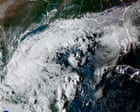
A tropical depression has spun itself into existence over the warm, shallow shelf of the Gulf. To a satellite orbiting hundreds of miles above, it looks like nothing more than a clumsy swirl of white cotton batting, drifting lazily north-northwest. But meteorologists at the National Hurricane Center are staring at their monitors with a familiar, grim intensity. The water temperatures are hovering near eighty-five degrees Fahrenheit—essentially a thermal engine running at full throttle.
Every hurricane season has a calendar, a strict chronology of atmospheric violence. It begins with polite warnings in June, builds a slow crescendo through the grueling heat of August, and peaks when the autumn equinox starts to fray the edges of summer. Yet nature cares nothing for our calendars. Here we are, looking at what forecasters predict will become the Atlantic season’s very first hurricane, and the calendar feels like a cruel joke.
Consider what happens next.
The warm moisture rises, feeds on itself, spins tighter. Air rushes in to fill the vacuum left behind, Coriolis forces take the wheel, and suddenly that lazy swirl of white cotton transforms into a spinning, muscular engine of destruction. It acquires an eye. It acquires a name.
And somewhere along the coastline, a man named Marcus is standing in his driveway, looking at a stack of three-quarter-inch plywood he bought three years ago.
Marcus is tired. Everyone living along the Gulf Coast is tired. You rebuild a fence, you patch a roof, you replace drywall soaked by storm surge, and before the paint has even finished off-gassing, the Atlantic stirs again. There is a psychological tax to living in paradise. The palm trees sway against brilliant sunsets, the seafood gumbo simmers in cast-iron pots, and the air smells of sweet pine and salt water. But the price of admission is high. It is paid in anxiety.
When the news breaks that a tropical depression has strengthened and is on a collision course to become a hurricane, the response is rarely panic anymore. Panic is for amateurs, or newcomers who have not yet learned the rituals of the coast. Instead, a grim, efficient fatigue settles over the towns.
Gas stations see long, snaking lines of sedans and pickup trucks. Hardware stores empty of generators, batteries, and bottled water within three hours. In the harbors, shrimp boats and charter vessels jostle against each other, their captains untying lines to head upriver, seeking the relative safety of inland canals where the storm surge cannot reach with its long, greedy fingers.
We talk about hurricanes in terms of statistics. Category one. Sustained winds of seventy-four miles per hour. Barometric pressure dropping to nine hundred and ninety millibars. Storm surge reaching four feet above normal tide levels.
Statistics are a defense mechanism. We wrap ourselves in numbers because numbers feel controllable. If a storm is just a math problem, then we can solve it with enough preparation, enough concrete, enough insurance.
But a hurricane is not a math problem. It is an elemental force.
When the first bands of rain hit, they do not arrive as a polite shower. They hit like thrown gravel. The wind catches the palm fronds and bends them until they scream, a dry, tearing sound that goes straight through glass windows and rattles the teeth. The power flickers once, twice, and then dies for good, plunging the neighborhood into an amber-tinted twilight as emergency lights kick on.
In the kitchen, Marcus sits with his wife, Elena, by the light of a single battery-powered lantern. Outside, the rain is horizontal now, drumming a relentless tattoo against the roof shingles. They are talking in low voices, trying not to wake the children who are asleep upstairs, lulled by the low, subterranean roar of the approaching wind.
They are calculating risks. Will the oak tree in the front yard hold? Will the drainage ditch at the end of the street hold back the rising tide, or will it spill over into the garage where the lawnmower and the holiday decorations sit?
This is the hidden cost of our changing climate. It is not just the billions of dollars in insured losses, or the stark, haunting images of flooded interstates on the evening news. It is the erosion of peace of mind. Every time the water warms a fraction of a degree, every time an early-season disturbance spins up out of nowhere, the baseline of human anxiety shifts. We are living on borrowed time between disasters.
The forecast models will continue to update every three hours. The cone of uncertainty will narrow, shifting slightly east or west, bringing relief to one coastal community while tightening the noose around another. Meteorologists will point their laser pointers at screens, explaining shear vectors, steering currents, and upper-level winds with calm professionalism.
They are doing vital work. They are giving people hours—sometimes days—to save their lives.
Yet as the depression crosses the threshold into a named hurricane, churning its way northward through the dark, warm waters of the Gulf, all the science in the world cannot quiet the quiet dread in a darkened living room.
The wind outside rises to a howling pitch, rattling the front door in its frame, testing the latches, searching for a weakness. Marcus reaches out in the dim light of the lantern and takes Elena’s hand. They do not say anything. There is nothing left to say that hasn't been said every summer before this one.
They simply wait for the eye to reach them, listening to the ocean reclaim, if only for a night, what we were never truly meant to hold.