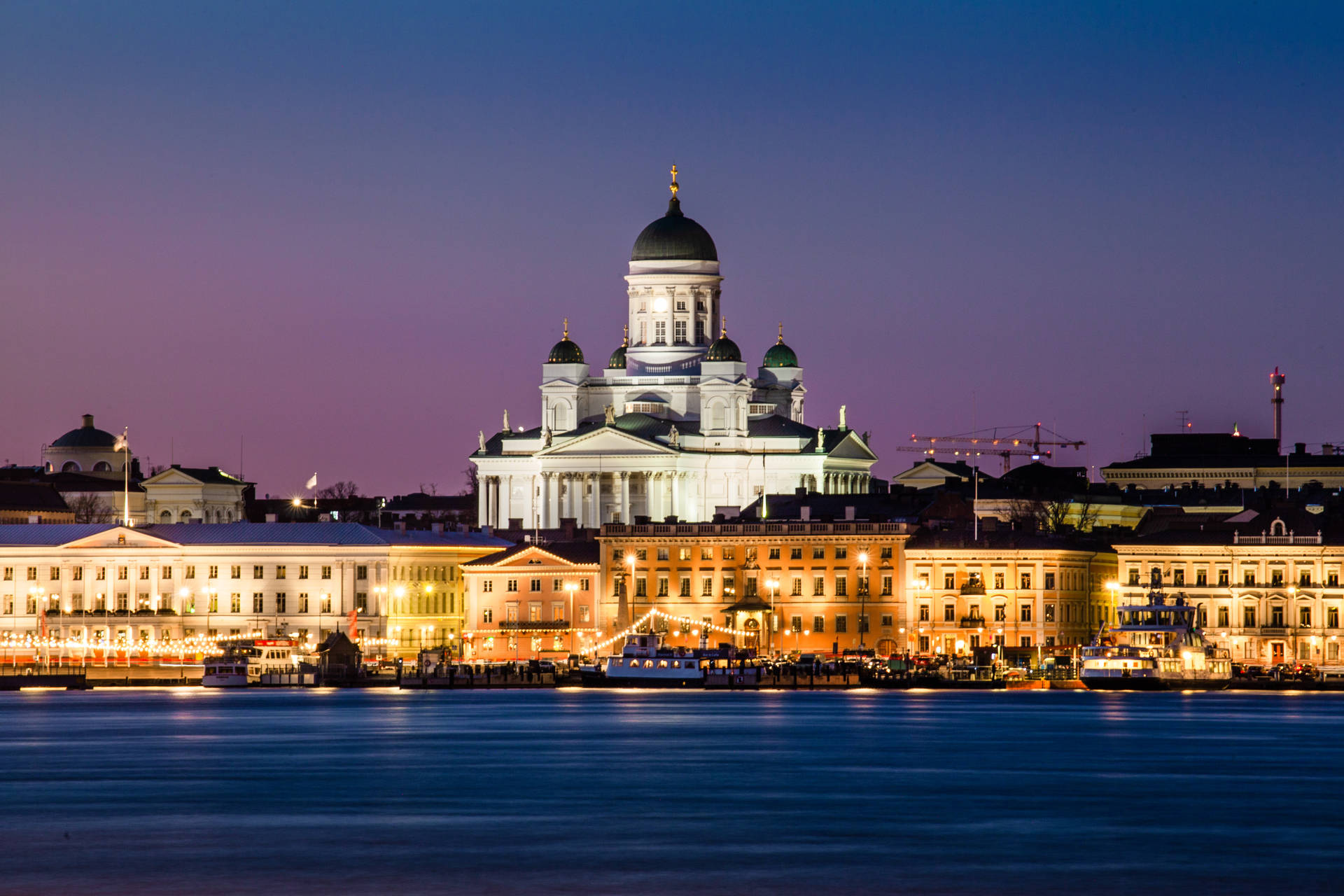
The defense establishment is currently swooning over a specific Nordic fantasy. Western security analysts look at Helsinki and see a flawless blueprint: comprehensive security, universal conscription, bunker networks under every apartment block, and a population supposedly psychological armored against hybrid warfare. The mainstream narrative insists that Finland just gifted NATO a ready-made, plug-and-play fortress on the eastern flank.
It is a comforting bedtime story. It is also dangerously obsolete.
The praise heaped upon the Finnish model misses the fundamental shift in modern conflict. The traditional metrics of national resilience—tonnage of stockpiled grain, sheer numbers of artillery tubes, and civil defense drills—belong to a geopolitical era that no longer exists. Finland has spent eight decades building the ultimate 20th-century defensive shield. Unfortunately, the next major crisis will not be fought with cold war playbooks, and the very structure Helsinki relies on contains hidden points of failure that standard military analysis completely ignores.
The Conscription Myth and the Fragility of Total Defence
The cornerstone of the Finnish system is kokonaismaanpuolustus (total defense). The underlying premise is that every sector of society—corporate, governmental, and civic—seamlessly coordinates during a crisis. Every able-bodied young man undergoes military training, maintaining an active reserve of roughly 280,000 personnel and a total mobilization force of 900,000.
To the average defense writer, this looks like a staggering deterrent. To anyone who has studied modern distributed systems or the realities of digital sabotage, it looks like an astronomical attack surface.
Mass conscription relies on a socio-economic contract: citizens trade months of their lives for the promise that a conventional army can hold a physical border. But modern state-sponsored aggression does not start with tanks crossing the line at Vaalimaa. It begins with deniable, distributed infrastructure failure.
Imagine a scenario where a hostile actor uses coordinated ransomware to permanently brick the SCADA (supervisory control and data acquisition) systems controlling the water filtration plants across Uusimaa. Simultaneously, localized GPS-spoofing disrupts automated maritime shipping in the Gulf of Finland, stalling the container vessels that deliver 80% of the country’s imported goods.
In this scenario, what do you do with 280,000 reservists carrying assault rifles?
They cannot shoot an algorithm. They cannot patch firmware. Universal conscription pulls top-tier software engineers, logistics planners, and grid technicians out of their specialized corporate roles and drops them into infantry platoons. The system actively drains the exact intellectual capital required to defend a hyper-digitized nation, trading elite technical defenders for baseline border security. It is a massive misallocation of human capital masquerading as national solidarity.
Stockpiling Is a False Sense of Security
Western commentators love to marvel at the National Emergency Supply Agency (Huoltovarmuuskeskus). The agency maintains vast, secret warehouses filled with months’ worth of grain, fuel, seeds, and medical supplies. Analysts treat this like the ultimate insurance policy.
It is not. It is an expensive monument to static thinking.
Industrial manufacturing and modern life run on just-in-time global supply chains. A nation cannot solve a prolonged supply disruption by sitting on mountains of raw wheat if the processing plants lack the proprietary microchips needed to repair automated milling machines. Finland’s economy is deeply integrated into the global technology ecosystem. If specialized chemical catalysts, semiconductor components, or software updates are cut off, the domestic supply chain grinds to a halt regardless of how much crude oil is sitting in a subterranean cavern near Porvoo.
Physical stockpiles create a psychological moral hazard. They convince politicians and citizens that the country is insulated from external shocks, delaying the painful, necessary work of building true operational redundancy. True resilience is not an inventory management problem; it is a dynamic capacity problem. It is the ability to rapidly adapt, pivot domestic production, and route around infrastructure failures in real time. Static hoarding provides the illusion of safety while leaving the underlying economic machinery entirely exposed to systemic failure.
The Invisible Threat to Social Cohesion
The ultimate vulnerability of the Finnish model lies in its deepest assumption: absolute social trust. The consensus view argues that high institutional trust makes the population immune to psychological manipulation and information warfare.
This view ignores how modern cognitive campaign strategies actually work. Hostile actors do not try to convince a population to love an adversary; they target internal fractures to turn the society against itself.
Finland’s highly centralized, consensus-driven political culture is uniquely vulnerable to polarization. The country operates on an unwritten agreement that everyone must agree on core national security priorities. When an adversary introduces highly targeted, algorithmically driven wedge issues—exploring latent tensions around immigration, economic austerity, or regional resource distribution—the shock to a consensus culture is far more severe than it is to a society accustomed to constant political chaos.
When trust is monolithic, it is brittle. A small crack in public confidence regarding government competence or energy grid stability can cause a rapid, systemic collapse in public morale. The belief that a population is naturally immune to narrative warfare is a dangerous blind spot that prevents the development of active, decentralized psychological counter-measures.
The Cost of the Fortress Mentality
There is a distinct downside to pointing out these flaws. Challenging the Finnish model risks undermining the collective confidence that forms NATO’s current deterrence strategy on the Nordic flank. If the alliance begins to question the operational readiness of its newest member, it could inadvertently embolden regional adversaries.
However, pretending a system is flawless when it is fundamentally misaligned with modern threats is infinitely more dangerous. NATO cannot afford to treat Finland as a solved problem.
The alliance needs to stop duplicating the Finnish model of mass mobilization and instead push for a complete overhaul of how civil defense intersects with critical technology. The current strategy treats technology as an add-on to conventional military strength. In reality, technological infrastructure is the primary battleground, and conventional forces are merely the cleanup crew.
Dismantling the Premise of Total Defence
The security community frequently asks the wrong questions when evaluating national readiness. A standard review of the consensus worldview reveals a fundamental misunderstanding of what actually keeps a modern state viable during high-intensity conflict.
Does a large military reserve guarantee national survival?
No. A massive pool of reserve manpower is completely useless if the state’s digital nervous system is paralyzed. If the financial transactions system is offline for two weeks, civil order breaks down long before conventional forces can be deployed effectively to a front line.
Can civil defense bunkers protect a population from modern warfare?
Only from the immediate physical effects of conventional bombardment. Bunkers do nothing to mitigate the long-term economic and psychological devastation of sustained cyber isolation. Living underground while the national economy collapses above is a temporary delay of national failure, not a victory condition.
Is high institutional trust a definitive defense against disinformation?
High trust makes a society incredibly vulnerable to deep-cover deception operations. If citizens are conditioned to trust official channels blindly, an adversary who successfully compromises or mimics those channels can manipulate public behavior with catastrophic efficiency.
The Unconventional Blueprint for True Resilience
True resilience requires a complete shift away from static defense models toward dynamic, decentralized systems.
- Pivot from Conscription to Cyber Conscription: Replace the mandatory infantry training model with a dual-track system. Citizens with technical expertise must be routed into specialized defensive infrastructure units, maintaining their civilian roles while being legally integrated into an active, real-time cyber defense network.
- Kill the Just-in-Time Corporate Model for Critical Infrastructure: Force private companies managing energy, water, and logistics to maintain complete, offline operational redundancy. If a system cannot run entirely manually via analog overrides during a prolonged digital blackout, it should be legally barred from operating.
- Decentralize Information Verification: Stop relying on top-down government statements to counter foreign influence. Build distributed, community-level information verification networks that train citizens to analyze source metadata and structural biases independently, rather than waiting for an official press release from Helsinki.
The era of the fortress nation is over. No amount of stockpiled grain, subterranean concrete, or conscripted infantry can insulate a modern society from the asymmetric realities of digital and economic warfare. If NATO continues to mistake Finland’s historical persistence for future readiness, it will find out the hard way that a shield built for the last century shatters instantly when struck by the tools of the next.