The weight of a passport is rarely felt until it is denied. Most of us walk through borders with a blue or red book, never pausing to consider the silent, invisible machinery that grants us passage. We take the ink stamp for granted. We take the safety of a home stadium for granted.
For two former members of Iran’s national women's football team, that booklet was never just paper. It was an elusive horizon.
The Sound of Silence on the Pitch
Picture the stadium lights. They hum with a low, electric vibration that cuts through the night air. Thousands of voices roar from the stands, a wall of sound that can either crush a player's chest or lift them off the turf. But imagine stepping onto that exact pitch with a quiet terror sitting right beneath your ribs.
Athletes train for years to master the physical mechanics of the game. They learn how to strike a ball with the laces, how to read the hips of an advancing striker, how to manage their breath when their lungs burn in the ninetieth minute. Nothing in the training manual prepares you for the moment your chosen path makes you a target.
For these two athletes, the football pitch in Iran was both a sanctuary and a cage. They played with fire in their boots and caution in their minds. Every match carried a hidden ledger. Every public appearance required a careful calculation of words, posture, and loyalty.
Sport is supposed to be a great equalizer. A green rectangle where heritage, wealth, and status dissolve into the sheer merit of a well-placed pass. Yet, for many female athletes navigating systemic restrictions, the game is heavily policed. The rules extend far beyond the white chalk lines of the touchline.
Crossing the Boundary
Departure is rarely a single, cinematic moment with dramatic music swelling in the background. Usually, it is quiet. It looks like packing a single suitcase while the city sleeps. It looks like looking out a window one last time, knowing the return ticket does not exist.
To seek asylum is to strip away every title you ever earned. Suddenly, the trophies gathering dust on a mantelpiece mean nothing. The newspaper clippings fade in relevance. In a foreign country, you are stripped down to your rawest form: a person searching for ground that won't shift beneath your feet.
Australia did not just offer a visa. It offered oxygen.
When the news broke that these two former players had officially secured their Australian citizenship, the public reaction was measured in polite headlines. Bureaucracy loves neutral language. Terms like "legal status" and "naturalization process" turn human survival into administrative checkboxes.
But listen to what the players actually said. They did not speak in policy jargon. They used words like proud. They used words like profoundly grateful.
Gratitude of that magnitude is heavy. It stems from the realization that safety is a luxury most of the world inherits by accident of birth, while others must risk everything to claw their way toward it.
The Anatomy of Starting Over
Imagine playing the sport you love your entire life, only to realize that your identity as an athlete has been entirely eclipsed by your identity as a refugee.
Integration is a slow, grinding process. The accent is a constant reminder of distance. The slang doesn't quite roll off the tongue. The winter wind feels sharper when you have no family history rooted in the soil.
Yet, resilience has a way of finding a seam in the defense.
Football speaks a universal language. It doesn't matter if you learned to trap a bouncing ball on the dusty asphalt of a back alley or the manicured lawns of a professional academy; the touch is the touch. Slowly, these women began to rebuild. Not by reclaiming their past glory—that chapter was violently closed—but by coaching local kids, stepping onto community pitches, and feeling the familiar crunch of grass beneath their cleats without looking over their shoulders.
Citizenship is the ultimate whistle. It signals the end of the run and the beginning of actual play.
The Invisible Ledger
We live in an era where global migration is reduced to political footballs. Figures flash across cable news screens. Statistics are weaponized. Debates rage in parliaments thousands of miles away from the reality on the ground.
It is easy to forget the faces behind the data points.
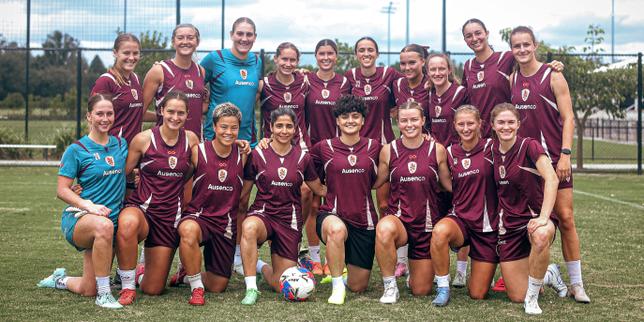
Two women. Two sets of boots worn thin by countless training sessions. Two distinct stories of courage that didn't make the front page until the paperwork finally cleared.
They are not just symbols of resilience. They are neighbors now. They are coaches, workers, and community members who traded an impossible reality for a challenging, beautiful, wide-open future.
The stadium lights in their new home might be shaped a bit differently. The crowd might speak a different tongue. But when they step onto the grass today, the air in their lungs is their own.
The final whistle has blown on the fear. The match for a new life has just begun.