Click. Whoosh. Click. Whoosh.
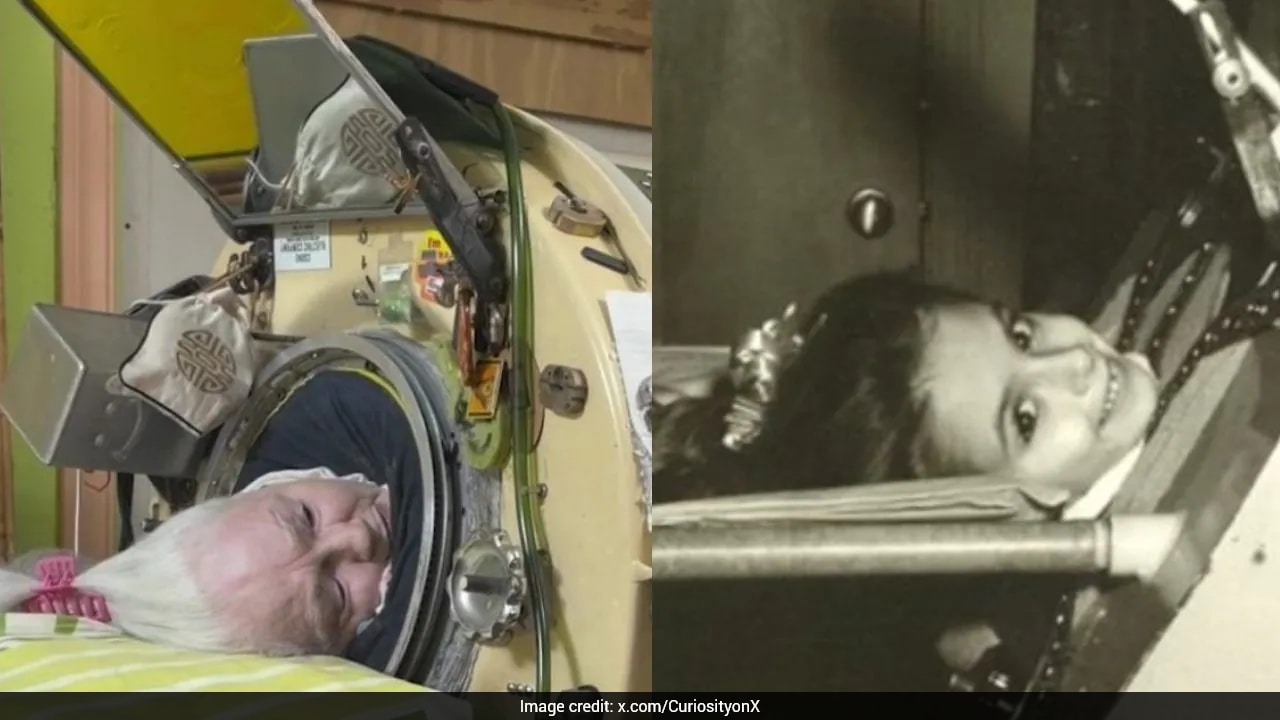
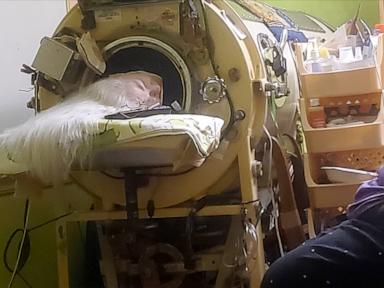
For more than seventy years, that mechanical respiration was the soundtrack of a room in Oklahoma. It was a heavy, industrial cadence, the sound of a pre-atomic age machine performing the most basic human function on behalf of a woman who could not do it herself. Inside the yellow steel cylinder lay Martha Lillard.
To look at the machine was to look at a museum piece, a seven-hundred-pound relic of mid-century panic. To Martha, it was something entirely different. It was an exoskeleton. It was home. It was the only reason her heart kept beating while the rest of the world moved on to microchips, smartphones, and eradication.
When Martha passed away recently at the age of seventy-eight, a quiet, monumental era of American medical history ended with her. She was one of the very last human beings in the United States to inhabit an iron lung. Her departure is not just an obituary for a brave woman; it is the closing of a living window into a time when an invisible enemy paralyzed a nation with fear every single summer.
The Summer the Water Dried Up
To understand the scale of what Martha lived through, you have to understand the terror of 1953.
Imagine a hot July afternoon. The air is thick, the kind of heavy Midwestern heat that makes clothes stick to skin. But the public swimming pools are empty. The movie theaters are dark. The playgrounds are completely deserted, swings swaying gently in the hot wind without any children to ride them.
Parents locked their front doors, terrified of a ghost. They checked their children’s foreheads for sweat, watched their gait for the slightest stumble.
Polio was the great thief of the American century. It arrived without warning, usually striking the youngest and healthiest. It didn't care about neighborhoods or income. One day a child had a scratchy throat; the next, they couldn’t lift their legs. By nightfall, they were suffocating as the virus destroyed the motor neurons in the spinal cord, leaving the diaphragm paralyzed.
Martha was just five years old when the ghost found her.
She had been celebrating her birthday. A week later, she woke up with a headache and a stiff neck. Her body felt heavy, as if it were sinking into the mattress. In the hospital, the rooms were filled with rows of giant metal canisters, a metallic army keeping a generation of children alive.
They slid her into the steel tube, closed the heavy collar around her neck, and turned on the motor.
She survived the initial onslaught, but the paralysis never left her chest. The machine that saved her life became the condition of her survival. For the next seven decades, while human beings walked on the moon, invented the internet, and mapped the human genome, Martha returned to her yellow cylinder every single night.
The Mechanics of a Metallic Breath
The technology behind the iron lung is brutally simple. It operates on a principle called negative pressure ventilation.
Think of a bicycle pump or an accordion. The iron lung is an airtight chamber. When the mechanical bellows at the base of the machine expands, it alters the air pressure inside the tank. The pressure drops, creating a partial vacuum. Because the air pressure outside the tank is now higher than the pressure inside, air is forced down the patient’s nose and mouth, inflating their lungs.
When the bellows contracts, the pressure inside the tank increases, gently squeezing the patient’s chest and forcing the air back out.
Air goes in. Air goes out.
It is a passive, terrifyingly fragile way to exist. Inside the machine, Martha was completely dependent on the integrity of a rubber seal around her neck and the steady supply of electricity from the wall outlet. If the power failed, the breathing stopped.
During storms or blackouts, survival became a frantic race against the clock. Her family would have to pump the bellows by hand, counting the seconds, mimicking the rhythm of human life until the lights flickered back on. In later years, she managed to spend hours outside the machine during the day, using a smaller, modern ventilator, but her chest muscles were too weak to sustain her through the deep relaxation of sleep. Every night, the yellow cylinder reclaimed her.
The Strategy of Obsolescence
As the decades rolled by, a strange and difficult irony enveloped Martha’s life. The world grew safer, which meant her life grew more precarious.
In 1955, Jonas Salk’s vaccine changed everything. Within a few generations, polio became a historical footnote in the West, a disease found only in textbooks. The factories that manufactured the iron lungs shut down. The companies that made the replacement parts stopped production. The mechanics who understood the delicate alignment of the leather bellows and the electric motors grew old and died.
Martha was left stranded on a shrinking island of obsolete technology.
When a part broke, there was no customer service number to call. There was no warehouse to ship a replacement gear. She had to rely on sympathetic engineers, vintage collectors, and local machinists who treated her survival as a bespoke engineering challenge. They fabricated parts from scratch in backyard workshops. They scavenged junkyards for old units, stripping them for valves and gaskets like mechanics working on a rare classic car.
Consider the psychological weight of that existence. Every squeak of the motor was a potential threat. Every wear mark on the leather bellows was a countdown. Yet, she refused to look at the machine as a prison. In interviews, she spoke of it with affection. It was her protector. It allowed her to paint, to care for her beloved dogs, to live a life filled with warmth, intellect, and grace.
The Danger of a Clear Horizon
We live in a world defined by the absence of the things that used to kill us.
Because we no longer see the rows of iron lungs filling hospital wards, we forget why they were built in the first place. We mistake the absence of danger for the absence of risk. The tragedy of modern public health is that success looks like nothing happening. When a vaccine works perfectly, the disease vanishes, and because it vanishes, we begin to doubt it ever posed a threat at all.
Martha’s life was a vivid, breathing rebuke to that complacency. She bore the physical cost of a world before prevention. Her presence was a reminder of what happens when society loses its defense against the microscopic forces of nature.
Her passing is a quiet milestone. The metal cylinder she inhabited for seventy years will likely find its way to a museum, alongside the leather helmets of early aviators and the wooden plows of the frontier. Visitors will look at the yellow paint, the glass portholes, and the manual pressure gauges, shaking their heads at the primitive cruelty of the past.
But they shouldn't just see a machine. They should see the immense, unyielding willpower of the woman inside it, who carved out a beautiful, decades-long life by adapting to the rigid confines of steel.
The room in Oklahoma is silent now. The click and the whoosh have finally stopped, leaving behind a stillness that asks us to remember what it took to buy the safety we enjoy today.