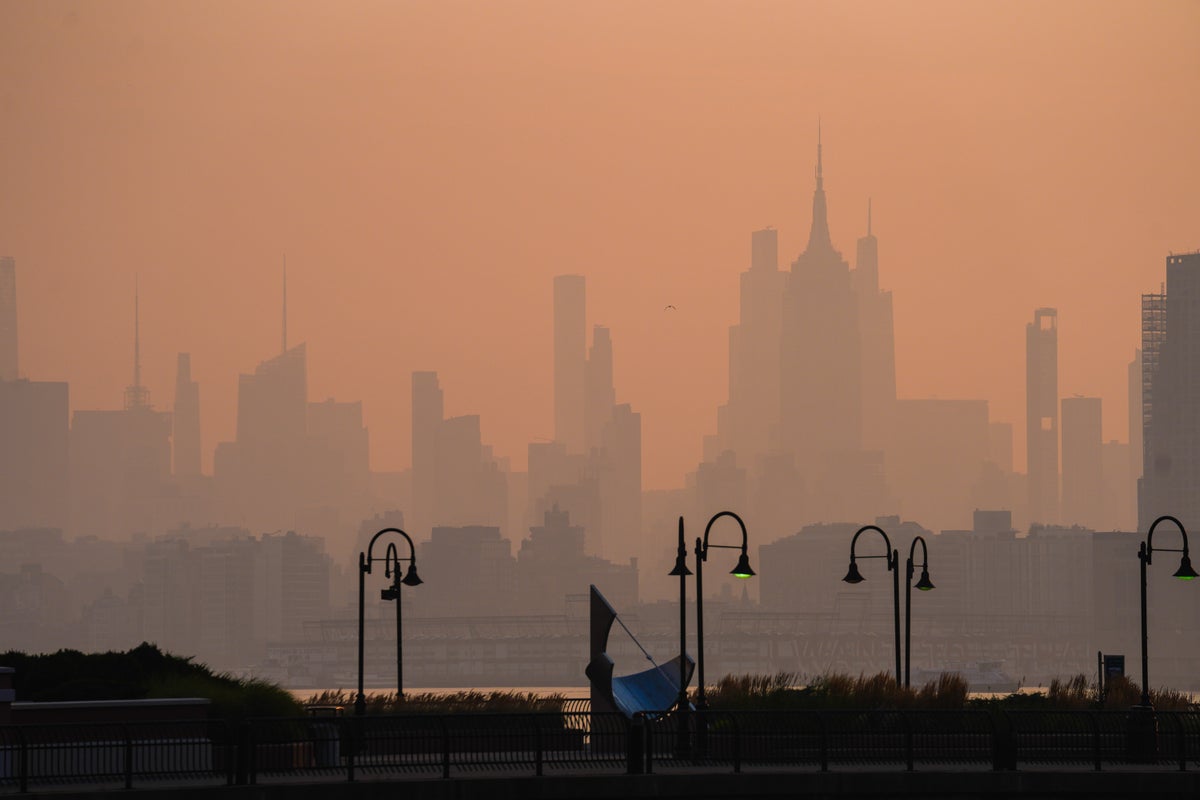
The biggest game in soccer is days away, and nobody can breathe. On Sunday, Spain and Argentina are scheduled to face off in the World Cup final at the New York New Jersey Stadium in East Rutherford. It is a dream matchup featuring generational talents like Lionel Messi and Lamine Yamal. Yet, the primary talking point isn't tactical formations or legacy. It's the thick, acrid orange haze blanketing the Northeast.
Canadian wildfires are pumping hazardous smoke straight into the tri-state area. Air Quality Index (AQI) levels have spiked deep into the "unhealthy" and "very unhealthy" zones. Local politicians like New York City Mayor Zohran Mamdani are out handing out free masks, telling normal people to avoid walking their dogs. Meanwhile, the governing body of global soccer is mostly silent, apparently hoping a cold front magically solves a massive public health dilemma. Building on this theme, you can find more in: The Fall From Olympus And The Heavy Silence That Follows.
It's a glaring oversight. Professional leagues across North America have firm rules for this exact scenario. FIFA doesn't. They are gambling with the health of the players and eighty thousand fans in an open-air stadium, and it's a terrible look.
The Massive Blind Spot in World Cup Planning
If you look at how other sports handle air quality, the contrast is sharp. The National Women's Soccer League (NWSL) forces mandatory hydration breaks the second the AQI hits 101 and postpones matches entirely if it crosses 200. Major League Baseball and Major League Soccer pulled the plug on games in Philadelphia and Chicago just this week due to the exact same smoke plume. Experts at ESPN have also weighed in on this situation.
FIFA's official playbook has deep protocols for extreme heat. They know how to handle high temperatures; they plan out water breaks down to the minute. But smoke? Their official stance is that climate risks are simply managed in coordination with host cities. That's corporate speak for having no actual backup plan.
Soccer players aren't standing around. They run upward of seven miles a game. During a high-intensity match, an athlete's lungs process two to three times the volume of ambient air compared to a person at rest. Inhaling particulate matter at that rate isn't just uncomfortable; it causes immediate throat burning, intense coughing, severe headaches, and reduced lung function.
Medical experts are rightfully terrified. Dr. Courtney Howard, an emergency room physician, pointed out the obvious risk of high-level athletes moving massive amounts of polluted air through their respiratory systems. Yet, the tournament machine keeps rolling forward because the logistics of moving a global final are a nightmare.
A Tale of Two Training Camps
The disruption has already started hitting the squads, but they are handling it completely differently. Spain landed in New Jersey directly from their semifinal in Texas and went right to work. Bizarrely, they held an outdoor practice on Thursday right in the middle of the hazardous air alert. Midfielder Mikel Merino summed up the squad's mentality, acknowledging that you can see and smell the haze, but the players have to shut out external factors. It's a classic athlete response, but exercising in those conditions is objectively dangerous.
Argentina took a smarter route. They chose to stay behind at their training camp in Georgia following their victory over England. They avoided the worst of the smoke on Thursday, only flying up to New Jersey on Friday afternoon as air conditions began to slightly stabilize.
The impact isn't limited to the twenty-two men on the pitch either. Performers rehearsing for the massive halftime show inside the open-air venue have complained that the air feels incredibly heavy and dancing has become physically exhausting.
What the Weather Predicts for Sunday
Meteorologists are tracking a heavy system of rain expected to hit the region on Saturday. In theory, heavy rain acts as a natural scrubber, dragging smoke particles out of the sky. You might see some dirty, ash-stained rain over the weekend, but it should clear the air temporarily. A cold front is also projected to move through by Sunday morning, which could push the remaining Canadian plume out to sea.
Current projections suggest the AQI might drop to a safer "moderate" level by kickoff. That is what FIFA is banking on. But smoke patterns are notoriously volatile. A slight shift in wind direction can bring a massive wave of particulate matter roaring back across the border within hours.
Relying on luck is a terrible strategy for the biggest sporting event on earth. Even if Sunday turns out clear, this week has exposed a massive flaw in how global sports organizations view environmental safety. Climate volatility isn't something you can just react to on the fly anymore.
If you're traveling to East Rutherford for the match, don't trust that the air will be perfect just because the sun is out. Pack high-quality masks like a KN95 or N95 in your gear. Keep an eye on local environmental updates rather than relying on stadium announcements. If you have pre-existing respiratory issues or asthma, factor in that the stadium cannot be closed. Be ready to prioritize your own health if the wind shifts and the haze rolls back in.